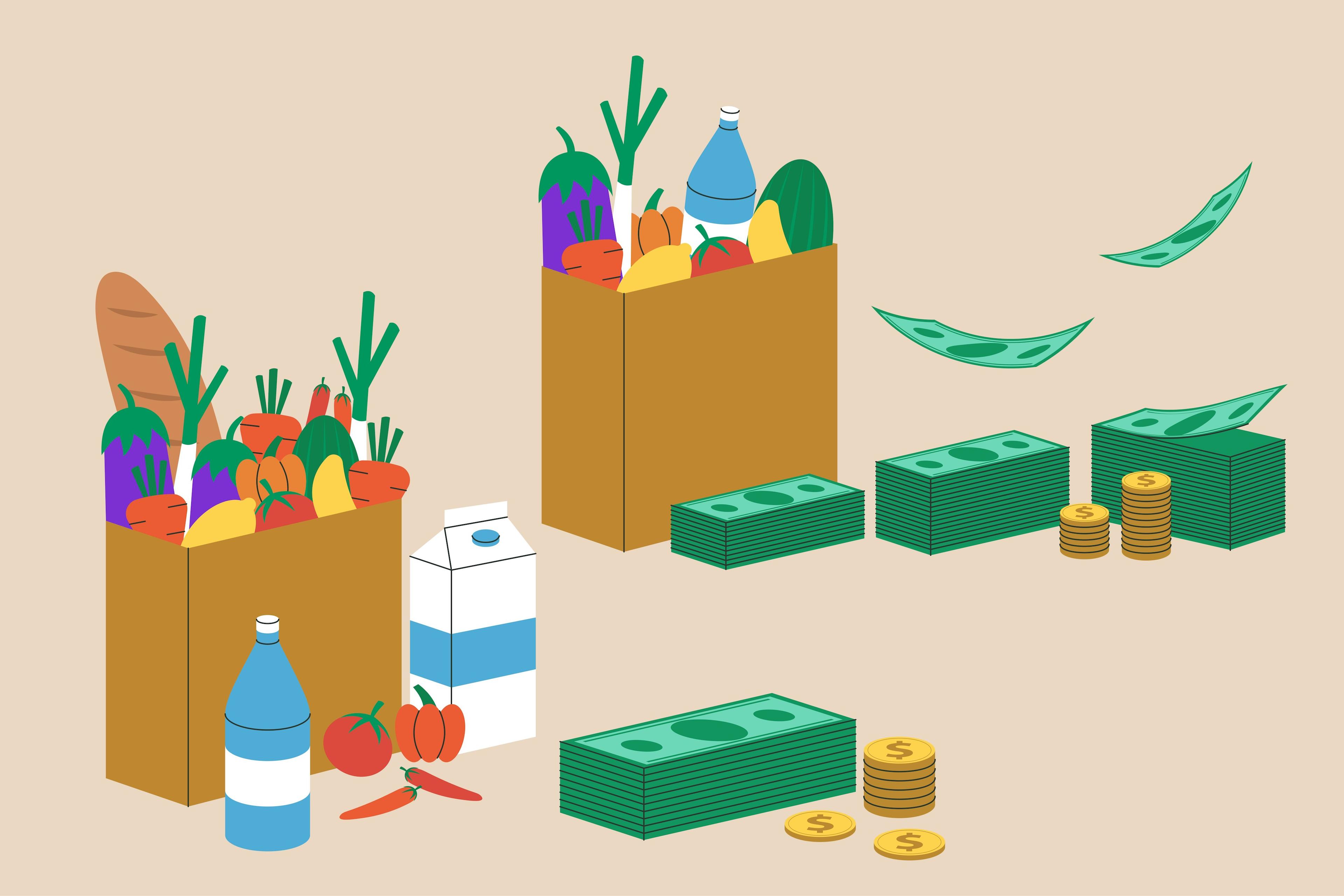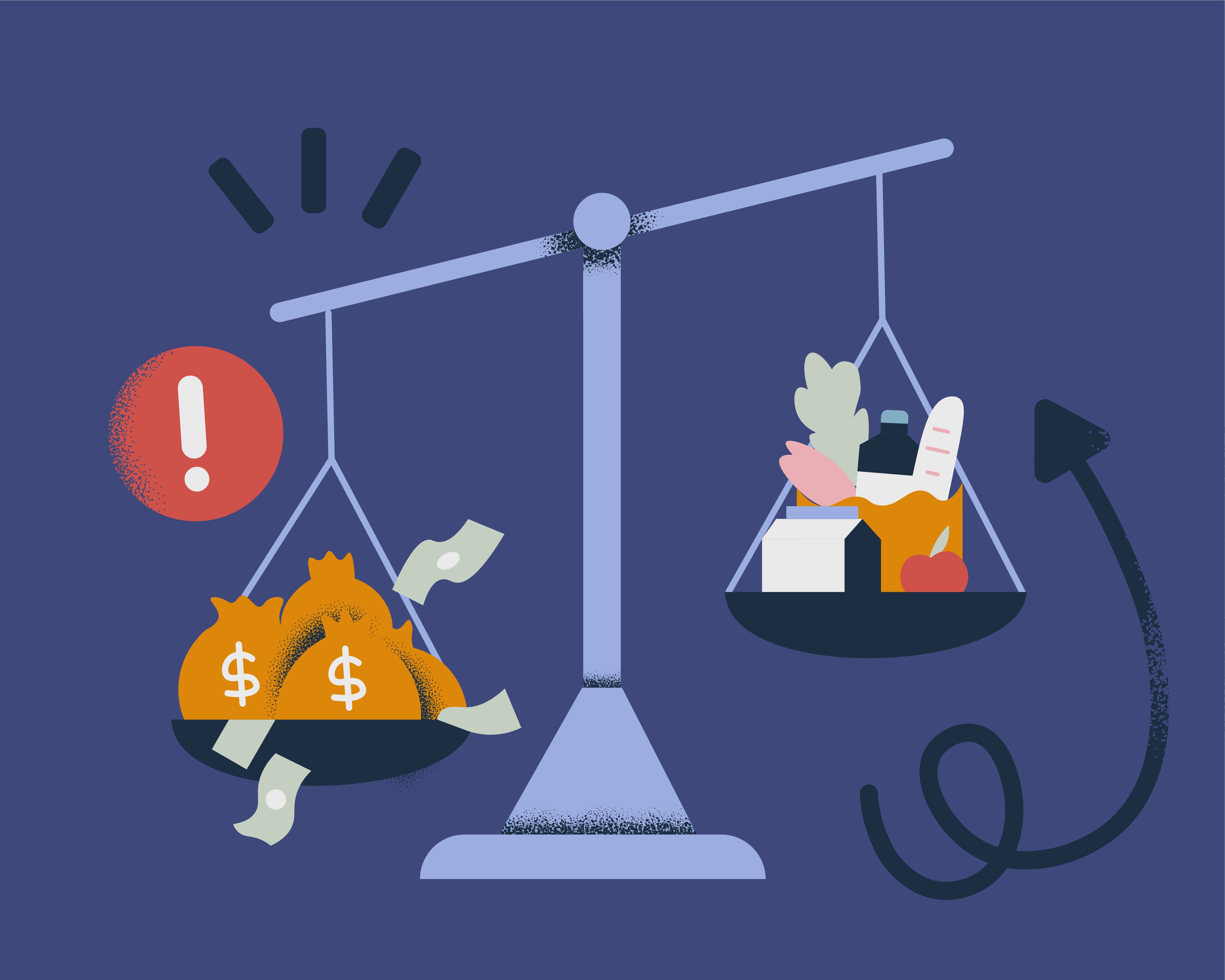
High inflation is often described as prices rising across the economy, but what consumers feel most is something more personal: the shrinking ability of their money to cover everyday life. Purchasing power is simply how much a unit of currency can buy. When inflation climbs, the same paycheck, the same savings balance, and the same monthly budget begin to purchase fewer groceries, fewer services, and fewer essentials. Even if someone’s income does not change on paper, the real value of that income declines as the cost of living rises.
This erosion becomes obvious fastest in essentials because essentials are both frequent and difficult to avoid. A consumer may postpone upgrading a phone or buying new furniture, but they cannot easily skip rent, food, transport, electricity, or basic healthcare. When these items become more expensive, the household budget is squeezed where it has the least flexibility. Discretionary spending then becomes the pressure valve. People dine out less, reduce entertainment, delay travel, and become more cautious with nonessential purchases. This is not just a lifestyle adjustment. It is an economic response to a narrower margin between income and required expenses.
One reason inflation reduces purchasing power so quickly is that prices can change faster than income. Many workers receive salary adjustments only once a year, sometimes even less frequently, and increases may be smaller than the rise in living costs. Even when wages do rise, they often lag behind inflation, which means consumers lose ground for months or years before earnings catch up. During that lag, households must find ways to fill the gap. Some dip into savings, some use credit, and some simply cut back. Each option has consequences. Savings depletion reduces resilience against emergencies, greater credit use increases future repayment burdens, and spending cuts slow demand in many parts of the economy.
Inflation also weakens purchasing power through the quiet channel of savings erosion. Cash held in a low-yield account does not keep pace with rising prices, so its real value declines over time. A savings buffer that once felt adequate for a car repair, a home maintenance issue, or an unexpected medical bill may no longer stretch as far. This changes behavior. Households become more anxious about surprise expenses and more cautious about spending, even in categories they previously felt comfortable with. When that buffer shrinks, families are forced to prioritize immediate needs over longer-term goals, such as education plans, home upgrades, or retirement saving.
Another part of the story is that inflation does not rise evenly across all categories, and households experience it through the things they buy most often. Groceries, fuel, utilities, and other staples deliver repeated reminders of rising costs, making inflation feel constant rather than occasional. Consumers also face real friction when trying to adapt. Substitution is not effortless. Switching brands, changing stores, or altering routines takes time and mental energy. Moving to a cheaper home, reducing commuting, or changing childcare arrangements can be expensive and complicated. Inflation does not only reduce purchasing power by raising prices. It also forces consumers to spend more effort managing the same standard of living.
When inflation persists, it begins to shape expectations, and expectations reshape decisions. If households believe prices will keep climbing, they may pull forward purchases to avoid paying more later, which can temporarily boost demand. Later, those same households may cut back sharply once budgets tighten, creating uneven spending patterns that can confuse businesses. Over time, consumers become more price-sensitive, more deal-driven, and less loyal to brands that cannot defend their value. In this environment, the concept of value becomes less about preference and more about survival. People look for reliability, fewer unpleasant surprises, and clearer justification for every purchase.
High inflation can also affect purchasing power indirectly through higher borrowing costs. Central banks often respond to persistent inflation by raising interest rates. This makes mortgages, car loans, and credit card debt more expensive, increasing the share of income dedicated to repayments. Even households that avoid borrowing can feel the impact through broader economic slowdown or tighter financial conditions. For many consumers, the combined effect is clear: prices rise, debt servicing becomes more costly, and the room to spend freely narrows.
Ultimately, high inflation reduces purchasing power because it changes the relationship between income and the cost of living. Consumers are not simply reacting emotionally when they say they feel poorer. They are responding to the mathematical reality that their money buys less than it did before. The squeeze begins with essentials, spreads into discretionary trade-down, and eventually influences major decisions, from buying a car to moving homes to planning for the future. If inflation lasts long enough, it becomes more than a temporary inconvenience. It becomes a new spending regime, forcing households to continuously adapt to the reduced value of money.
 WhatsApp
 Instagram
 Threads