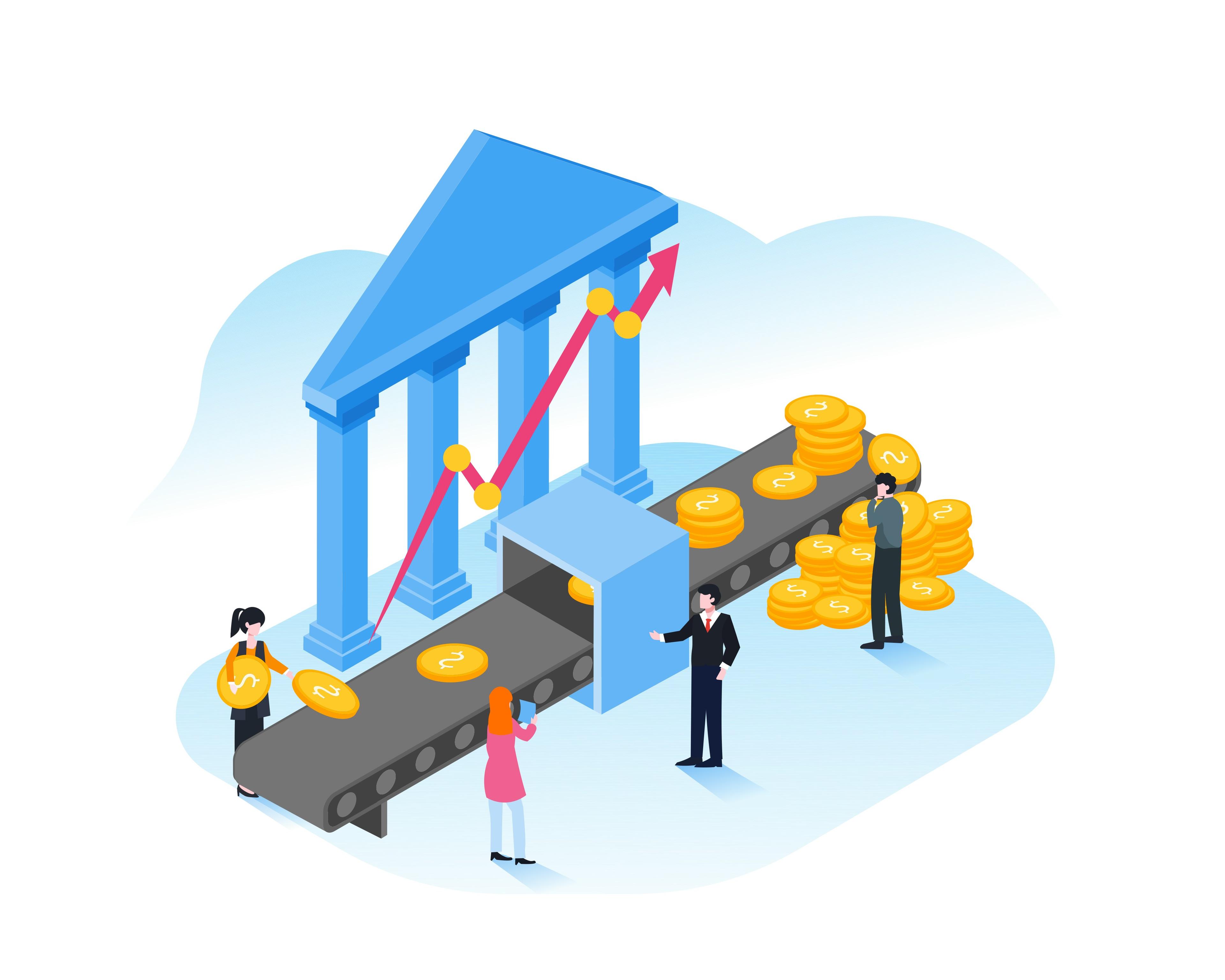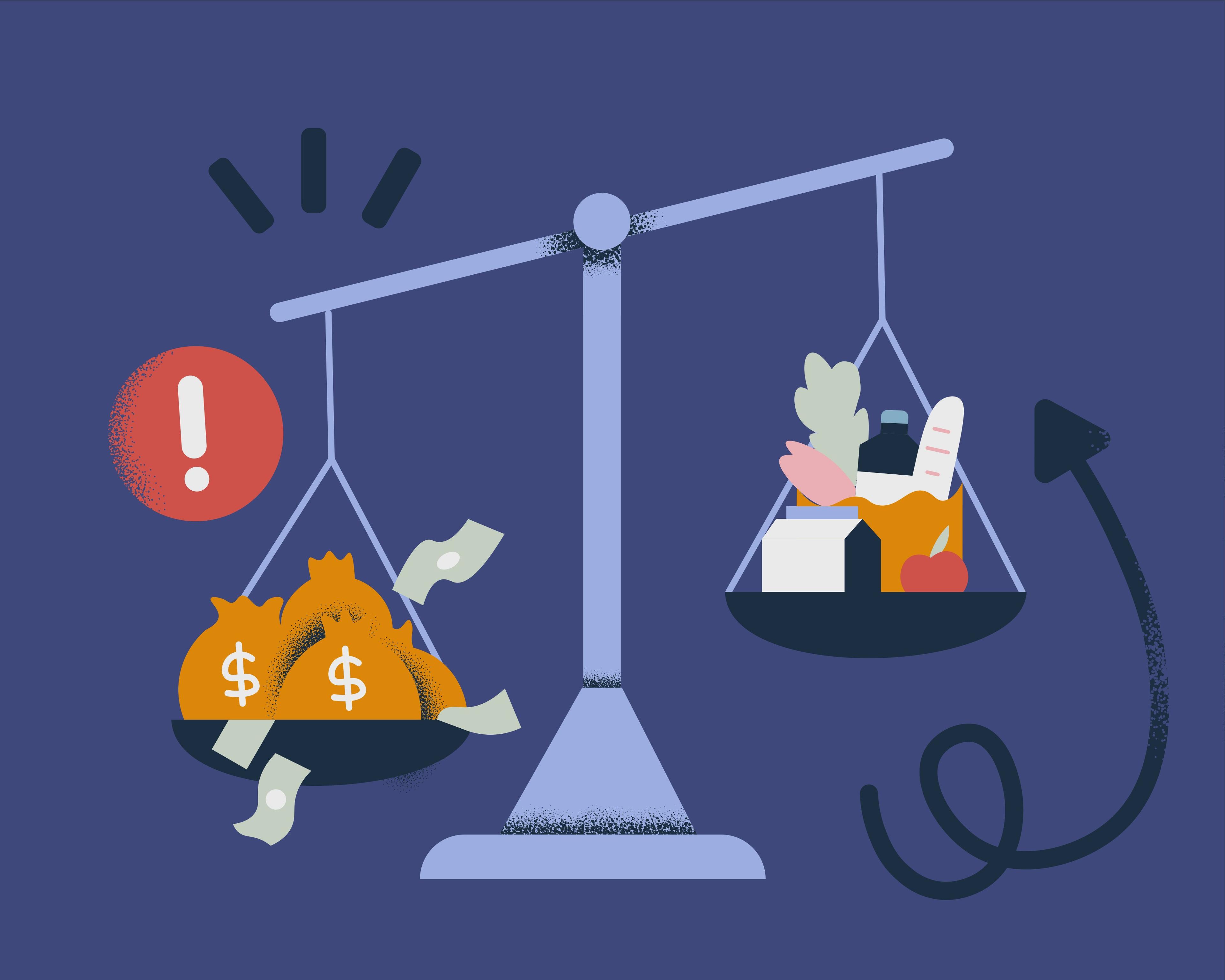
Central banks sit at the center of an economy’s pricing system, not because they control the price of every product on the shelf, but because they influence the price of money itself. When inflation rises, the public often expects a direct fix, as if policymakers can simply announce that groceries, rent, or insurance will stop getting more expensive. In reality, inflation is an economy-wide outcome created by millions of choices made by households, businesses, lenders, and investors. The central bank’s most powerful way to shape those choices is to adjust interest rates, which then ripple outward through borrowing costs, credit availability, the currency, and even psychology. That is why interest rates remain the cornerstone tool for managing inflation.
To understand how this works, it helps to treat interest rates as the baseline price of financing in the economy. A central bank does not set every loan rate directly, but its policy rate becomes a reference point for commercial banks, bond markets, and financial institutions. When the policy rate changes, the entire structure of rates across mortgages, business loans, credit cards, and government bonds tends to move with it. This matters because economic activity is heavily influenced by financing conditions. Households decide whether to buy a home, upgrade a car, or take a holiday partly based on monthly payments. Businesses decide whether to expand, build new factories, hire more staff, or stock more inventory partly based on the cost of capital. If inflation is being driven by demand running ahead of the economy’s ability to supply goods and services, making money more expensive can cool that demand.
The most intuitive transmission channel is consumer and business spending. When interest rates rise, the cost of borrowing increases. A higher mortgage rate reduces how much a household can afford, which cools housing demand and slows price growth in property-related sectors that often feed into broader inflation. A higher rate on car loans and personal loans encourages households to delay discretionary purchases, especially big-ticket items where financing is common. On the business side, higher borrowing costs make expansion plans less attractive. Projects that looked profitable when financing was cheap can become marginal when interest expense rises. Companies may choose to postpone new equipment purchases, slow hiring, or focus on efficiency rather than growth. When enough actors across the economy respond this way, overall demand eases and firms face more resistance when trying to raise prices.
Yet the story is not only about the cost of credit. It is also about the availability of credit. Central bank rate hikes often tighten financial conditions beyond the headline policy rate. Banks become more cautious, credit standards tighten, and risk premiums rise, particularly for borrowers with weaker balance sheets. This matters because inflationary episodes are frequently reinforced by easy credit. When credit is abundant, households can keep spending even as prices rise, and businesses can keep investing aggressively. Tighter credit reduces that fuel. It does not require every consumer to suddenly become frugal. Instead, the system gradually reduces how much leveraged demand can flow into the economy, which helps slow price pressures.
There is also a psychological dimension that may be even more important than the mechanical one. Inflation becomes dangerous when it shifts from a temporary price spike into a social expectation. Once people believe prices will continue rising, they behave in ways that make it true. Businesses raise prices preemptively because they expect higher costs and assume customers will accept increases as normal. Workers negotiate harder for wage increases because they expect their cost of living to rise. Landlords price in future inflation when setting rents. This expectation-driven loop can keep inflation elevated even after the original shock fades. Central banks use interest rates not only to cool spending, but also to signal seriousness. By raising rates decisively and communicating their intent, they aim to anchor expectations. In practical terms, they try to convince the public that inflation will be brought back to target, which reduces the incentive for businesses and households to behave as if inflation is permanent.
Another major channel is the exchange rate. Higher interest rates can make a country’s assets more attractive to global investors seeking higher returns. If capital flows in, the domestic currency can strengthen. A stronger currency lowers the local currency price of imports, which can directly reduce inflation for economies that import fuel, food, consumer goods, or industrial inputs. This exchange-rate effect can be especially influential in smaller, open economies where imported inflation plays a large role. In those cases, interest rate policy is doing double work: it is restraining domestic demand while also helping manage external price pressures through currency strength. The same dynamic can operate in reverse. If a central bank keeps rates too low relative to peers, the currency may weaken, making imports more expensive and worsening inflation. Interest rate decisions therefore interact with global financial conditions, not just domestic ones.
All of these channels share a critical feature: they work with a lag. Monetary policy is not a switch that instantly changes inflation tomorrow. Many loans are fixed-rate, meaning existing borrowers are insulated until they refinance. Businesses may have secured long-term financing or hedged interest rate exposure. Consumer habits adjust slowly because people commit to spending plans and lifestyle patterns over time. Housing markets in particular move at the speed of transactions, which can take months from listing to closing, and then longer for price trends to show up in inflation data. Labor markets can remain tight for a while even after growth slows, because firms are reluctant to lay off staff after struggling to hire. This lag forces central banks into a forward-looking posture. They are not reacting only to current inflation prints; they are trying to steer the economy toward where inflation will be several quarters from now.
This is why central bankers often talk about real interest rates rather than just nominal ones. The real interest rate is the policy rate adjusted for expected inflation. If inflation is high and the policy rate is only slightly lower, borrowing can still feel relatively cheap in real terms. In that environment, the economy may continue to run hot. As inflation falls, even if the central bank holds nominal rates steady, real rates rise, tightening conditions. This is one reason rates may stay elevated even after inflation begins to improve. Central banks want to ensure financial conditions remain restrictive enough for long enough to prevent inflation from reaccelerating or becoming entrenched.
Closely related is the idea of a neutral rate, the level of interest rates that neither stimulates nor restricts the economy. Neutral is not directly observable and it shifts with structural forces such as demographics, productivity, fiscal policy, and global savings patterns. But the concept helps explain policy intent. When a central bank believes inflation is being fueled by excess demand, it aims to move policy above neutral to slow growth. When inflation is low and the economy weak, it aims to move below neutral to encourage borrowing and spending. Inflation management therefore becomes a question of calibration. Policy must be restrictive enough to reduce inflation pressures, but not so restrictive that it creates unnecessary damage.
That damage is not theoretical. Higher interest rates can increase unemployment, reduce household wealth, and strain borrowers. Central banks are aware that their tool is blunt. It affects people unevenly. Those with variable-rate mortgages, high debt levels, or limited savings are hit harder. Small businesses that rely on short-term financing can face abrupt increases in costs. Developers and highly leveraged firms can see their models break quickly. Meanwhile, cash-rich households may earn more on savings and feel less immediate pain. Because of this unevenness, central banks must weigh inflation control against broader economic outcomes. In many mandates, this is described as balancing price stability with maximum employment or sustainable growth.
The toughest challenge arises when inflation is driven by supply shocks rather than demand. If energy prices surge because of geopolitical disruption, or if food prices rise due to drought, or if supply chains choke because of logistical constraints, inflation can rise even if domestic demand is not excessive. In these cases, raising interest rates cannot create more oil, produce more wheat, or unclog ports. The central bank cannot repair the supply side directly. What it can do is prevent a temporary shock from spreading. Even supply-driven inflation can become persistent if businesses and workers respond by raising prices and wages broadly across the economy. Interest rate hikes help limit that second-round effect by cooling demand and signaling that the central bank will not allow a lasting inflation regime shift. This is uncomfortable because it may require slowing the economy even when the initial problem was not caused by domestic overheating. But central bankers often see this as the lesser evil compared with allowing expectations to drift upward.
Financial stability adds another layer of complexity. Higher rates can expose weak spots created during years of cheap money. Asset prices may fall, refinancing becomes harder, and balance sheets that depended on low interest costs can crack. If the financial system shows stress, the central bank may face a conflict between the goal of lowering inflation and the need to prevent a crisis. In practice, modern central banks try to separate tools: interest rates to manage inflation, and liquidity facilities or supervisory measures to address stability issues. The separation is not perfect because financial stress can reduce spending and investment, which then affects inflation. Still, the principle matters. A central bank may keep policy tight to tame inflation while simultaneously providing targeted support to ensure the plumbing of the financial system keeps working.
From a business perspective, the interest rate channel is visible in how the cost of capital changes the entire risk environment. When risk-free returns rise, investors demand higher returns for taking risk. This reprices everything from corporate bonds to private equity to venture funding. Valuations compress, marginal projects become harder to justify, and firms that relied on cheap financing must either become profitable faster or scale back. In inflation-fighting cycles, this is not a side effect. It is part of the intended transmission. The economy becomes more selective about what gets funded and what gets built, reducing excess demand and speculative behavior that can contribute to inflation.
Different countries experience these effects differently because financial structures vary. Some economies have a larger share of fixed-rate mortgages, making household cash flows less sensitive to policy moves in the short run. Others rely heavily on variable-rate lending, where borrowers feel rate changes quickly. Some countries have deep bond markets that transmit policy changes rapidly; others depend more on bank lending. Smaller open economies may feel exchange rate effects more intensely than larger economies with broad domestic production. Credibility also differs. A central bank with a strong track record of meeting its inflation target can often influence expectations with smaller moves. A central bank that lacks credibility may need to hike more aggressively to convince the public it will do what is necessary.
Because of all these moving parts, central bank rate decisions are best understood as forward-looking signals rather than simple reactions to inflation headlines. If policymakers emphasize labor market tightness and wage growth, they are usually targeting persistent domestic inflation pressure. If they highlight currency weakness and imported inflation, they are leaning on the exchange rate channel. If they focus on expectations, they are trying to prevent inflation psychology from hardening. If they reference financial stability, they are acknowledging that tightening has reached a point where stresses may emerge. For businesses and investors, reading these signals is often more valuable than obsessing over the size of a single rate move.
Ultimately, central banks use interest rates to manage inflation because changing the price of money is the only lever that reaches across nearly every sector at once. It cools demand by raising borrowing costs, tightens credit by shifting risk appetite and lending standards, influences the currency by affecting capital flows, and shapes expectations by signaling commitment to price stability. None of this is instant, and none of it is painless. Interest rates are a blunt instrument, and the lags mean policy must be set with humility and foresight. But when inflation threatens to become persistent, the ability to reprice financing conditions across the entire economy is powerful precisely because it does not require micromanaging millions of individual prices. By adjusting interest rates, central banks steer the incentives and constraints that shape economic behavior, and over time, those shifts are what bring inflation back under control.
 WhatsApp
 Instagram
 Threads