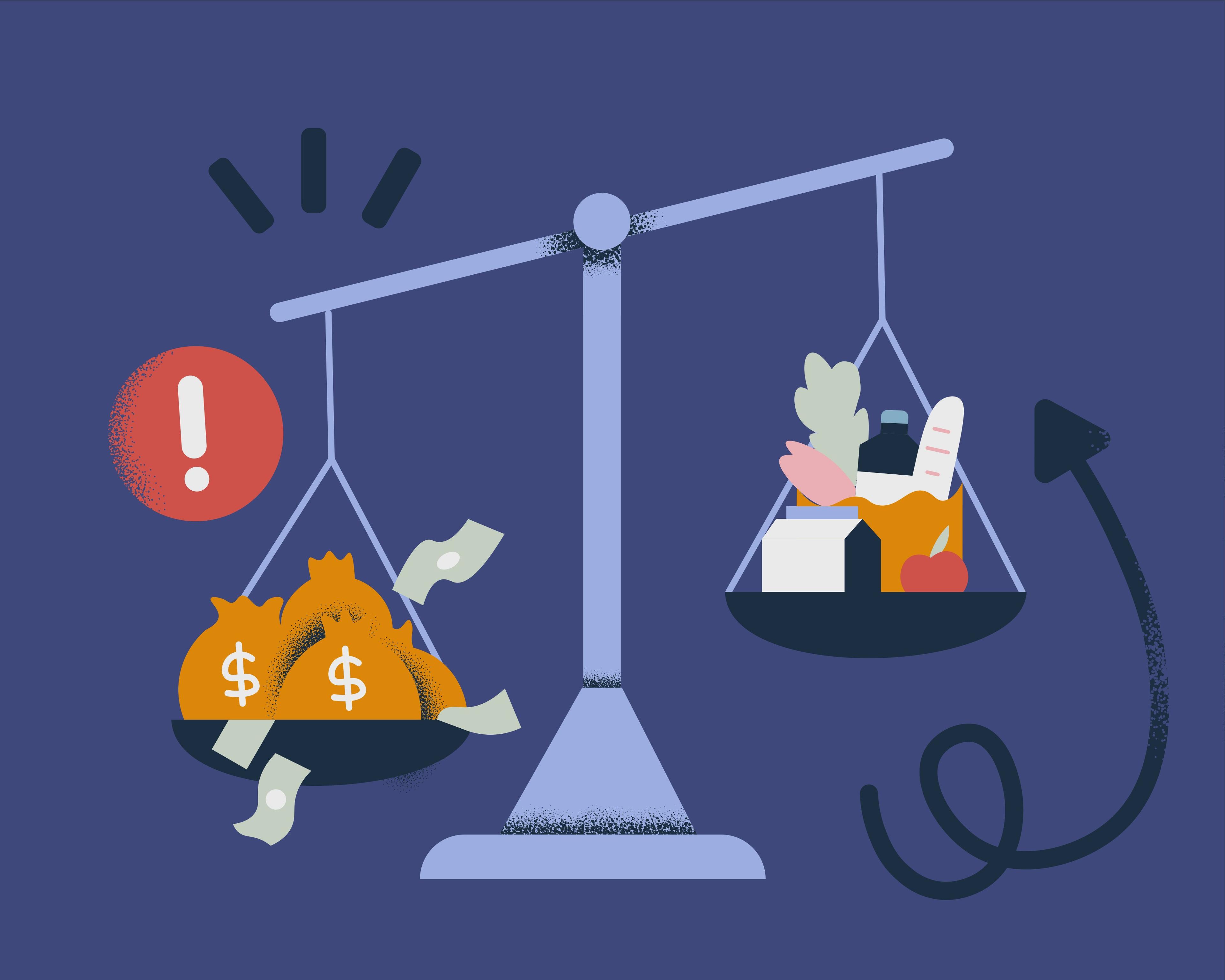
Paying off the national debt sounds straightforward at first. Most people picture the government setting aside money the way a family might save to clear a loan, then writing a final cheque that closes the account. In reality, national debt works less like a single loan with a fixed end date and more like a constantly managed portfolio of obligations. Governments borrow through bonds that mature at different times, are held by many different investors, and are priced by markets that react to economic conditions, policy choices, and credibility. Because of that, the way a government “pays off” its debt is usually not one dramatic act. It is an ongoing process of funding, refinancing, and gradually changing the size of the debt burden over time.
To understand how governments deal with debt, it helps to separate two ideas that often get mixed together. The first is paying down the actual dollar amount of debt, which means reducing the total face value of what the government owes. The second is reducing the debt burden, which means making the debt easier to carry relative to the size of the economy and the government’s revenue base. A country can lower its debt burden even if the total debt number keeps rising, as long as the economy and revenue grow faster. This distinction matters because in many modern economies, debt management is aimed less at reaching “zero debt” and more at keeping debt sustainable, affordable, and stable across business cycles.
The most direct way a government reduces the actual amount of debt is by running a budget surplus. When the government collects more revenue than it spends on public services and programs, it has cash left over that can be used to pay down principal. Economists often focus on the “primary balance,” which measures the gap between revenue and spending before counting interest payments. If a government runs a primary surplus, it is generating enough cash from its operations to cover part of its debt obligations without borrowing more. When this happens consistently, the government can redeem bonds as they mature and choose not to replace all of them with new borrowing. Over time, that shrinks the debt stock.
Surpluses, however, are difficult to maintain for long periods. Running a surplus usually requires some combination of higher taxes, reduced spending, or both. Each option comes with tradeoffs. Higher taxes can raise revenue, but if pushed too far, they can discourage investment, reduce work incentives, or shift activity into the informal economy. Spending cuts can improve the budget balance, but they often affect politically sensitive areas such as healthcare, pensions, education, subsidies, and public sector wages. Even when a government intends to run surpluses, it can be knocked off course by a recession, a crisis, or a sudden rise in interest rates that increases the cost of servicing existing debt.
Because sustained surpluses are rare, most governments rely heavily on refinancing, sometimes called rolling over debt. Government bonds do not all mature at once. They mature on a schedule. When a bond matures, the government must pay back the principal. The common practice is to issue a new bond to raise the money needed to repay the old one. This means the government is not necessarily reducing the debt. Instead, it is renewing it, replacing an old obligation with a new one. Refinancing is not automatically a sign of trouble. It is the standard method of sovereign finance, especially in countries with stable institutions and deep capital markets. The real question is whether the government can refinance at reasonable interest rates and on terms that do not strain future budgets.
Interest rates are a central part of this story because they determine how expensive the debt is to carry. Even if a government can refinance smoothly, higher interest rates mean more of the budget is consumed by interest payments. That reduces room for public spending and can force hard choices. If interest costs rise faster than revenue, the government may find itself borrowing more just to keep up with debt service, which can create a cycle where debt grows and markets demand even higher yields in response. To avoid this, debt managers try to shape the maturity profile of government borrowing. Borrowing longer term can lock in rates and reduce the risk of having to refinance large amounts during a period of high rates. Borrowing shorter term may be cheaper when rates are low, but it increases refinancing risk because more debt comes due sooner.
While surpluses and refinancing are the most visible tools, economic growth is often the most powerful factor in improving the debt picture. When the economy grows, government revenue tends to increase even without changes in tax rates, because more income, profits, and consumption expand the tax base. Growth also changes how heavy the debt feels relative to national output. Policymakers often track debt-to-GDP as a way to measure burden. If GDP grows faster than the debt, the ratio falls, which signals improved capacity to carry and service obligations. In that sense, a country can “work off” debt by expanding the size of the economy, much like a business can make a fixed loan more manageable by growing revenue and profit.
This is why many fiscal strategies emphasize supporting productivity, employment, and investment. Growth does not need to be spectacular to matter. Steady growth over years can gradually reduce the debt ratio and lower pressure on public finances. The relationship between growth and interest rates is especially important. If the economy’s nominal growth rate is higher than the average interest rate the government pays on its debt, then the debt ratio can stabilize or decline even with modest deficits. When that relationship flips, and interest costs exceed growth, debt becomes harder to manage and requires more aggressive fiscal action to prevent the burden from rising.
Inflation also plays a role, though it is often discussed carefully because it can be politically and economically sensitive. Inflation reduces the purchasing power of money over time, which means it can reduce the real value of fixed-rate debt. If a government issued long-term bonds at low interest rates and inflation rises, the real burden of repaying those bonds falls. In practical terms, the government repays creditors with money that buys less than it did when the bonds were issued. This can make existing debt easier to carry in real terms, especially when the debt is denominated in the country’s own currency and fixed rates dominate the portfolio.
But inflation is not a free solution. If investors expect a government to rely on inflation to reduce debt burdens, they will demand higher yields on new borrowing to compensate for inflation risk. That increases future interest costs and can outweigh the short-term relief inflation provides. Persistent inflation can also harm households through higher living costs and can disrupt business planning, wages, and investment decisions. For countries with strong institutions, moderate inflation that remains within a credible policy framework may not derail trust. For countries with weaker credibility, inflation can quickly feed into currency depreciation, capital outflows, and a sharp rise in financing costs. The effectiveness of inflation as a debt-relief mechanism depends heavily on the country’s monetary credibility and the expectations of investors and citizens.
Closely related is the role of the central bank, which is often misunderstood in public debate. Central banks can purchase government bonds in the market for monetary policy reasons, such as supporting liquidity and stabilizing financial conditions. When a central bank holds government bonds, the interest paid on those bonds can, depending on institutional arrangements, flow back to the government, which can make financing costs look lower from a consolidated public sector perspective. This sometimes leads to the impression that the government can simply print money to pay off debt. The reality is that while central bank purchases can influence market conditions and lower yields, they do not eliminate the underlying economic constraints. If bond buying is perceived as the central bank financing government spending, it can weaken confidence, raise inflation expectations, and undermine currency stability. In that environment, markets may demand higher yields, making debt harder to manage rather than easier.
Taxes remain the backbone of debt repayment in the long run because revenue is what ultimately supports the government’s ability to service and reduce debt. Governments can increase revenue by raising tax rates, broadening the tax base, improving compliance, and reducing evasion. Broadening the base can include reducing loopholes, aligning tax systems with modern economic activity, and strengthening administration. In many countries, compliance improvements and better enforcement can raise revenue without large headline rate increases, which can be more politically feasible. However, the balance is delicate. Tax policy affects incentives, competitiveness, and fairness. Poorly designed increases can slow economic activity, while overly aggressive enforcement can create social backlash if the system is seen as unequal.
On the spending side, governments can reduce deficits by controlling expenditure growth. This often involves reforms rather than simple cuts, because many public expenditures are structural. Pension obligations, healthcare costs, and social programs reflect demographic trends and policy commitments. In advanced economies with ageing populations, these pressures can grow faster than revenue unless reforms occur. Reforms can include adjusting eligibility ages, changing benefit formulas, targeting subsidies more carefully, and improving efficiency in healthcare delivery. In developing economies, large spending pressures can come from infrastructure needs, education, and safety nets. A government aiming to reduce debt must decide which spending is essential for growth and social stability and which spending can be adjusted without undermining long-term outcomes.
Another method sometimes used is asset sales and balance sheet management. Governments own assets such as land, buildings, infrastructure, and state-owned enterprises. Selling or privatizing assets can generate cash that can be used to pay down debt. This approach can reduce debt quickly on paper, but it comes with important questions. If the government sells an asset that produces stable income, it may be trading future revenue for immediate fiscal relief. If the sale is rushed during a weak market, it may not reflect fair value. If privatization improves efficiency and service quality, the economy can benefit, which can indirectly support fiscal sustainability. Asset sales can be part of a responsible plan, but they are not a substitute for structural fiscal balance.
In cases where debt becomes truly unmanageable, governments may resort to restructuring, which means changing the terms of debt agreements. This can involve extending maturities, reducing interest rates, or in more severe cases, reducing the principal owed. Restructuring is not a normal tool for stable economies because it damages credibility, can disrupt domestic financial institutions, and makes future borrowing more expensive. It is more common in situations where a country has borrowed heavily in foreign currency, faces a sudden stop in capital flows, or suffers a shock that collapses revenue and reserves. Restructuring is a last resort because it shifts costs onto creditors and often comes with significant economic and social consequences.
Whether a country can manage debt smoothly depends on institutional strength, currency regime, investor base, and market confidence. Countries that borrow primarily in their own currency and have deep domestic markets often have more flexibility, because they are less exposed to exchange rate swings and rely less on external funding conditions. Countries that depend on foreign currency borrowing or external investors can face sharper constraints, because currency depreciation can raise the cost of debt service and refinancing conditions can tighten suddenly. In those cases, paying off debt is not only about fiscal policy. It is also about maintaining reserves, stabilizing the currency, and preserving access to international capital markets.
What this means in practice is that most governments “pay off” the national debt through a combination of tools rather than a single strategy. They aim to keep budgets on a credible path by managing revenue and spending. They refinance debt in ways that reduce risk, such as spreading maturities and locking in rates when conditions are favorable. They pursue growth policies that expand the tax base and reduce the debt burden relative to GDP. They maintain monetary credibility to prevent inflation and currency instability from raising financing costs. In some cases, they use asset management to improve the balance sheet, and in rare cases, they restructure when the debt is no longer sustainable.
The key point is that the national debt is not just a bill waiting to be paid. It is a financial system that requires constant management. Governments borrow because it allows them to fund long-term investments, respond to crises, and smooth economic cycles without forcing sudden tax changes. Debt becomes dangerous when it grows faster than the economy and revenue, when interest costs crowd out essential spending, or when confidence erodes and refinancing becomes expensive. Paying off the national debt, therefore, is best understood not as reaching a dramatic endpoint, but as maintaining a stable path where debt remains affordable, refinancing remains credible, and the economy remains strong enough to support the state’s obligations without sacrificing its future.
 WhatsApp
 Instagram
 Threads