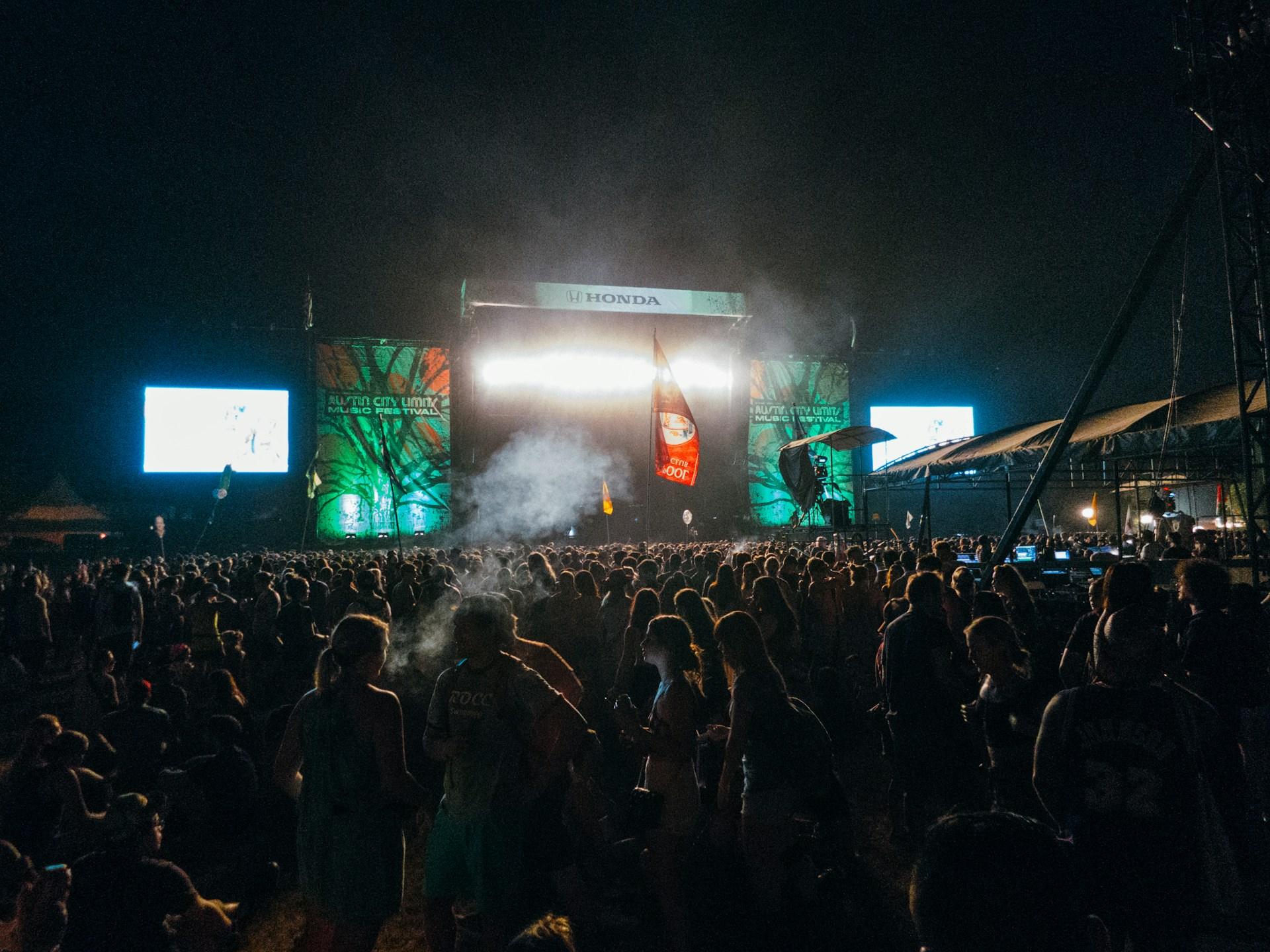
A concert is often described as an economic windfall, as if a single night of music automatically turns into a surge of prosperity for the host city. In reality, the economic impact of a concert is shaped by a set of conditions that decide whether spending is genuinely new, how widely benefits spread, and how much value quietly flows out of the local economy. What looks impressive in headlines can be far less meaningful in net terms, and what looks modest on paper can be highly valuable if it strengthens local businesses, fills a low-demand period, and keeps costs under control.
The first influence is the scale of the event, because size determines the type of economic activity a concert can produce. A small venue show may create a noticeable uplift for nearby restaurants and ride services, yet it rarely changes the broader rhythm of the city. A stadium concert behaves differently. It can pull visitors from far beyond the region, reshape hotel demand, and put pressure on transport networks. With larger scale comes larger potential gains, but also larger exposure to congestion, operational complexity, and public costs. Scale sets the boundaries for what is possible, but it does not guarantee that the value will land locally.
From there, the most decisive factor is the mix of attendees, especially the share who are visitors rather than residents. When locals attend a concert, a portion of their spending often replaces something they would have done anyway, such as dining out or watching a film. The city still sees activity, but it may be more of a rearrangement than a true increase. Visitors are different because their spending is more likely to be additional. They pay for accommodation, transportation, meals, and often other leisure activities that they would not have purchased in that city without the event. This is why two concerts with identical attendance numbers can have very different economic outcomes. The attendance figure matters less than where people came from and what they did around the concert.
Even when the audience includes many visitors, the next question is whether the local economy can retain the spending. This is where leakage becomes important. A concert can produce high gross spending but limited local benefit if much of the value is captured by external promoters, touring teams, international vendors, and suppliers based outside the area. The effect is especially strong when staging, lighting, sound, logistics, marketing, and event technology are imported. In contrast, cities with deep local event ecosystems tend to keep more value circulating within local firms and households. In that sense, a concert is not only a test of demand. It is also a test of how developed the local supply chain is.
Capacity constraints, particularly for hotels and transport, also shape how much incremental value is created. A city that can accommodate visitor inflows smoothly is more likely to capture spillover spending across different districts and businesses. When hotel capacity is tight, prices rise sharply, which can lift revenue for operators but also discourage longer stays and push some visitors into nearby towns. Transport constraints can produce similar patterns, increasing friction and reducing the number of additional activities people choose to do around the event. If the city is already near full occupancy due to a holiday weekend, a trade show, or another major event, a concert may crowd out other visitors rather than add to the total. This displacement reduces net gains, even if business owners still experience a busy period.
Timing works alongside capacity and often determines whether the concert fills a gap or intensifies an already crowded calendar. Off-peak scheduling can turn a quiet weekend into a profitable one for hotels, eateries, and attractions, and it can improve overall utilization of city infrastructure that would otherwise sit underused. Peak scheduling can create impressive turnover while increasing strain, raising public costs, and producing negative experiences that harm long-term perceptions of the city as a host destination. The economic impact is therefore not only about the event itself, but about the moment it is placed into the broader economic calendar.
Measurement choices can also exaggerate or understate reality. Some studies report direct spending, others add indirect and induced effects through multipliers. Those multipliers can be meaningful in places with strong local procurement and stable local employment, but they become unreliable when the supply chain is imported or when income does not remain in the local area. The credibility of an impact estimate depends on whether the assumptions match the structure of the local economy. If the model treats every city as if it has the same vendor base and the same capacity to keep profits local, the figures may look scientific while telling an incomplete story.
Labor conditions influence outcomes in a similarly practical way. Concerts create work, but much of it is short-term and concentrated in hospitality, security, cleaning, and venue operations. If the local labor market has spare capacity, those shifts can represent additional income for workers and a helpful boost for households. If the labor market is already tight, the concert can pull staff away from other businesses, pushing overtime costs higher and weakening service quality elsewhere. A city can therefore experience a busy weekend without creating much net new employment or income, especially if the event relies on contracted labor that does not translate into durable local job creation.
Public costs and externalities sit on the other side of the balance sheet and can sharply change the net picture. Policing, crowd management, medical readiness, sanitation, road closures, and traffic control often involve significant municipal resources. If these costs are not recovered through event fees, taxes, or negotiated agreements, a portion of the economic activity effectively transfers costs to the public. The event may still be worthwhile for non-economic reasons, such as cultural vitality or city branding, but the financial net impact can narrow considerably. The best outcomes tend to occur when responsibilities and costs are clearly allocated, and when the event is planned in a way that reduces avoidable strain.
Venue ownership and revenue structure also shape who benefits. Ticketing revenue, concessions, parking, premium seating, and sponsorship rights are often controlled by the promoter and venue operator. That can mean a large share of the value stays inside the event ecosystem rather than spreading across surrounding neighborhoods. If the venue is locally owned, publicly owned, or linked to local investors, more of the surplus may remain in the region. If it is externally owned, profits may travel elsewhere. This can be one of the least visible but most influential factors, because it affects distribution even when overall spending is high.
Pricing strategy adds another layer. Higher ticket prices can raise the event’s revenue while reducing the amount attendees spend outside the venue, particularly if people cut back on meals, shopping, or extra activities to afford the ticket. Lower ticket prices may broaden the audience and increase participation, but if the crowd becomes more local, the visitor-driven spending premium may decline. Premium-heavy pricing can increase margin but concentrate benefits among the venue and promoter. There is no single best approach. The economic impact depends on whether the city aims to maximize promoter returns, visitor inflows, or broader spillover to local businesses.
Accessibility and travel friction can expand or shrink the catchment area. Cities that function as transport hubs can draw attendees from a wider region more easily, which can increase visitor numbers and overnight stays. Places with limited flight capacity, weaker rail links, or expensive last-mile transport often see a more local crowd, limiting incremental tourism-related spending. In practice, a concert’s economic footprint is influenced as much by connectivity as by star power.
The readiness of the local business ecosystem determines how well the city captures spillover. A strong late-night economy, flexible operating hours, and clustered dining and entertainment zones make it easier for attendees to spend beyond the venue. If businesses close early, if public transport options thin out late at night, or if the event district is isolated from other commercial areas, spending concentrates inside the venue bubble. That concentration can still be profitable for the venue, but it reduces the breadth of local benefits.
Regulations and permitting can either unlock or restrict economic participation. Streamlined processes for temporary vendors, extended trading hours, and coordinated street management can help local entrepreneurs and small businesses capture demand. Rigid rules can narrow participation and push value to the most established operators. At the same time, weak enforcement can create safety risks that produce long-term reputational costs. The most effective approaches tend to balance safety and order with pragmatic policies that enable lawful commerce and smooth crowd movement.
Finally, many stakeholders point to brand and media effects, arguing that concerts improve the city’s reputation and attract future visitors. This can be true, but it is difficult to treat as guaranteed. A short burst of attention only becomes lasting value if it connects to repeat visitation, a stronger events calendar, better infrastructure, or an improved visitor experience that makes the city a reliable destination. Without those foundations, brand effects can be fleeting and difficult to convert into sustained gains.
Taken together, these factors suggest that a concert’s economic impact is not a single number but a relationship between demand, capacity, and retention. Gross spending is easy to see, but net benefit depends on how much spending is truly additional, how much is displaced from other activities, how much leaks out through external ownership and imported supply chains, and how much is offset by public costs. The distribution of gains matters too, because a city benefits differently when value spreads through local workers and small businesses than when it concentrates in a few private operators.
A concert can be a meaningful economic catalyst, but it becomes one only when the surrounding conditions support incremental visitor spending, local value capture, manageable costs, and a business environment that can serve the crowd beyond the venue gates. In that sense, the biggest driver of economic impact is not the artist alone. It is the city’s ability to host the event as part of a well-designed system, one that turns a busy night into a wider, more durable local benefit.
 WhatsApp
 Instagram
 Threads