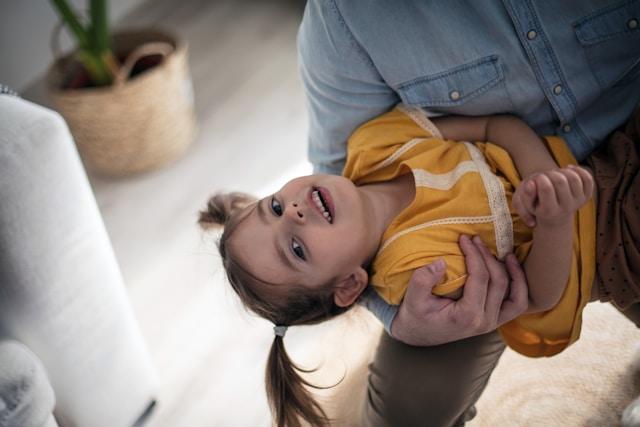
Soft parenting shapes a child’s emotional development in a way that is both gentle and structurally sound. It is often described as “kind” parenting, but the kindness is not the kind that removes every discomfort or treats every feeling like a crisis that must be fixed immediately. Instead, it is the kind that stays present when a child is overwhelmed, offers language when a child cannot find words, and holds boundaries when a child is testing limits. Over time, those repeated moments become a child’s emotional blueprint. The child learns what feelings mean, how long they last, how safe it is to express them, and what to do when the feeling is bigger than their ability to manage it.
A child’s emotional life is built inside ordinary scenes. A spilled drink at breakfast. A lost pencil right before school. A sibling who touches something “special.” A phone call that pulls a parent away at the worst moment. These moments are small, but they are frequent, and frequency is what shapes development. Soft parenting works because it treats emotions as normal weather rather than moral failures. When children grow up in an environment where feelings are allowed to pass through without humiliation, they begin to experience their internal world as something understandable, not shameful or dangerous. That matters because children do not just learn how to feel. They learn how to interpret themselves. They decide, often without words, whether being upset makes them unlovable or whether being upset is simply part of being human.
The first way soft parenting influences emotional development is through co-regulation, which is the calm a child borrows before they can create it alone. Young children do not have fully developed self-regulation skills. Their brains and nervous systems are still learning how to come back from stress. When a child is melting down, the child is not making a strategic choice to be difficult. The child’s body is flooded. In those moments, a steady adult becomes the bridge back to safety. A parent who can keep their voice low, their posture relaxed, and their words simple is offering the child a model of stability. The message is not only “calm down.” The message is “you can be upset and still be safe with me.”
That experience becomes the foundation for later resilience. Over time, repeated co-regulation teaches the child that intense emotions have a beginning, a middle, and an end. The feeling rises, peaks, and falls, and the child survives it. A child who has been guided back to calm enough times starts to recognize the signs of being overwhelmed earlier. They learn that they can pause, breathe, or ask for help. They begin to internalize the rhythm of recovery. This is why soft parenting is not about preventing tantrums at all costs. Tantrums, tears, and frustration are often part of normal development. Soft parenting is about what happens during and after those moments. It is about teaching a child that big feelings are not the end of the world, and that relationships do not disappear when emotions get messy.
Soft parenting also shapes emotional development by giving feelings language, which turns confusion into clarity. Children can feel intensely long before they can explain what is happening inside them. Without language, emotions can feel like a storm with no name. When parents help children name feelings, they give them a tool that becomes more powerful with age. “You’re frustrated because the blocks won’t stack.” “You’re disappointed because you wanted more time.” “You got scared when the noise was loud.” Naming does not magically erase the feeling, but it gives the feeling edges. Once a feeling has a name, it becomes easier to hold, easier to talk about, and easier to manage.
This emotional vocabulary also helps children develop something deeper than just words. It helps them develop emotional awareness. They learn to notice what is happening inside their body, whether it is a tight chest, hot cheeks, wiggly limbs, or a fast heartbeat. They learn that these sensations often come with specific feelings, and that feelings are linked to events, expectations, and needs. A child who can say “I’m nervous” is often less likely to express that nervousness through aggression or withdrawal. A child who can say “I feel left out” can reach toward connection instead of acting out to reclaim attention. Soft parenting supports this growth because it treats emotion as information rather than misbehavior.
Still, emotional development is not just about validating feelings. It is also about boundaries, because boundaries teach children how to live with feelings without being controlled by them. One of the most important lessons a child can learn is that emotions are real and worthy of attention, but they do not automatically decide outcomes. A child can be angry that screen time is over and still turn it off. A child can be sad that it is bedtime and still go to bed. A child can feel desperate for a toy and still hear “no.” Soft parenting offers empathy without surrendering structure. The adult recognizes the feeling while holding the limit.
This is where many people misunderstand the word “soft.” Soft parenting is not permissive parenting. Permissiveness often says yes to stop the crying, avoids conflict at all costs, and teaches children that discomfort must be removed immediately. Soft parenting, when practiced well, teaches children that discomfort is part of life and that it can be survived. It makes space for emotion without making emotion the ruler of the household. That difference is crucial for long-term emotional development because children need to learn frustration tolerance. They need to learn that they can be disappointed and still be okay, and that not getting what they want does not mean they are powerless or unloved.
Boundaries in soft parenting tend to be communicated in a way that feels like a steady railing rather than a cold wall. A railing keeps you safe while still allowing movement. A wall can feel like rejection. The words matter, but the tone matters even more. “I won’t let you hit” is a clear boundary that protects everyone. “What is wrong with you?” is a statement that turns behavior into identity. Soft parenting tries to correct behavior without attacking the child’s core sense of self. That approach supports emotional development by reducing shame, which is one of the strongest fuels for either aggression or withdrawal.
Another major way soft parenting shapes emotional development is through repair. Children learn not only from how adults respond in calm moments, but also from how adults respond after conflict. Every family has rough moments. Parents lose patience. Children scream. Mornings become chaotic. What matters for emotional development is not whether conflict happens, but whether connection returns. Repair is the moment when a parent acknowledges what happened and reconnects with the child. It might be an apology for yelling. It might be a calm conversation later. It might be a hug and a simple, “That was hard. We can try again.”
Repair teaches children that relationships can stretch without breaking. It teaches them that mistakes do not equal abandonment. This lesson becomes a deep emotional safety net. Children who do not experience repair may grow up believing that conflict ends love, which can lead to people-pleasing, anxiety, or avoidance. Children who experience repair regularly learn that relationships can hold imperfection. They learn that accountability is possible without shame, and that closeness can return after rupture. That is a powerful emotional skill, because life is full of disagreements and misunderstandings. A child who learns repair at home is more likely to practice it with friends, teachers, and later partners, because it feels normal rather than terrifying.
Soft parenting also supports emotional development through routines and predictability. Emotional regulation is harder when the body is hungry, tired, overstimulated, or rushed. Many emotional blowups are not only about “attitude.” They are about capacity. A child who has had a long day at school and is suddenly asked to do homework in a loud room may not have the same emotional resources as a child who has had time to decompress. Soft parenting often pays attention to these patterns. It does not treat every tantrum as a character flaw. It looks for the pressure points in daily life and tries to reduce unnecessary stress where possible.
This can look simple. A snack after school before discussing responsibilities. A short quiet moment after arriving home. A predictable bedtime rhythm that signals the body to slow down. A clear transition warning before turning off a screen. These are not tricks. They are ways of supporting a child’s nervous system so that learning is possible. When a child is constantly overwhelmed, their brain is in survival mode. When a child feels steadier, they can practice skills like patience, compromise, and emotional expression. Over time, this environment helps children develop a more stable baseline. They are not always calm, but they recover more quickly, and they trust that support exists.
Soft parenting also shapes emotional development by offering age-appropriate autonomy, which builds confidence that is not brittle. Children need to feel some sense of agency. They need to practice making choices and experiencing the results. Soft parenting often offers small choices within safe boundaries. This might mean choosing between two outfits, deciding which book to read, or picking the order of tasks. These choices seem minor, but they teach a child something important: “I can influence my world.” At the same time, because the choices are contained, the child is not burdened with adult responsibility. They learn autonomy without being forced to lead the household.
This balance helps children develop emotional confidence. They become more willing to try, more willing to speak up, and more able to handle the fact that they cannot control everything. A child who has practiced small disappointments in a safe environment is often better prepared for bigger disappointments later. They learn that not getting their way is uncomfortable, but not catastrophic. That is resilience in everyday form.
Perhaps one of the most lasting impacts of soft parenting is the inner voice it helps build. Children absorb the tone adults use with them, especially during emotional moments. If a child repeatedly hears that they are “too much,” they may grow into an adult who hides needs and edits feelings to avoid rejection. If a child repeatedly hears that they are “dramatic,” they may learn to distrust their own emotional signals. Soft parenting aims to leave children with an internal voice that is kinder and more grounded. It sounds like, “This is hard, but I can handle it.” It sounds like, “I can calm down and try again.” It sounds like, “I can be loved and still be corrected.”
This does not mean children raised with soft parenting will never struggle. Emotional development is not a straight line. Children will still have angry days, anxious seasons, and moments of insecurity. The difference is that soft parenting tends to give them tools and relational safety that make those struggles more navigable. They are more likely to recognize what they feel, more likely to reach for support, and less likely to see their emotions as proof that something is wrong with them.
It is also important to be honest about what soft parenting is not. It is not endless negotiation. It is not removing every consequence. It is not treating a child like a fragile object. Done poorly, anything can become distorted. A parent can mistake gentleness for avoidance and become inconsistent. A parent can over-explain and lose authority. A parent can validate feelings but fail to teach boundaries. But done well, soft parenting is steady. It is warm without being weak. It is empathic without being indulgent. It respects a child’s emotions while guiding behavior firmly.
In practical terms, soft parenting shapes emotional development by normalizing the full range of feelings while teaching a child what to do with them. It teaches that anger can be expressed without hurting someone. It teaches that sadness can be held without being rushed away. It teaches that fear can be talked about rather than hidden. It teaches that joy does not need to be earned and that love is not withdrawn when a child is at their worst. It also teaches that other people have feelings too, and that empathy is not just a word adults use, but a lived experience.
Over time, the goal is not a perfectly regulated child who never cries or never raises their voice. That kind of child might simply be a child who has learned to suppress. The goal is a child who can feel deeply and still find their way back. A child who can tolerate discomfort without panicking. A child who can handle conflict without believing the relationship is over. A child who can apologize without collapsing into shame. A child who can ask for help without feeling weak. Those are the emotional outcomes that matter in real life, where stress exists, people misunderstand each other, and things rarely go exactly as planned.
Soft parenting, at its core, is a long-term investment in emotional stability. It is built through a thousand small responses: the parent who stays calm enough to be a guide, the parent who names what is happening without labeling the child, the parent who holds a boundary without humiliating, the parent who repairs after a hard moment, and the parent who creates routines that support a child’s capacity to cope. In that kind of home, emotions are not treated as enemies to defeat. They are treated as experiences to understand. And as children grow, that understanding becomes the foundation for resilience, empathy, and a healthier relationship with themselves.
 WhatsApp
 Instagram
 Threads