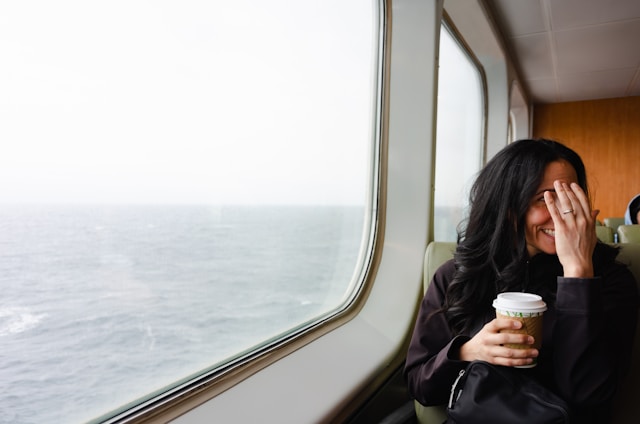
Solo travel can be one of the most practical ways for women to build confidence because it turns confidence from an abstract idea into a set of lived experiences. Rather than waiting to feel brave before acting, solo travel asks you to act first, then rewards you with evidence that you can handle unfamiliar situations. Each day on the road becomes a sequence of real decisions, small risks, and quick adjustments. Over time, those repetitions teach your mind and body that you do not need perfect certainty to move forward. You only need enough clarity to take the next step, and the willingness to adapt if that step is not ideal.
One of the clearest confidence shifts comes from decision ownership. In everyday life, decisions are often shared, softened, or deferred, especially when another person is present to split responsibility. Traveling alone removes that safety net. You choose where to stay, how to get around, what to do with your time, and how to respond when plans change. When you make these choices and see them work out, you build self-trust. Even when a decision is imperfect, you learn a more important lesson: you can recover. That ability to adjust without spiraling is a core ingredient of confidence because it reduces the fear of being wrong. It teaches you that being responsible is not the same as being trapped.
Solo travel also strengthens a woman’s ability to trust her own perception. Many women are conditioned to second-guess discomfort, to prioritize politeness, or to explain away uneasy feelings. In unfamiliar places, that habit can be costly. Traveling alone encourages a more accurate relationship with intuition. You start paying closer attention to your surroundings, to the tone of interactions, and to the subtle signals that tell you whether a situation is safe or simply draining. The confidence that comes from this is not performative. It is quiet and durable because it is rooted in noticing and acting on what you notice. With repetition, you stop treating your internal signals as something to override, and instead learn to use them as useful information.
Another reason solo travel builds confidence is that it turns boundaries into a daily practice rather than a theory. Saying no, limiting what you share, and choosing distance when needed become part of ordinary functioning. Instead of relying on someone else to buffer uncomfortable encounters, you learn to communicate clearly and move on without over-explaining. This kind of confidence does not always look bold. Often it looks calm, simple, and firm. Over time, the body learns that it can hold a boundary without collapse, guilt, or panic. That lesson transfers back home, improving how you navigate work, family expectations, friendships, and dating.
Practical competence also grows quickly on solo trips because uncertainty is built into the experience. Different transport systems, unfamiliar languages, changing plans, and unexpected delays force you to become a capable problem-solver. At first this can feel exhausting, but as you adapt you begin to realize that you are not fragile in new environments. You can learn fast, ask for help when necessary, and still steer your day toward what you want. That competence becomes confidence because it proves you can function without constant support. You stop needing the world to be predictable before you take action.
Confidence, however, is not only mental. It also depends on nervous system regulation, and solo travel teaches that skill in a tangible way. When you are alone, you cannot outsource emotional stability to other people. You have to notice when you are hungry, overstimulated, tired, or anxious, and you have to respond before small issues become overwhelming. Over time, you build routines that steady you, such as planning rest, choosing safer options at night, keeping your phone charged, and pacing your day realistically. This is not about fear. It is about becoming reliable to yourself. The confidence that emerges is the confidence of knowing you can bring yourself back to calm even when circumstances are imperfect.
Solo travel can also reshape how women relate to loneliness. Being alone on the road sometimes feels peaceful, and sometimes it feels sharp. Yet this exposure can be constructive because it teaches that loneliness is a temporary feeling, not a verdict about your life or your worth. You learn the difference between isolation and chosen solitude, and you learn how to comfort yourself without immediately chasing distraction or settling for low-quality company. That self-sufficiency becomes a form of confidence because it reduces dependence on external validation. When you return home, you often carry a stronger ability to choose relationships for their quality rather than for their ability to fill silence.
Ultimately, solo travel builds confidence because it produces receipts. You come home with real proof that you can navigate unfamiliar environments, make decisions, set boundaries, manage discomfort, and recover from mistakes. Those memories become a reference point that strengthens you in daily life. The confidence is not just a travel mood that fades when the trip ends. It can become part of how you approach work stress, difficult conversations, and new opportunities, because you have already practiced functioning under uncertainty.
To make that confidence last, the key is to translate the travel experience into ordinary routines. The most valuable changes are behavioral, not aesthetic. If solo travel made you more decisive, practice making small decisions quickly at home. If it helped you set boundaries, practice saying no without long explanations. If it taught you calm under uncertainty, intentionally do small activities alone, such as taking yourself to a cafe, visiting a new neighborhood, or joining a class where you know no one. In this way, solo travel becomes more than a one-time achievement. It becomes a training ground that shows you, repeatedly, that you can lead your own life.
 WhatsApp
 Instagram
 Threads