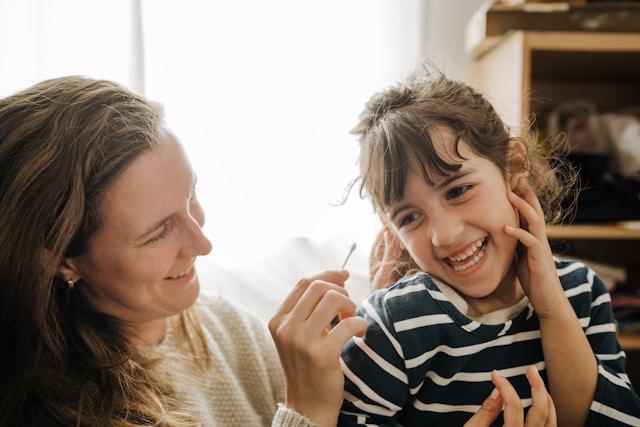
Permissive parenting often begins with a good intention. Many parents want their children to feel safe, accepted, and loved without conditions. They want home to be a place where emotions can be expressed openly and mistakes are met with patience rather than punishment. In a world that can feel harsh and demanding, permissive parenting can look like a humane alternative, one that replaces strictness with empathy and replaces control with trust. The question, though, is not whether permissive parenting feels kind. The question is whether permissive parenting is effective, especially when effectiveness means more than short-term peace.
To answer that honestly, it helps to define what permissive parenting actually is. In most discussions, permissive parenting is characterized by high warmth and low structure. The parent is responsive, affectionate, and emotionally available, but hesitant to set firm limits or enforce consequences. Rules may exist, but they are flexible. Expectations may be expressed, but they are not consistently followed through. The parent may avoid saying no, or say no and then reverse it when a conflict escalates. The child’s preferences become the center of decision-making, not because the parent does not care, but because the parent often prioritizes harmony and closeness over discipline and routine.
At first glance, this can look like an ideal arrangement. Children raised with permissive parents may feel deeply heard. They may perceive their parents as friends and confidants. The household may seem calm on the surface, with fewer daily battles over bedtime, homework, screens, or chores. If your definition of effective is “my child likes me and we rarely fight,” permissive parenting can appear to work. But parenting does not take place only in the living room, and childhood does not stay frozen at the age where a child’s needs are simple and immediate. Over time, effectiveness becomes about whether a child is developing the skills required to function in school, friendships, and adult life. That is where permissive parenting can become complicated.
A useful way to think about parenting is to treat it as a system. Systems produce outcomes. The outcomes you get are not only shaped by love and intention, but also by patterns, boundaries, and feedback. When a child grows up in an environment with warmth but little structure, the child receives one clear message: feelings are welcome, but limits are negotiable. That message can shape behavior in predictable ways. It can encourage openness, but it can also weaken self-control. It can create closeness, but it can also create dependency on external comfort. It can reduce conflict in the short term, but it can increase friction when the child enters environments where rules are not optional.
Research on parenting styles often points to a repeated theme: children benefit from both emotional support and consistent expectations. Warmth helps children feel secure and connected. Structure helps children learn self-regulation, persistence, and respect for boundaries. When warmth exists without structure, children may struggle with the part of life that requires them to tolerate frustration, delay gratification, and accept “no” without falling apart. These are not minor skills. They are the foundation of classroom behavior, friendships, teamwork, and later employment. A child who cannot handle limits at home will still meet limits in the world. The difference is that the world is less patient and less personal than a parent.
This is why permissive parenting can sometimes lead to a specific pattern of difficulties. A child may become more impulsive, not because the child is “bad,” but because the child has had fewer chances to practice inhibition and patience. A child may melt down when disappointed because they have not learned to sit with discomfort. A child may resist routines because routines require surrendering immediate wants to long-term needs. A child may struggle academically, not because they lack intelligence, but because academic success depends heavily on follow-through, organization, and the ability to push through boredom. These are trained abilities. They are built through repetition, guidance, and predictable boundaries.
Socially, permissive parenting can also create challenges. Peer relationships require mutual limits. Children must share, take turns, respect personal space, and respond to rules that are not tailored to them. When a child is used to adult accommodation at home, they may struggle when peers push back. They may come across as entitled or demanding, even if their intentions are not selfish. The underlying issue is that the child has not had enough practice adapting to rules they did not create. They have not learned that other people’s boundaries matter as much as their own emotions. Still, it would be unfair to dismiss permissive parenting as simply ineffective. There are situations where it can appear to work well, at least for a time. Some children are naturally cautious, reflective, and internally motivated. They may not need much external structure to stay regulated. In those cases, permissive parenting can look effective because the child supplies their own discipline. The parent may take credit for a calm household, but the calm may be driven largely by the child’s temperament.
In other families, there is hidden structure even if rules are not discussed openly. The household may have stable routines for meals, sleep, school preparation, and family time. The parents may model self-control, respect, and emotional regulation. Screen time may be limited naturally because the family is busy and engaged, not because limits are enforced through conflict. In those environments, the child still receives a consistent framework. The parenting feels permissive, but the system is not truly boundary-free. The structure is simply built into the rhythm of daily life.
Permissive parenting can also seem more successful in communities with strong external supports. A school with clear rules, attentive teachers, and consistent expectations can provide the boundaries that home lacks. Sports teams, music programs, and organized clubs often teach discipline through practice schedules, coaching feedback, and performance standards. Extended family members may also serve as stabilizing figures who enforce norms. When the environment supplies structure, permissive parenting at home may feel like a relationship advantage because the parent becomes the safe place to decompress. Again, the pattern is clear: permissiveness appears most effective when structure exists elsewhere.
The difficulties arise when neither the child nor the environment can compensate for the absence of boundaries at home. Some children are intense, energetic, and easily overstimulated. Some are highly social and crave novelty. Some are anxious and avoid discomfort. Some are bright and verbally skilled, able to argue a parent into exhaustion. These children do not benefit from a loose framework. They benefit from predictable limits delivered with warmth. Without that, the home can become a constant negotiation, and the child can become increasingly dysregulated because they do not know where the edges are.
One of the most common problems in permissive households is the confusion between emotions and decisions. A child can be upset about a rule without the rule being wrong. A child can cry about bedtime without bedtime being harmful. A child can feel angry about turning off a device without the device needing to stay on. When a parent treats the child’s distress as a signal to remove the limit, the child learns that escalating emotion changes outcomes. Over time, the child does not just express emotion. The child relies on emotion as a strategy because the system rewards it. This does not mean the child is manipulative in a calculated way. It means the child is adapting to the pattern that works.
Another sign that permissive parenting is failing is boundary fatigue. The parent sets a limit, the child protests, the parent repeats the limit, and the conflict escalates until the parent gives in simply to end the stress. The child learns to ignore the first no. The first no becomes meaningless. The real no arrives only after prolonged escalation, and even then it may not hold. This dynamic is exhausting for both parent and child. It also undermines the very closeness permissive parents often want, because children do not feel secure when they must constantly test the system. A child may look confident, but inside they may feel uneasy because the adult is not consistently steering.
If permissive parenting is not reliably effective as a long-term approach, what is the alternative? The goal is not to replace permissiveness with harshness. It is to combine the best of permissive parenting, which is warmth and emotional attunement, with the missing element, which is consistent structure. A healthier framework is freedom within constraints. Children do not need unlimited choice to feel respected. They need meaningful choice within boundaries that keep life stable. Constraints are not the same as control. Constraints are the rails that allow movement without chaos. In a well-designed parenting system, the child experiences the parent as kind and responsive, but also reliable. The child learns that feelings are welcome and boundaries still hold. This combination is powerful because it teaches emotional literacy without sacrificing self-regulation.
One practical way to build this is to establish a small set of non-negotiables. Every family has to decide what truly matters. When a parent tries to enforce everything, they often end up enforcing nothing because the effort becomes unsustainable. A small set of priorities can be held consistently. Common non-negotiables include sleep, safety, and respectful behavior. These are not abstract values but daily behaviors. Sleep requires a predictable bedtime routine. Safety requires rules about dangerous situations. Respect requires clear limits on hitting, insulting, yelling, or breaking things in anger. When these are enforced calmly and consistently, a child learns that the home is stable even when emotions are not.
Inside those non-negotiables, the child can have autonomy. Autonomy can look like choosing clothing, choosing the order of tasks, choosing between two acceptable options for dinner, or deciding whether to do homework before or after a snack. These choices give the child a sense of agency without placing adult responsibilities on them. A child should not have to decide the family’s bedtime policy or the rules around screen use. That is adult territory. But a child can decide which pajamas to wear and which bedtime story to read. The child gets a voice while the parent keeps the structure.
Consequences are another area where permissive parenting can be improved without becoming punitive. Consequences do not have to be harsh to be effective. They need to be predictable and connected to behavior. A child who throws a toy may lose access to that toy for a period of time. A child who refuses to turn off a device may lose the device the next day. A child who stalls in the morning may have less time for play because the family still needs to leave on time. When consequences follow behavior calmly and consistently, the child learns cause and effect. When consequences are inconsistent or delivered through long lectures and emotional conflict, the child learns to focus on the drama rather than the lesson.
For parents who have been permissive for a long time, change is possible, but it needs to be approached realistically. A family system will not transform overnight. If you suddenly attempt to tighten every boundary at once, you may create more conflict than you can manage, which increases the chance you will revert to old habits. A better approach is to choose one recurring friction point and improve it steadily. Bedtime is often a good starting point because sleep affects emotional regulation for both child and parent. Screen time is another common starting point because it is a daily source of negotiation and overstimulation.
When introducing a new boundary, timing matters. The conversation should happen when everyone is calm, not in the heat of an argument. The rule should be stated simply. The explanation should be brief. The consequence should be clear. Then the parent must follow through without turning enforcement into a debate. The more the parent argues, the more the child believes the boundary is negotiable. Consistency is what makes boundaries feel safe. A child may protest, but protest is not proof that a boundary is wrong. Protest is proof that the system is changing.
Parents should also expect a period of increased resistance when boundaries become firmer. If a child has learned that escalation works, they will often escalate more at first when the old strategy stops working. This is a normal part of behavior change. It does not mean you are damaging your child. It means you are retraining the pattern. When the parent stays calm and consistent, the child eventually adapts, and the household often becomes more peaceful than it was under permissive routines. The peace is not based on avoidance. It is based on stability. Underneath many permissive choices is a hidden fear. Some parents fear becoming like the strict adults who raised them. Some fear damaging the relationship. Some fear being disliked. Some fear that boundaries mean rejection. But boundaries are not rejection. Boundaries are clarity. They communicate that the parent is paying attention, that the parent is willing to lead, and that the child does not have to manage the household to feel secure.
So, is permissive parenting effective? It can be effective at fostering closeness and open communication, especially when the child is naturally self-regulated or the environment supplies strong external structure. But as a primary long-term strategy, permissive parenting often fails to develop the skills children need to handle frustration, limits, and responsibility. The most effective approach for many families is not permissive or strict, but warm, clear, and consistent. Children need love they can feel and boundaries they can trust. When those two are paired, the child gains both connection and competence, which is what real effectiveness looks like.
 WhatsApp
 Instagram
 Threads