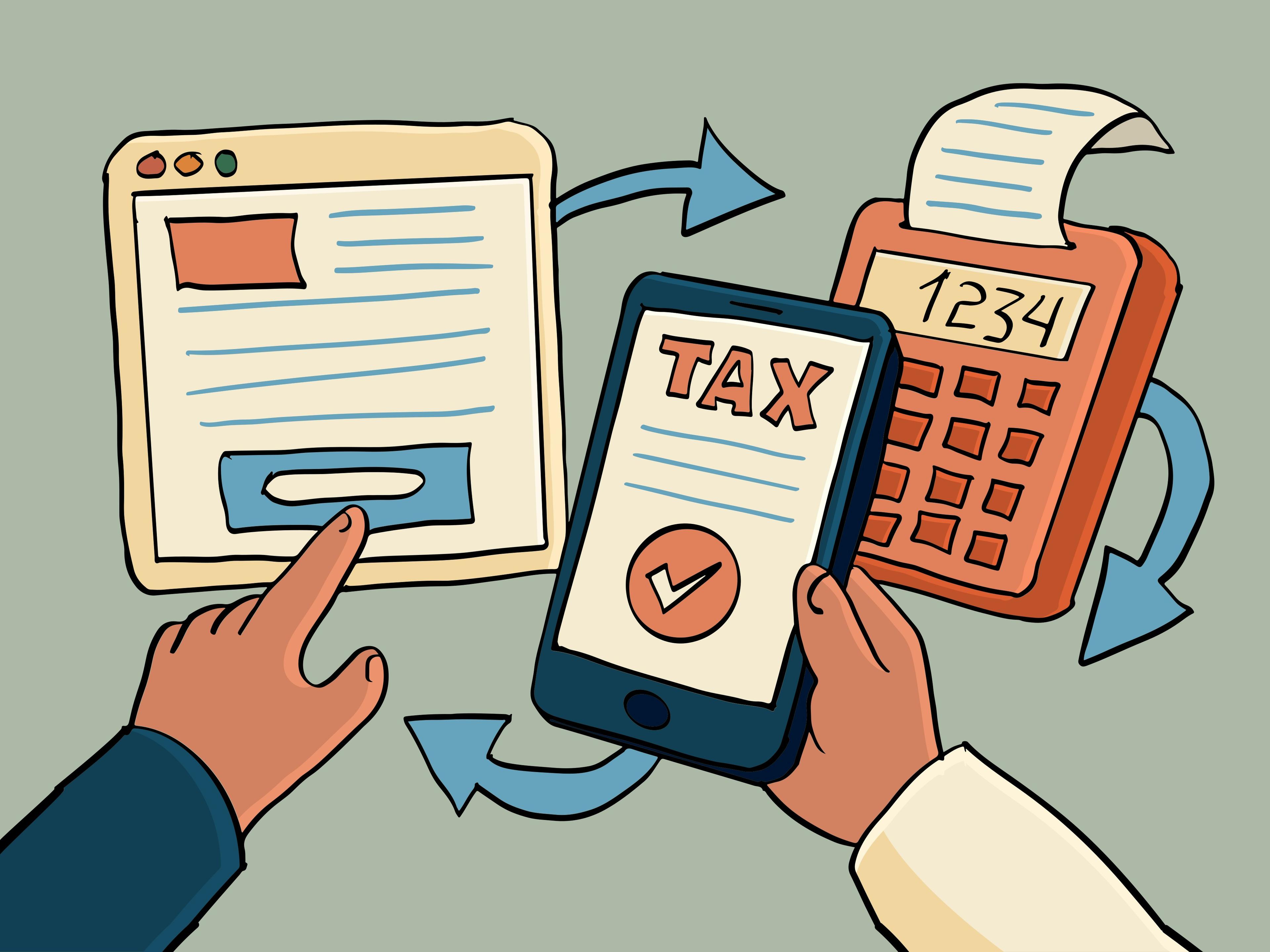
Tax evasion often gets imagined as something uncovered by chance, as if a tax officer picks a name out of a hat and decides to investigate. In reality, most tax authorities detect tax evasion through a steady, systematic process built around comparison. They compare what a taxpayer reports with what other parts of the financial system already reveal, then they follow up when the story does not align. That is why detection is less about drama and more about data, documentation, and consistency.
The starting point for modern enforcement is third party reporting. In many countries, employers report wages, banks report interest, brokers report investment proceeds, and platforms or payment processors may report payments received. When an individual files a tax return, that return becomes another account of what happened financially in the year. Tax authorities run automated checks to see whether these accounts match. If they do, most returns never receive further attention. If they do not, the mismatch itself becomes the reason a case begins. This is important because it changes how to think about risk. Many issues are not found because someone looks suspicious. They are found because the numbers do not reconcile.
This matching system works particularly well for straightforward income streams. Salary income is difficult to hide when employers submit payroll information. Bank interest is difficult to omit when financial institutions report it. Investment income is difficult to ignore when broker statements are part of the reporting ecosystem. Even where reporting rules vary, the overall direction is the same. Tax systems increasingly rely on information that does not come only from the taxpayer, and that information creates a baseline reality against which the tax return is tested. In practical terms, underreporting is often detected the way an accounting error is detected, by noticing that two records that should align do not.
Beyond direct matching, authorities also use risk profiling to decide where to focus limited audit resources. Not every mismatch leads to a full audit, and not every unusual return is noncompliant. Tax agencies therefore rely on analytics to identify patterns that are statistically unusual or inconsistent with known benchmarks. Certain ratios can raise questions, such as expenses that appear high relative to declared income, repeated losses in a business that otherwise seems active, or deductions that are far above typical levels for a peer group. This does not mean that large deductions are wrong. It means that extreme patterns tend to be reviewed more often because they are more likely to contain either mistakes or deliberate misstatements.
Risk profiling has become more powerful as tax authorities gain access to broader datasets and better tools. Some agencies openly acknowledge using advanced analytics, including artificial intelligence, to segment taxpayers and industries by risk and to prioritize enforcement work. The reason is simple. A large tax authority oversees millions of taxpayers. It cannot audit everyone. It must choose, and the most efficient choice is to start where the data suggests the probability of noncompliance is higher. This creates a world where detection is often the outcome of being explainably consistent rather than simply being unnoticed.
International reporting has also transformed the landscape, especially for offshore evasion. For a long time, hiding income abroad depended on secrecy and fragmented jurisdictional boundaries. That has weakened significantly with the rise of automatic exchange of information regimes and cross border reporting frameworks. Many jurisdictions now share financial account information, which allows home tax authorities to learn about certain overseas accounts, interest, dividends, or balances. This does not mean every offshore detail is instantly transparent, and the rules differ across countries. It does mean that the old assumption, that foreign accounts remain invisible by default, is far less reliable than it once was. Non disclosure is increasingly detected the same way domestic underreporting is detected, through discrepancies between what is reported and what is received from other sources.
The growth of digital work and platform based income has expanded what counts as detectable. In earlier eras, informal cash work could be difficult to trace unless a person was audited deeply. Today, a significant amount of casual selling, freelance work, and gig income flows through platforms that keep records and may be subject to reporting obligations. Payment intermediaries create transaction histories. E commerce marketplaces track sales volumes. Booking platforms track rental activity. Even when a platform is not required to send reports in a given country, its data can still become relevant if an audit begins and the taxpayer is asked to substantiate income and expenses. Digital footprints do not automatically prove evasion, but they can support verification when the tax return appears inconsistent with real world activity.
Publicly available information can also play a supporting role. Tax authorities in some jurisdictions allow compliance teams to use open source research as part of risk assessment, especially once a case has already been flagged for other reasons. If a taxpayer claims minimal income but publicly advertises a thriving business, if a person claims a property is not rented but lists it publicly, or if a business reports extremely low sales while marketing high volume services, those contradictions can strengthen the justification for closer review. This type of research is usually secondary rather than primary. It tends to be used to confirm or challenge a narrative after a discrepancy has surfaced through other channels.
Tip offs and whistleblowers remain another important pathway to detection. Data systems are excellent at catching mismatches where third party reporting exists. They are less effective at detecting arrangements that are deliberately structured to avoid clear trails, especially in cash heavy sectors or in situations involving insider manipulation of records. Employees, competitors, ex partners, and industry participants sometimes have information that cannot be inferred from datasets alone. That is why many tax authorities maintain channels for confidential reporting and, in some countries, formal whistleblower reward programs. These tips do not always lead to action, and they still require verification. Yet they can initiate investigations where automated checks might not.
Audits and investigations often follow predictable triggers that overlap with these detection methods. A mismatch notice might start with a single line item, such as income reported by a third party that the taxpayer did not include. A broader audit might begin because deductions appear high relative to income, because the taxpayer reports repeated losses, because a business has unusual cash flows, or because returns fluctuate sharply without an explanation. In some cases, audits are tied to industry campaigns where authorities focus on sectors known for common underreporting risks, such as cash intensive retail, construction subcontracting, hospitality, or certain professional services. None of this guarantees wrongdoing. It reflects how authorities allocate attention in a system built to manage risk.
Financial institutions and the broader compliance environment indirectly reinforce detection too. Banks and regulated financial entities monitor transactions for various compliance reasons. While anti money laundering controls are not the same as tax enforcement, unusual patterns can prompt questions, account reviews, or reporting that may eventually intersect with tax issues. More importantly, financial institutions often hold records that can corroborate or contradict what a taxpayer claims. If a person reports low income but deposits suggest higher receipts, if business expenses claimed do not align with bank outflows, or if lifestyle spending appears inconsistent with declared earnings, these inconsistencies become harder to explain when documentation is requested.
From a personal finance perspective, the most useful way to understand tax evasion detection is to think in terms of coherence. A tax return should be consistent with the surrounding evidence trail. If income flows through employers, banks, brokers, or platforms, the return should match those streams. If deductions are claimed, the taxpayer should be able to show how they connect to real expenses and why they meet the tax rules. If the return tells a story that only makes sense in isolation, without records that support it, that return is more fragile when comparisons occur.
This is where many people experience anxiety even when they have no intention of evading tax. They may have multiple income sources, inconsistent record keeping, or confusion about what must be declared. They may misunderstand the tax treatment of foreign income, capital gains, or side income. They may claim legitimate deductions but lack the receipts or the logic chain that makes those deductions clear. When a notice arrives, it can feel personal, but the underlying cause is often administrative. The system flagged a mismatch or an unusual pattern, and the next step is for the taxpayer to support the numbers.
That support often comes down to documentation and a clean narrative. Documentation includes payslips, bank statements, invoices, platform summaries, receipts, contracts, and logs that explain business use versus personal use. A clean narrative means the taxpayer can explain, in plain language, how income was earned, why certain expenses were necessary, and why the return reflects the reality of that year. Unusual circumstances can be fine if they are explainable. A major one time commission, a large charitable donation, a new business startup year, or a medical expense claim can create numbers that do not look typical. The difference between a stressful process and a manageable one is often whether the taxpayer can support and explain those numbers quickly.
If a taxpayer realizes they made a mistake, the timing of the response matters. Many systems distinguish between errors corrected promptly and patterns that appear deliberate or repeated. Ignoring notices, delaying responses, or repeatedly omitting similar income streams can elevate risk and increase scrutiny. Addressing errors early, keeping records, and seeking qualified professional advice when situations involve multiple jurisdictions or complex income can reduce the likelihood that a manageable issue escalates into something more serious.
Ultimately, tax authorities detect tax evasion because the modern financial system generates many overlapping records. Income is rarely a single private fact known only to the taxpayer. It is often a set of facts reflected in payroll systems, bank ledgers, brokerage reports, platform dashboards, and international exchanges. Tax authorities use automated matching to compare those records, analytics to prioritize what deserves attention, and investigative tools to verify what is true when discrepancies persist. For ordinary taxpayers, the best protection is not secrecy or luck. It is consistency, traceability, and the ability to back up the story your tax return tells.
 WhatsApp
 Instagram
 Threads