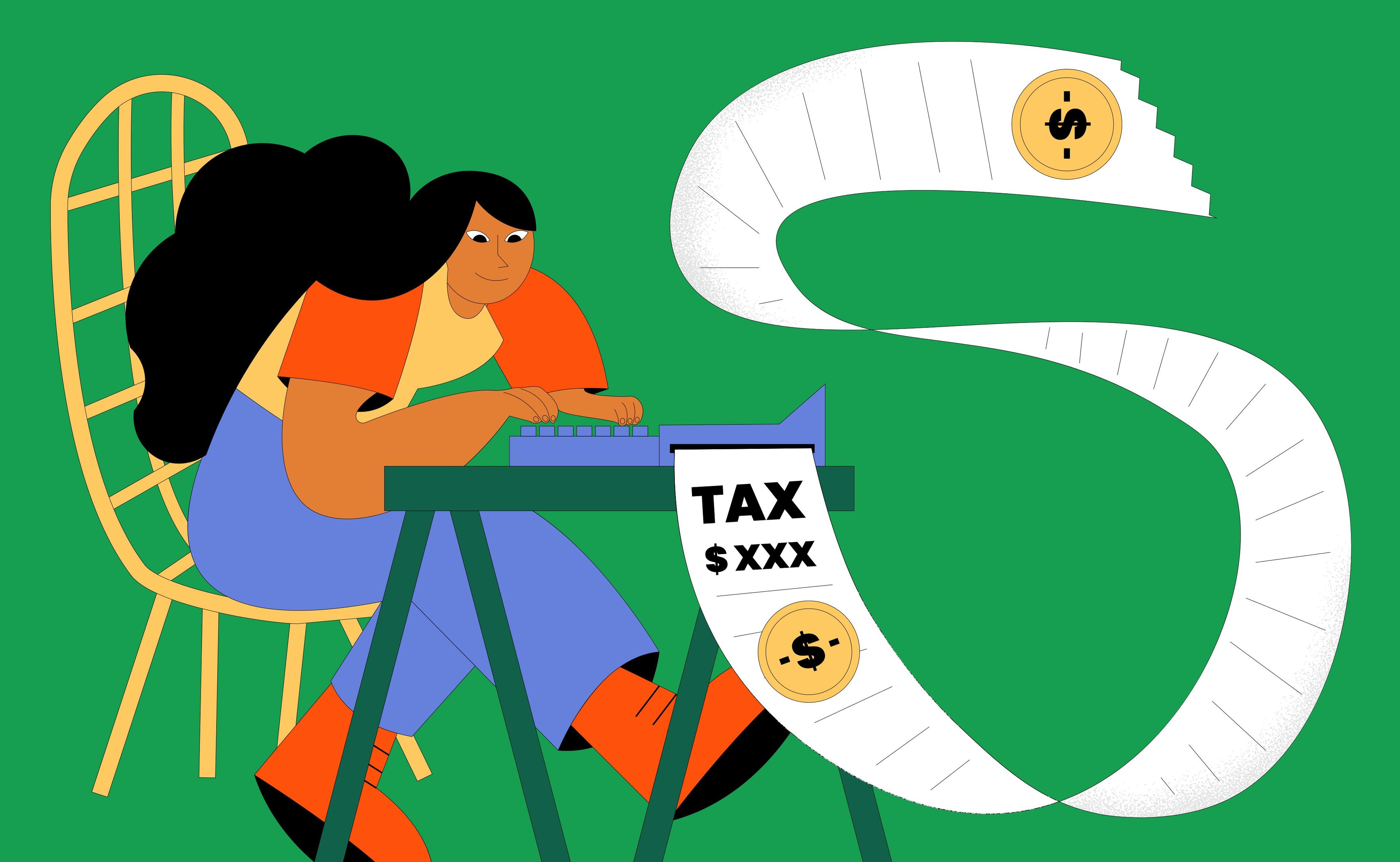
Most long-term investors spend their mental energy on the exciting parts of the journey. They think about which stocks or funds to buy, which apps to use, and how often to contribute. They debate whether to invest in global indexes, local markets, or the latest thematic trend. Hidden in the background is something far less exciting but just as powerful over time. Taxes. You can build a solid portfolio, commit to a long time horizon, and still end up with far less money in the future if you ignore how your returns are taxed year after year. The problem is that tax rules rarely show up in social media investing content. They differ from country to country and are filled with jargon, so most people mentally file them under the category of boring adult tasks. Yet the underlying pattern is very simple. Whenever your investments earn interest, pay dividends, or you sell for a profit, some form of tax is likely to appear. That tax is a slice of your return that never gets a chance to compound for you.
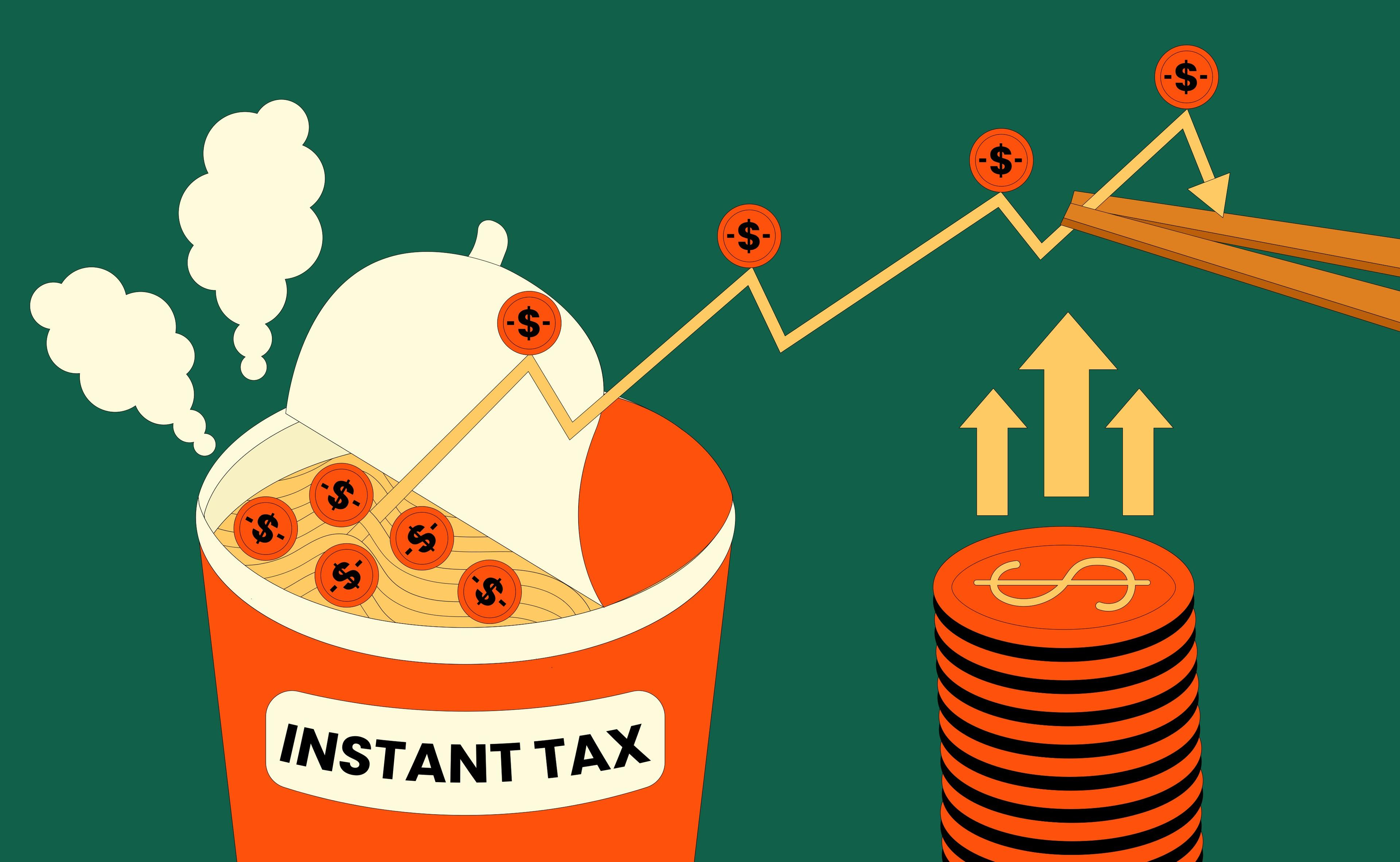
To understand why tax efficiency matters so much, it helps to think in terms of compounding. Compounding is the process where your returns start generating their own returns. When you reinvest gains instead of pulling them out, the growth curve begins to curve upward over time. Most charts that show the power of compounding assume that all returns are reinvested without any leakage. In reality, tax acts like a small leak in your compounding engine. Each time you receive a taxable dividend or realize a gain, the government takes a cut. The more often this happens and the higher the tax rate, the more you slow the growth of your future wealth.
Imagine two investors with identical portfolios and identical pre tax returns. One holds investments inside structures that allow gains to grow with minimal tax impact until much later, or at a lower rate. The other triggers taxable events constantly through frequent trading and income heavy holdings. Each year, the second investor has less left over after tax to reinvest. That difference may feel small in a single year, but over twenty or thirty years it widens into a noticeable gap between their final portfolio values. The principle is straightforward. Every dollar you avoid paying in unnecessary tax today can stay in the market and keep working for you for many years.
Taxes show up in several parts of an investor’s life, and understanding where they appear is the first step toward being more tax efficient. The most common sources are dividends, interest, and realized capital gains. If you hold dividend paying stocks, bond funds, or high yield products, the cash you receive might be taxed as income. In many systems, income tax rates can be higher than tax rates on long term capital gains. That means a portfolio designed to generate high income every year might lead to larger tax bills than a portfolio that focuses more on long term price growth, especially if you do not need the income yet.
Realized capital gains are another important source. A gain typically becomes taxable when you sell an investment for more than you paid. Investors who constantly buy and sell create many such taxable events. In some countries, holding an investment for a longer period results in a lower tax rate on those gains. Even where the rate does not change, less frequent selling means fewer tax bills and more time for gains to accumulate before any tax is due.
Fund level activity is a third layer that many people overlook. Some mutual funds and actively managed products trade frequently inside the fund. When the fund realizes gains and passes them to you as distributions, you can face a tax bill even if you never sold anything yourself. On top of that, if you invest across borders, you may face withholding taxes on dividends from foreign companies, as well as extra rules on how those investments are reported at home. All of this contributes to what can be called tax drag. The constant friction that slows your compounding.
Tax efficient investing is about reducing this drag without breaking any rules or turning your life into a giant tax project. It is not about avoiding tax completely. It is about designing your investing setup so that compounding can happen with less interruption. At a high level, this involves three areas. The type of accounts you use, the type of assets you hold, and your behavior as an investor.
Account choice is powerful because some accounts are built specifically to encourage long term saving. Many countries offer retirement plans, education savings schemes, or long term investment wrappers that give you some kind of tax advantage. Sometimes contributions are deductible. Sometimes growth is tax deferred. Sometimes gains and withdrawals are tax free if you follow certain rules. Using these accounts for long term goals allows more of your returns to compound before tax shows up. The trade off is that the money is usually locked up for specific purposes, such as retirement or education. Tax efficiency here comes from matching the right goal to the right account, not from trying to force every dollar into a restricted structure.
Asset choice matters because some investments generate more taxable activity than others. High turnover active funds, products that rely on constant trading, and very high yield instruments can all produce a steady stream of taxable events. Index funds and many exchange traded funds tend to have lower turnover and fewer capital gain distributions. Growth oriented holdings often produce more of their return through price appreciation rather than constant income. If your main objective is long term growth and you do not need regular cash flow today, favoring these kinds of assets can reduce the annual tax burden on your portfolio.
Behavior is the piece that most investors underestimate and yet fully control. Treating your portfolio like a social feed, constantly refreshing and reacting to every market move, usually leads to frequent trading. This behavior increases trading costs and also increases the number of taxable gains you realize. Investors who adopt a calmer, rules based approach tend to do better over time. They decide on a sensible asset allocation, rebalance only when necessary, and avoid emotional reactions to short term market noise. These habits not only protect your mental health, they also support tax efficiency by avoiding unnecessary taxable events.
A simple thought experiment makes the importance of this clearer. Picture two friends who each start with the same amount invested. Both earn the same pre tax return. The first friend invests through a structure that allows gains to accumulate with minimal annual tax, perhaps with taxes due only when money is finally withdrawn years later, or at a lower rate. The second friend invests through a setup where every dividend, every bit of interest, and every realized gain is taxed each year at a higher rate. On paper, it looks like they are walking the same path. In reality, the second friend is carrying a heavier backpack. Every year, they have to pay some of their return out in tax and then try to grow what is left. Over multiple decades, the gap between their portfolios is not just the sum of all those tax bills. It is the difference between two compounding curves that diverged early and never reconverged.
The good news is that you do not need to become a tax specialist to enjoy the benefits of tax efficiency. You simply need to pay attention to a handful of decisions that have long term impact. When your country offers tax advantaged accounts, take the time to understand how they work and whether they fit your goals. Use them to house investments that would otherwise generate more tax, such as high yielding or high turnover holdings, while keeping naturally tax efficient assets in regular accounts. Focus your core portfolio on broadly diversified, low turnover funds rather than constant trading. Review whether you genuinely need high income products now, or whether growth oriented holdings make more sense for your time horizon.
It also helps to step back from the habit of thinking only in terms of the current tax year. Many people worry about whether they can save a few hundred dollars on a tax bill this year, but never ask how their choices will affect their wealth ten or twenty years down the road. Tax efficiency is a long game. The real payoff is not the satisfaction of seeing a slightly lower tax bill this filing season, but the quiet compounding of all the money you did not unnecessarily hand over in earlier years.
Common traps can derail this long game. One is the urge to react to every market move with trading. Another is the temptation to chase high yields without understanding the tax treatment of those payouts. A third is using tax advantaged accounts in a way that does not match the nature of the assets held within them. These traps feel harmless when your portfolio is small, which is why many people tell themselves they will sort out the details later. The problem is that habits built with a small portfolio often stay in place when the numbers get bigger. Correcting messy structures after many years is harder than setting them up thoughtfully from the start.
For Gen Z and millennial investors, tax efficiency is particularly important because of the long time horizon ahead. If you are in your twenties or thirties, time is your greatest compounding ally. Every smart habit you adopt now has decades to pay off. Contributing regularly, staying invested through volatility, and resisting panic already put you ahead of many people who try to time the market. Layering tax efficiency on top of these habits is like giving yourself an extra hidden boost. It will not feel dramatic in the first year or two, but it will shape the size of your portfolio in later decades.
When you think about tax efficiency for long-term investing, picture your future self rather than your current tax form. The future version of you will not remember every individual trade or every sudden market swing you were tempted to react to. That version of you will simply see the results of years of compounding. A portfolio that grew with minimal friction will look and feel very different from one that had to constantly pay out small slices in tax. By paying attention to account choice, asset choice, and your own behavior today, you give more of your money the chance to stay in the market, keep working, and eventually support the life you want to build.
 WhatsApp
 Instagram
 Threads