


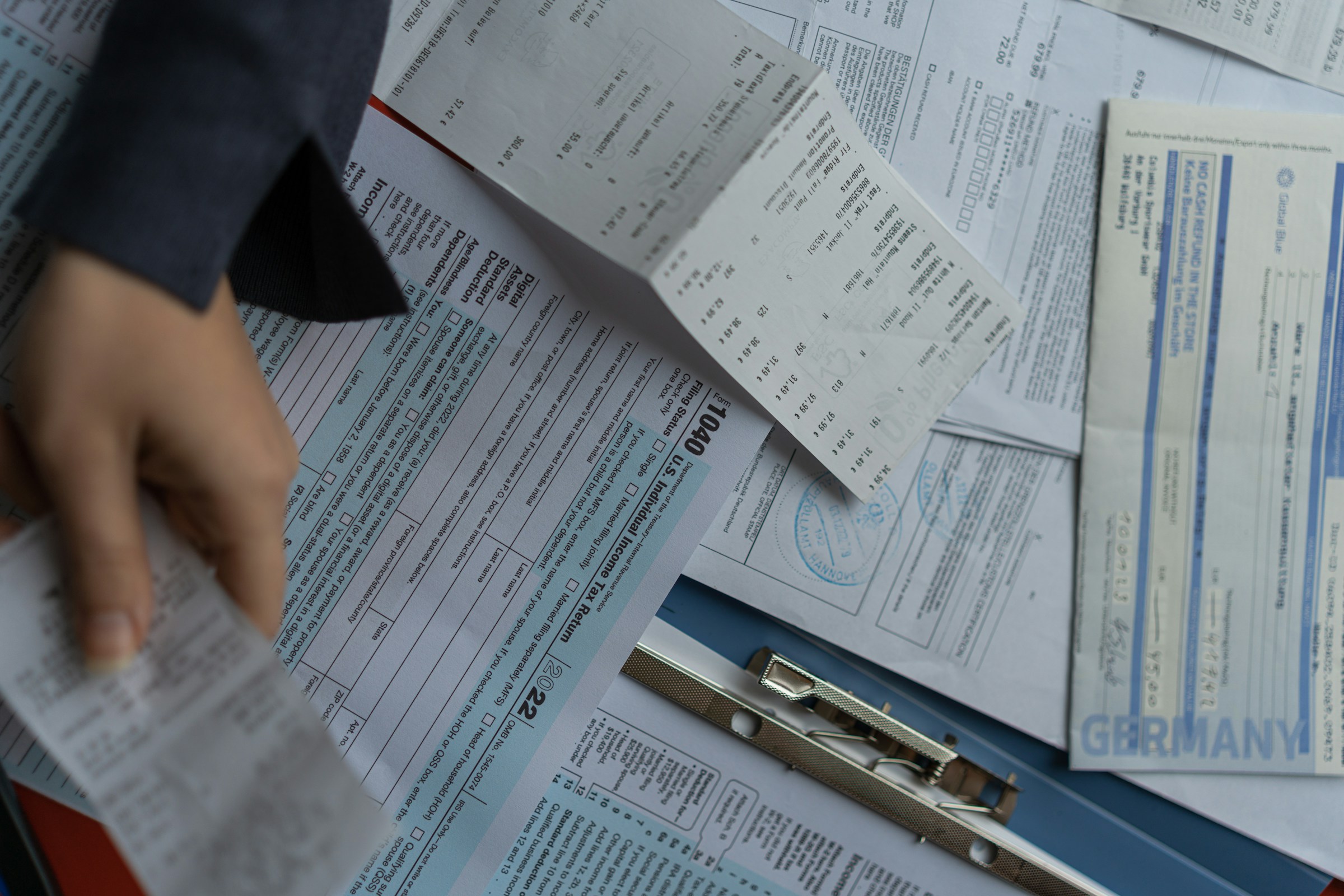
When people hear about proposals for a billionaire tax, the first reaction is often emotional. Some feel a sense of justice that those at the very top should finally pay more. Others worry that punishing success will harm innovation, jobs, and growth. The debate can sound like a distant fight between politicians and the ultra rich, but the real question you raised is more practical and more personal. Who will actually benefit from a billionaire tax, and how would any of that flow back into the lives of ordinary people who work, save, invest, and try to build a future?
To answer that, it helps to first understand who a billionaire tax is aimed at. These proposals do not usually target typical high earners with good salaries or even most millionaires. They aim at a very small group at the very top of the wealth ladder, people whose net worth sits comfortably in the billions. Their wealth does not come mostly from monthly paychecks. It sits in large shareholdings in public companies, stakes in private businesses, huge property portfolios, and financial assets that grow in value over time. Because of that, a lot of their economic power is not taxed the way your income is. You pay tax on your wage or salary each year. They may only trigger big tax bills when they decide to sell assets, which they can delay, structure, or borrow against.
A billionaire tax is an attempt to correct this imbalance. Some versions propose a tax on unrealized gains, which means taxing part of the yearly increase in the value of assets even if they are not sold. Other versions suggest a minimum effective tax rate for ultra wealthy households so that complex deductions and loopholes cannot push their real tax rate too close to zero. Whatever the technical route, the intention is similar. The state collects more from a very small group with extreme capacity to pay, and uses that revenue to relieve pressure on everyone else or to fund things that benefit the broader public.
For everyday earners in the middle of the income distribution, the benefits are usually a mix of small direct gains and larger indirect ones. The direct benefit might come in the form of slightly lower taxes on wages, new or expanded tax credits, or specific relief measures such as boosted child benefits or more generous education support. If a government is serious about linking billionaire tax revenue to middle class gains, it will often design a visible policy package around it. This might show up as a slightly larger refund, a student loan subsidy, or a small cut in payroll taxes. Individually, those changes are nice but not life changing. When billions of dollars are divided across tens of millions of people, the numbers per person tend to be modest.
The more meaningful gains for regular workers are often indirect and long term. Tax systems are one of the ways governments fund infrastructure and public goods, which are the invisible scaffolding under most private success. Better maintained transport networks, reliable digital infrastructure, more robust public universities, stronger courts, and well funded healthcare systems all support the daily life and economic prospects of people who will never see a billionaire tax line in their own paperwork. When the state has more fiscal room because it collects more from those at the very top, it has less pressure to cut these core services during downturns and crises. Over ten or twenty years, that stability can matter far more than a one time bonus.
For young investors and builders, the picture is more nuanced. Many in Gen Z both invest and care deeply about fairness. On one hand, taxing billionaires more heavily feels like a correction to a rigged game, especially when headlines show some ultra wealthy people paying lower effective rates than ordinary workers. On the other hand, there is a fear that if governments overreach, they might dampen the appeal of building big companies or investing in risky ideas that could lead to growth and jobs.
The key detail here is the threshold. Most billionaire tax ideas set their cut off at levels of wealth so high that even very successful professionals, small business owners, or tech employees with stock will never come close. Typical retail investors who use a broker app, buy index funds, or hold a few shares in well known companies are not the target. Instead, the policy focuses narrowly on those whose fortunes are so large that small changes in their tax rate produce meaningful revenue. For young investors, the real benefit is not about paying less tax personally. It is about living in an environment where the tax system feels more legitimate. When people believe that the top pays a reasonable share, there is less political demand for sudden, radical changes that can wreck markets. A sense of fairness can support long term policy stability, and long term policy stability is exactly what long term investors need.
If you are building something, whether that is a startup or a growing side hustle, you rely on a reasonably predictable environment as well. Extreme inequality that keeps widening can feed social anger, political instability, and sudden policy swings. From that perspective, some wealthy founders may accept a higher tax burden as the price of living in a society that will not turn aggressively hostile to capital and entrepreneurship. A carefully designed billionaire tax, clear and predictable rather than chaotic or vindictive, can actually help protect the long run conditions that allow ambitious ventures to exist.
Governments themselves are also major beneficiaries in a direct sense. The state is not just an abstract actor. It manages budgets, services, and long term commitments. When a government can raise more revenue from those with the greatest ability to pay, it does not need to rely as heavily on regressive taxes like sales tax or consumption tax, which take a larger share of income from lower earners than from the rich. With a stronger revenue base, the state can continue funding necessary programs during recessions, respond faster to emergencies, and avoid abrupt cuts that throw vulnerable groups into crisis.
That has a real impact on citizens. In countries where public finances become too stretched, the emergency solution often involves slashing budgets for education, healthcare, transport, and social protection. Those cuts rarely touch billionaires directly, who can pay privately for their own needs. They land instead on ordinary people. If a billionaire tax improves the resilience of public finances, it reduces the probability and severity of these painful adjustments later. In that sense, the government benefits, but ordinary citizens benefit too, because they are less exposed to the costs of fiscal crises.
For lower income households, the pattern of benefits looks slightly different again. Many people on the lowest rungs of the income ladder either pay no income tax or very little. A billionaire tax will not suddenly show up as a big refund for them. Their main relationship with the state is usually through services and transfers rather than tax bills. The question that matters is how additional revenue is used. If funds raised from billionaires are directed into better social housing, more comprehensive healthcare access, food assistance programs, childcare support, or targeted cash benefits, the effect on low income households can be significant. It can mean fewer months where the rent consumes nearly everything, fewer medical bills that sink families into debt, and more stability for children.
There is also an important psychological and social dimension. When people at the bottom see that the system treats extreme wealth with a light touch while squeezing them through consumption taxes and service cuts, trust in institutions erodes. That loss of trust can drive tax evasion, protests, or withdrawal from formal systems. In contrast, visible efforts to tax ultra wealth more fairly can send a signal that rules apply at least somewhat equally. While that does not erase material hardship, it can restore a measure of legitimacy to the system, which matters for social cohesion.
It might seem counterintuitive, but certain billionaires and large asset holders can also benefit in a broader sense, even as they write bigger checks to the tax authority. From their perspective, there is a trade off between paying more today and facing the risk of something far harsher later. History shows that when inequality reaches extremes and political pressure becomes unbearable, societies sometimes choose very blunt tools. These can include confiscatory taxes, forced nationalisations, or severe capital controls that destroy wealth much more aggressively than a calibrated billionaire tax ever would. Some ultra wealthy individuals recognise that agreeing to a stable, predictable higher tax regime can be a rational strategy to preserve the overall economic model that enabled their fortunes in the first place.
On top of that, a clear set of rules can be easier to plan around than a patchwork of loopholes, aggressive enforcement changes, and constant fights with tax authorities. If the effective rate is known and accepted, sophisticated individuals and businesses can still make rational decisions, invest, and grow, just with slightly lower after tax returns. They might not call that a benefit, but in system terms, a modest sacrifice in net worth can be a price worth paying for a calmer environment. Perhaps the biggest and least visible beneficiaries of a well designed billionaire tax are future generations. Children today and people who have not been born yet cannot vote on tax law. They inherit whatever structure current voters and politicians choose. If additional revenue from taxing extreme wealth is invested in education, healthcare, climate resilience, and critical infrastructure, the payoff compounds over decades. Fewer underfunded schools mean better human capital. Stronger public health means a workforce that can handle shocks. Better climate infrastructure means fewer disasters that destroy homes, jobs, and savings.
If nothing is done to address the concentration of wealth and opportunity at the top, inequality can keep rising. Over time that can undermine social mobility, fuel resentment, and increase the risk that the system reaches a breaking point. A billionaire tax will not magically fix every dimension of inequality, but it can act as a small steering correction, slowing the drift away from a broadly shared economy toward a deeply fractured one. The young adults of tomorrow benefit when they step into a society that is unequal but functional rather than one that is sliding toward breakdown.
Of course, there are losers and risks. Some very wealthy individuals will pay significantly more and will see no personal upside, especially if they view everything only in terms of their own balance sheet. Certain tax driven strategies will become less attractive or even unworkable. Some capital that is highly sensitive to taxes may relocate, at least on paper, to friendlier jurisdictions. If a government designs and implements a billionaire tax poorly, it can create uncertainty, discourage investment, or trigger a backlash that harms workers and the broader economy.
That is why the design details matter more than the slogans. A narrow, targeted, phased approach with clear thresholds and predictable rules is less likely to backfire than a sudden, vague, or punitive policy that spooks markets and investors of all sizes. For individuals who are far from billionaire status, the key things to watch are simple. Look at where the threshold sits. As long as it remains far beyond your own plausible lifetime wealth, you are not directly affected. Look at how the revenue is used. If it goes into thoughtful long term investments, the indirect benefits can be meaningful. If it gets scattered across short term vote buying schemes, the effect will be weaker. Finally, observe whether the overall environment feels more stable or more chaotic after the policy is introduced.
In the end, the answer to who benefits from the billionaire tax is not limited to one group. Ordinary workers and middle class families stand to gain from a fairer distribution of the tax burden and a stronger safety net. Young investors and entrepreneurs benefit from a system with more perceived fairness and less risk of violent policy swings. Lower income households can gain substantially if the new revenue is channeled into better services and targeted support. Governments gain the fiscal breathing room to manage crises without drastic cuts. Future generations gain a somewhat more balanced system that is less likely to collapse under the weight of its own inequality. All of these benefits are potential rather than automatic. They depend on whether political leaders use the tool responsibly. For someone managing their own finances, it is worth seeing billionaire tax debates not as distant ideology, but as a lever that can shape the economic environment in which your income, savings, and investments either struggle or quietly thrive.
 WhatsApp
 Instagram
 Threads




.jpg&w=3840&q=75)