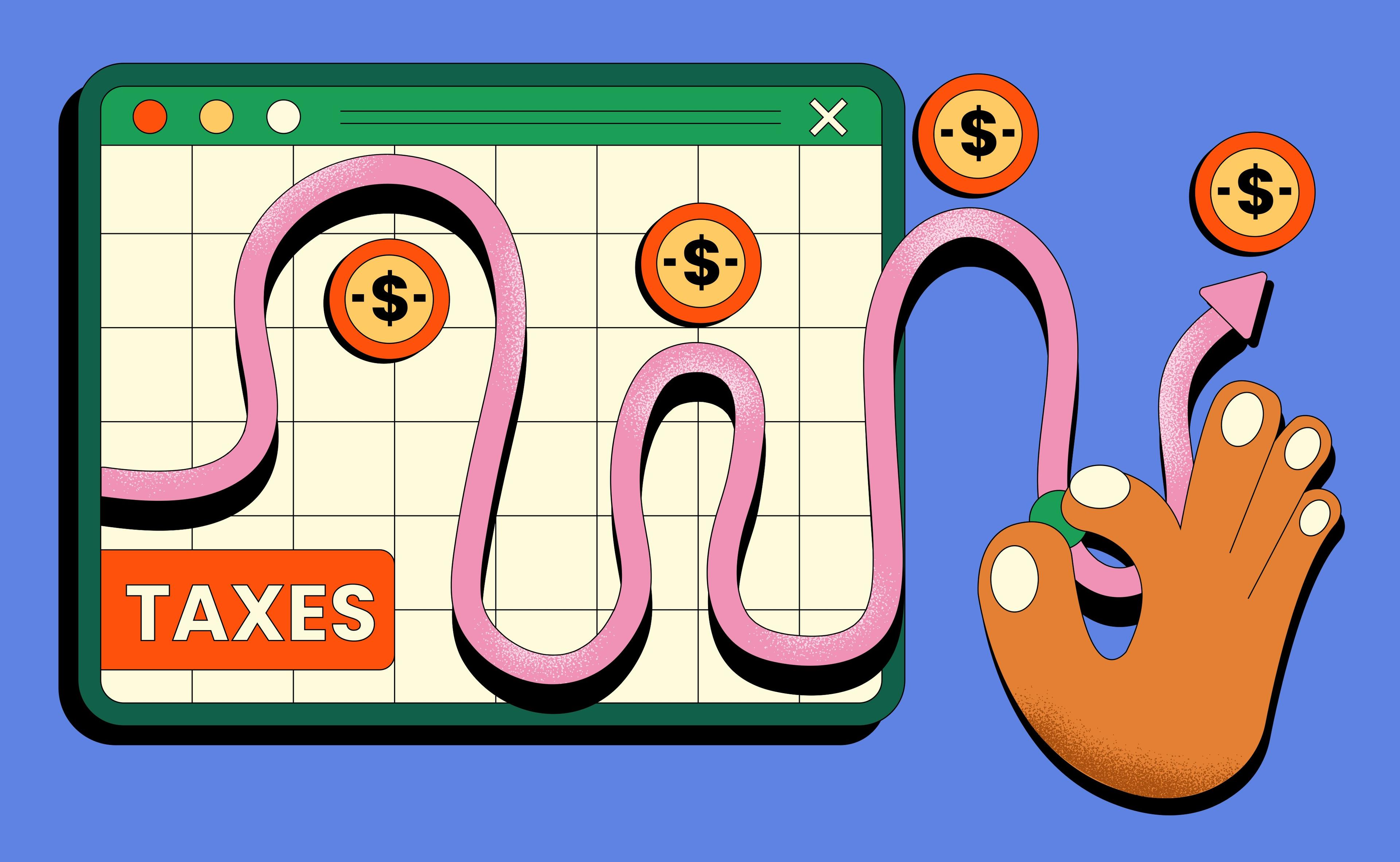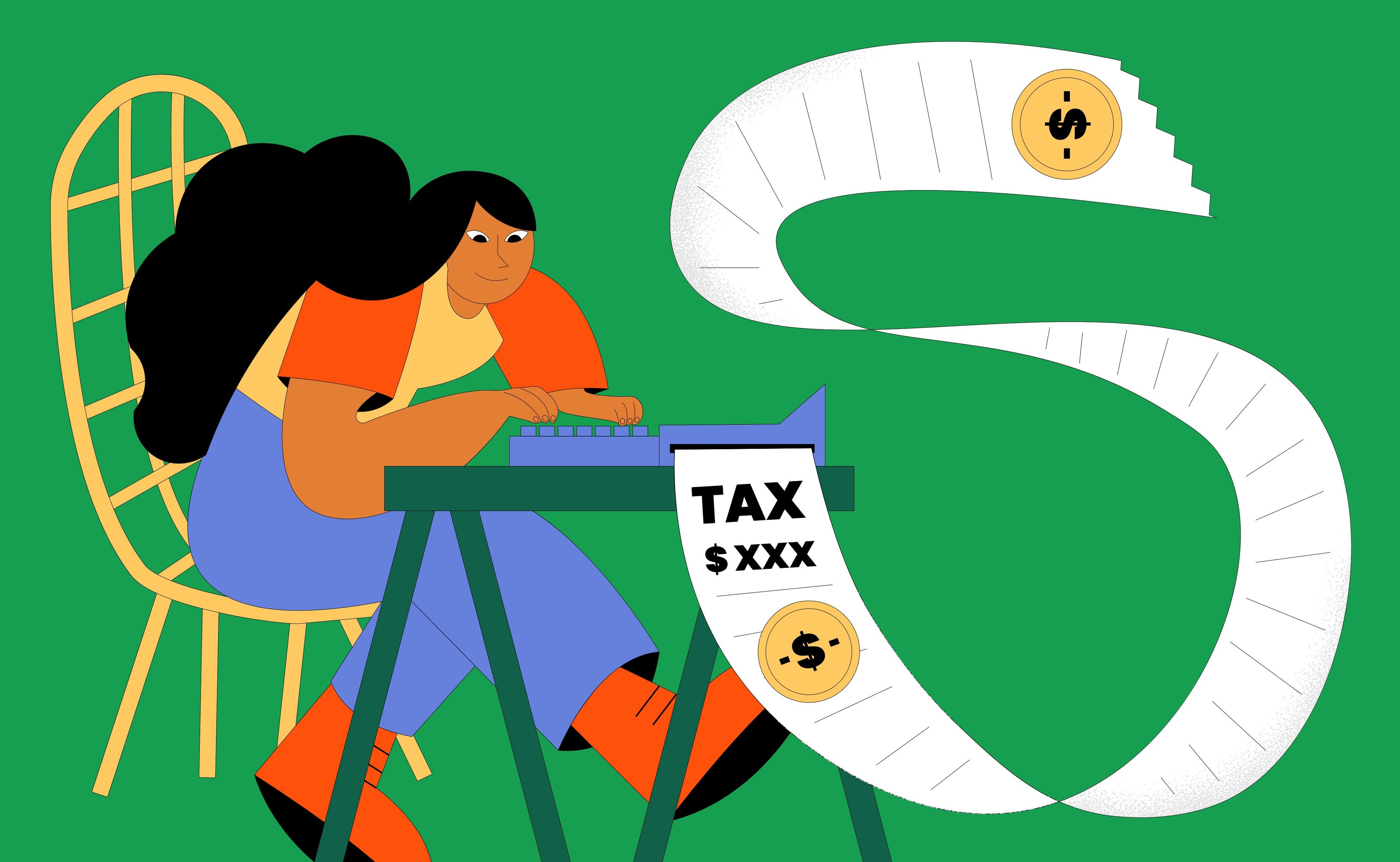
When you look at your payslip and feel that too much of your effort disappears before it ever reaches your bank account, you are sensing something economists call the tax wedge. It sounds technical, but it is simply the gap between what your employer spends to hire you and what you actually take home. Understanding this gap matters, because a high tax wedge does not only affect your personal income. Over time, it can influence how fast your wages grow, how employers design jobs, and even the kinds of work opportunities that exist in the economy.
Imagine that your employer has budgeted 6,000 a month for your role. That 6,000 is the total cost of employing you. From an employee’s perspective, it is natural to assume that most of that money should appear as salary. In reality, you might see only 3,800 or 4,200 as take home pay. The rest is absorbed by income tax, pension or social security contributions, health insurance levies, and other compulsory charges. Some of these amounts are deducted from your payslip. Others are paid separately by your employer. Together, they form the wedge between what your employer pays and what you keep.
When the tax wedge is high, a large share of that total cost goes to the government and related schemes, and a smaller share becomes net income. From a personal finance point of view, this matters for two reasons. First, it changes how much of your work effort is rewarded in cash. Second, it changes how both you and your employer think about extra hours, promotions, and long term career moves. Over years, those small differences compound into very real outcomes for your savings, investments, and lifestyle.
On the employer’s side, decisions about pay are made in terms of total cost, not just salary. When a company decides whether to fill a role or approve a raise, it looks at the full budget it must allocate to that position. If taxes and mandatory contributions are high, the same budget buys less take home pay for the employee. Suppose a firm can afford to spend 6,000 on a position. In an environment with a moderate tax wedge, perhaps 5,000 can be offered as gross salary and 1,000 goes to contributions and tax. If the wedge is high, the company may only be able to offer a gross salary of 4,000 because the other 2,000 is swallowed by levies and charges. The employer still spends 6,000, but the employee receives less in their account.
This simple arithmetic shapes wage growth. When you negotiate a raise, you think in terms of how much extra you would like to see each month. Your employer, however, must think in terms of how the raise changes the total cost of employing you. If providing you 500 more in take home pay requires the business to absorb 700 or 800 in extra cost after adding the taxes and contributions, that raise becomes a heavier decision. Over many years, high wedges can lead to slower wage progression, especially for middle earners, because each increase requires a larger commitment from the employer.
The tax wedge does not just alter individual pay packets. It also changes how companies design their workforce. When every full time hire comes with significant non salary charges, employers become more cautious about expanding headcount. Instead of adding another permanent employee, they may choose to outsource tasks or rely on freelancers and contractors. These arrangements often shift tax and contribution responsibilities from the firm to the individual and reduce the employer’s burden. For certain types of work, firms may prefer to invest in automation or software rather than hire additional people, since the relative cost of labor rises when tax wedges are large.
Location decisions are affected as well. If a business can place a role in more than one country, the combined effect of wages, taxes, and social charges becomes a major factor. A jurisdiction with a lower tax wedge may look more attractive for certain operations, particularly those that do not require face to face interaction. Over time, this influences which regions see stronger job creation and which ones struggle to attract investment and high quality roles.
From the worker’s point of view, the tax wedge shapes how rewarding extra effort feels. When you agree to overtime, accept a promotion, or take on a higher paying role, you naturally focus on the headline increase in salary. The true reward, however, is the net amount that ends up in your bank account. If moving into a higher tax band means that a large portion of each additional dollar is taxed away, your effective hourly reward decreases. For some people, this reduces the appeal of working very long hours or chasing small incremental pay rises that do not significantly improve their standard of living.
This does not mean that seeking advancement is pointless, but it does mean that you need to be realistic about the tradeoffs. A demanding job that offers a slightly higher gross salary may not actually leave you with enough extra net income to justify the stress and time cost, especially if the higher role also pushes you into a steeper tax bracket. Some people respond by seeking roles where their skills are more scarce and better rewarded, so that the leap in total compensation is large enough to outweigh the higher taxes. Others consider self employment or contracting structures that allow a different approach to tax and expenses, although those paths come with their own risks and responsibilities.
There is also a psychological dimension. When the gap between what you generate and what you keep feels very wide, frustration can build. You may feel that you are working mainly to feed a system you do not fully understand. That feeling can erode motivation over time. While it is never a good idea to cut corners, underreport income, or engage in aggressive schemes, it is useful to see that tax design influences behavior. Systems that are perceived as more balanced and transparent tend to encourage better compliance and a healthier attitude toward work.
For individuals who live in high tax wedge environments, it becomes crucial to look beyond the headline salary when comparing jobs. Two positions with similar gross pay can lead to very different financial outcomes once you account for tax treatment, benefits, and cost of living. Instead of asking only what the salary is, it can be more useful to ask what your monthly take home amount would be, how much the employer contributes to retirement or social security on your behalf, and what public benefits you are entitled to in return for the taxes you pay.
In some countries, a high tax wedge is paired with generous public services. Strong healthcare, education support, unemployment protection, and state pensions reduce the need to buy private insurance or build a large emergency fund. In others, taxes and contributions may feel heavy, but the perceived quality or accessibility of benefits is weaker. In that case, individuals must save more aggressively and plan more carefully for retirement and health costs, because they cannot assume that the state will fill the gap. The same numerical tax wedge therefore has very different implications depending on what you get in exchange.
When you evaluate opportunities across borders, the comparison becomes even more complex. A job in a low wedge, moderate cost country might offer a lower gross salary but leave you with more usable money and flexibility after taxes and living expenses. A role in a high wedge, high cost city may pay what looks like a premium, yet deliver less real financial security once you have paid tax, rent, and other essentials. It is not enough to compare the top line salary; you need to think in terms of net income and what that net income can buy in a particular place.
For your own planning, it helps to think of your income in three layers. The first layer is what your employer spends in total to have you in the role. The second layer is the portion of that amount that counts as your taxable income. The third is what appears in your bank account each month. Many people only ever focus on the third layer, but knowing the others adds useful context. It allows you to understand your bargaining power, to appreciate the cost your employer incurs on your behalf, and to have more grounded conversations about compensation and benefits.
Within the rules of your local system, you can often soften the effect of a high tax wedge by using tax advantaged accounts and programs. Retirement schemes that allow you to contribute pre tax income, education savings accounts, or specific reliefs for certain types of expenses can all reduce your current tax burden or provide future benefits. These tools vary by country, but the principle is similar. When taxes are heavy, every bit of legal optimisation matters. Consistent use of these schemes over many years can make a significant difference to your eventual wealth.
Career strategy is another lever. In environments where taxes are high, it becomes more important to develop skills that are both scarce and valuable across borders. If you can anchor yourself in roles that directly drive revenue, manage risk, or oversee critical systems, you tend to have more room to negotiate not only salary, but also location, benefits, and flexible arrangements. This stronger bargaining position can offset some of the discouraging effects of the tax wedge, because you are no longer fighting for small increments in a narrow band, but instead making larger, strategic jumps when the opportunity is right.
At the same time, keeping a simple, disciplined approach to budgeting remains essential. Even if a significant portion of your gross income goes to tax, the familiar idea of dividing your net pay into needs, wants, and future building still works. The difference is that your future building category may need to be larger if high taxes do not translate into strong public retirement and healthcare guarantees. In that case, you are effectively funding both the state and your own private safety net, which means you must avoid lifestyle inflation and be more deliberate about saving and investing.
Ultimately, understanding the tax wedge is about regaining a sense of control. It does not change the law or instantly boost your pay, but it helps you move from confusion to clarity. Instead of seeing taxes as a mysterious black box, you begin to see how they interact with employer decisions, your own choices about work, and the overall shape of the job market around you. With that knowledge, you can choose roles, negotiate compensation, and design your financial plans in a way that fits the realities of your system.
A high tax wedge is one of the structural features of many modern economies. You cannot remove it on your own, but you can decide how to respond. You can shape your skills, your career path, and your savings habits so that this gap between cost and take home pay becomes a known variable in your life, not a constant source of surprise. When you treat it as a factor to plan around, rather than an invisible force that acts on you, you reduce money stress and strengthen your path toward long term financial security.
 WhatsApp
 Instagram
 Threads



.jpg&w=3840&q=75)