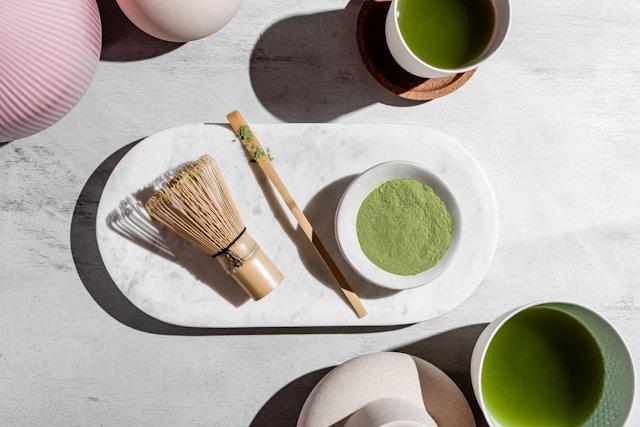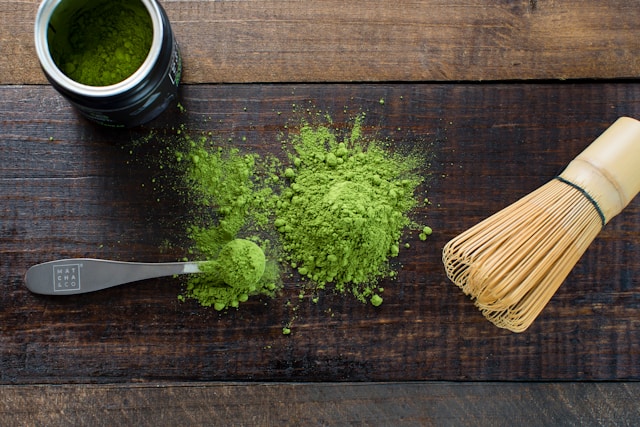
Matcha’s color can look almost unreal when it is prepared well, a soft and luminous green that feels like spring held in a bowl. In Japan, that green has never belonged only to taste. Matcha is special because it sits at the intersection of craft, attention, hospitality, and philosophy. It is a drink, but it is also a way of arriving in a moment and a way of treating other people with care. When you follow matcha back through Japanese culture, you end up learning less about trends and more about how meaning is made through repeated, ordinary actions done with sincerity. Part of matcha’s power comes from what it physically requires. Unlike leaf tea that is steeped and discarded, matcha is whisked into water so the whole leaf is consumed. That simple fact changes the experience. The preparation is immediate and tactile. You sift the powder, pour hot water, whisk until the surface turns glossy and foamy, and then drink from a bowl that warms your hands. It is difficult to remain distracted when your hands are involved and the result is visible in real time. Even at home, matcha quietly insists that you participate. It does not let you be entirely passive.
This participatory quality helps explain why matcha became inseparable from Japan’s tea tradition. The tea ceremony, often called chanoyu or sadō, is not merely an etiquette lesson or a historical curiosity. It is a practiced form of hospitality that uses matcha as its central action. In the ceremony, the tea is not the end goal in the modern sense of something you consume to move on to the next task. It is the anchor that makes everything else in the room meaningful. The utensils, the season, the pacing of gestures, the pauses, the sound of water, the way a bowl is turned before drinking, all of it is shaped around the preparation and sharing of matcha. Through this, a simple beverage becomes a medium for presence.
Matcha’s cultural significance is also closely tied to Zen, not because every bowl is a spiritual act, but because the ideals of training the mind through the body became woven into the tea world over centuries. Tea and Zen share a respect for discipline, repetition, and awareness. Matcha was historically valued for its ability to keep people alert, and over time the act of making and receiving tea developed into a refined practice. The important point is not to romanticize the past, but to notice what the practice teaches. When a host prepares matcha for a guest, the host is not only making a drink. The host is practicing attentiveness. The guest, by receiving it with care, is practicing gratitude. In a culture that often communicates through nuance rather than direct declaration, this becomes a powerful language.
The tea ceremony is frequently described through four principles that many schools trace back to Sen no Rikyū: harmony, respect, purity, and tranquility. These words can sound lofty until you see how they operate. Harmony is not a vague idea but a lived arrangement. It is the way the room, the tools, the season, and the people are composed so that nothing feels out of place. Respect is shown not only through polite speech but through how objects are handled, how time is given, how attention is offered. Purity is not about moral perfection. It is about clearing away the unnecessary, starting with the literal cleaning of utensils and extending to the mental clearing that happens when actions become calm and deliberate. Tranquility is not forced. It arrives when the other principles are practiced sincerely, and it can be felt in the room even by someone who cannot name it.
Space itself matters in Japanese tea culture, and that is another reason matcha feels special. The tea room is designed to shape behavior. Traditional tea houses and tea rooms tend to be intentionally modest, using natural materials and soft light to quiet the senses. One famous feature is the small entrance that requires people to stoop or kneel as they enter. This is not an architectural quirk. It is a physical reminder of humility. Inside the tea room, social status is meant to fade. What matters is not who you are outside, but how you show up inside. When matcha is served in that environment, it becomes part of a larger lesson: slow down, lower your ego, and meet the moment as it is.
Matcha also carries Japan’s seasonal sensibility. Japanese aesthetics often prize the fleeting and the subtle, the way a particular flower appears for only a short time, or the way light changes across a room in different months. Tea gatherings reflect this attentiveness to season through details that might seem small but are carefully chosen: a bowl whose glaze suits the time of year, a scroll that sets the mood, a simple arrangement that echoes what is happening outdoors. Matcha fits naturally into this worldview because its taste is not a one note sweetness. It can be grassy, slightly astringent, deep, and savory. In formal settings it is often paired with sweets served before the tea, not as an indulgence for its own sake, but as a designed balance that lets the tea’s character emerge. The experience becomes less about consuming and more about noticing.
If matcha is special as a practice, it is also special as a craft. In Japan, craft is rarely separated from lineage. People care about where things come from, how they are made, and what traditions they carry. Matcha is tied to specific regions and producers, with Kyoto’s Uji area famously associated with high quality tea cultivation. When Japanese people speak about good matcha, they often speak about freshness, aroma, color, texture, and origin. Quality is not hidden. It announces itself the moment powder meets water. A vibrant green suggests careful production and freshness. A duller hue can hint at age or lower grade leaf. The flavor and mouthfeel shift with the way the tea was grown and ground. This sensitivity makes matcha a product that naturally invites respect for the work behind it. That respect extends to tools as well. The whisk, the bowl, the scoop, the container, each object exists to serve the moment. Yet none of them are treated as disposable. They are handled with care because care is the point. In modern life, convenience often teaches us to move quickly and treat objects as replaceable. Matcha culture moves in the opposite direction. It asks you to slow down and treat both people and things as worthy of attention. The bowl in your hands is not just a vessel. It is a bridge between host and guest, between daily life and a quieter way of being.
One phrase often associated with tea culture captures the emotional core of why matcha matters: ichigo ichie, commonly understood as “one time, one meeting.” The idea is simple and profound. Each gathering is unique and will never occur in exactly the same way again. Even if you meet the same person tomorrow, you will both have changed slightly. The season will have shifted. The weather will be different. Your mind will carry different thoughts. Because the moment cannot be repeated, it deserves full sincerity. This is not a demand for perfection. It is a reminder not to treat the present as disposable. Matcha becomes a ritual that makes this easier to feel because it is small enough to fit into your hands. A single bowl becomes a single encounter that you can taste. This is why matcha, in Japanese culture, can feel sacred without being dramatic. It does not require loud symbols. It relies on the quiet dignity of doing small things well. The host prepares. The guest receives. Both acknowledge, without needing to speak much, that care is being exchanged. In a world that often rewards speed, performance, and constant stimulation, matcha offers another rhythm. It offers a structured pause where meaning comes from attention rather than intensity.
At the same time, matcha’s global popularity has created a tension that reveals its cultural depth. Around the world, matcha is frequently marketed as a superfood, a lifestyle signal, or a trendy flavor. It shows up in lattes, desserts, and social media photos where the green color becomes the headline. None of this is inherently wrong, and it can even be an invitation into deeper curiosity. But in Japan, many people understand that matcha’s heart is not simply its taste or its health halo. Its heart is context. When you remove the ritual and the values that shaped it, you still have a delicious ingredient, but you lose the cultural engine that made the drink feel like a practice of living. That distinction is what makes matcha special in Japan. It is not only what matcha is, but what matcha does. It trains attention through the hands. It embodies hospitality through careful preparation. It expresses humility through space and posture. It honors seasonality through aesthetic choices. It protects craft through respect for origin and technique. And it invites people to treat meetings as precious because they cannot be repeated.
Even if you never attend a formal tea gathering, you can still carry some of matcha’s cultural spirit into everyday life. You can prepare it without rushing. You can choose a moment that is not optimized, a moment that exists simply to be felt. You can hold a bowl with two hands and notice how that small posture changes your pace. You can treat the act as a form of care, whether you make it for yourself or for someone else. In doing so, you touch what matcha has represented in Japan for centuries: not a shortcut to wellness, not a status symbol, but a gentle discipline of presence. Matcha is special in Japanese culture because it turns the ordinary into a form of meaning. A drink becomes a ritual. A pause becomes a practice. A simple green bowl becomes a lesson in how to live with intention, how to welcome others with sincerity, and how to recognize the quiet beauty of a moment that will never come again.
 WhatsApp
 Instagram
 Threads