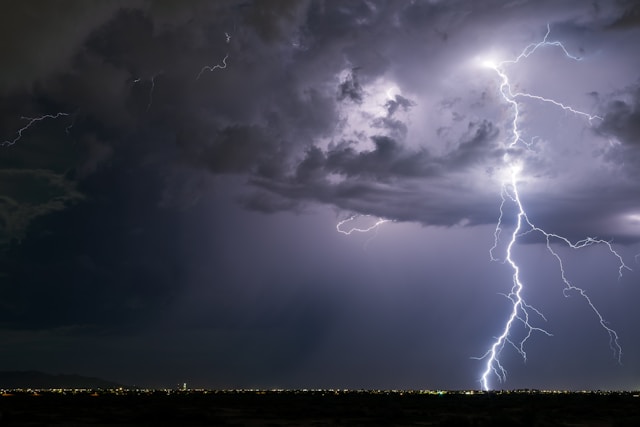
Typhoons do not only tear apart buildings and disrupt daily life. They also reshape the natural environment in ways that can be immediate, dramatic, and long lasting. When a typhoon makes landfall, it brings a concentrated package of forces that arrive at the same time: powerful winds, intense rainfall, towering waves, and storm surge that pushes seawater inland. The environment absorbs that energy through its natural defenses, but those defenses can be overwhelmed. What follows is not just damage in the ordinary sense. It is a reordering of coastlines, waterways, soils, and habitats, with ripple effects that can take weeks, months, or even years to fully reveal themselves.
The most visible environmental changes often happen at the coast because the coastline is where wind and water combine their power. During a typhoon, higher sea levels from storm surge allow waves to attack areas that are normally protected. Beaches can be scoured, dunes can collapse, and sand can be carried inland or swept into deeper water. These shifts can redraw the shoreline in a single night. When dunes and coastal vegetation are stripped away, the coast loses an important buffer that normally absorbs wave energy. The consequence is not limited to the storm itself. A weakened shoreline becomes more vulnerable to everyday tides and future storms, increasing the chance that erosion accelerates over time.
Storm surge adds another layer of disruption because it carries saltwater into places that are usually fresh. When seawater pushes into wetlands, river mouths, canals, and low lying farmland, it changes the chemistry of the landscape. Salt can stress or kill plants that are not adapted to it, which can thin vegetation cover and expose soil to further erosion. In agricultural areas, salt left behind by flooding can reduce yields and degrade soil structure, sometimes long after the floodwater has drained away. In coastal communities that rely on shallow wells, saltwater intrusion can also affect groundwater, creating a slow moving problem that is harder to see than broken trees or damaged roads.
While the coast takes the first punch, rainfall drives much of the typhoon’s broader environmental footprint inland. Typhoon rain is often intense enough to overwhelm soils, especially when the ground is already saturated. Water runs off rapidly, stripping topsoil from exposed land and sending sediment into streams and rivers. This sudden sediment load can turn rivers opaque, block sunlight, and disrupt aquatic habitats. Fish and aquatic plants that depend on clearer water can suffer, and riverbeds can be altered as sediment deposits in new places. In mountainous or steep terrain, the risk grows larger because heavy rain can trigger landslides. Landslides do not only move soil. They can bury vegetation, reroute waterways, and deposit massive amounts of debris downstream, changing river systems in ways that last far beyond the storm.
The quality of floodwater matters as much as its volume. In cities and industrial areas, runoff can sweep up oil, heavy metals, and other pollutants from roads and work sites. When drainage systems cannot cope, wastewater and stormwater can mix, spilling untreated sewage into rivers and coastal waters. Even in less industrial settings, fertilizers and pesticides from farms can wash into waterways. These pollutants can alter oxygen levels, increase nutrient concentrations, and destabilize ecosystems that are sensitive to sudden changes. Sometimes the most serious environmental harm is not the flood itself, but what the floodwater carries and where it deposits it.
Coastal ecosystems such as mangroves and wetlands sit at the intersection of land and sea, which makes them both vulnerable and vital. Mangroves can be damaged by strong winds and waves, losing branches and leaves, and in severe cases being uprooted. Yet mangroves are also natural shock absorbers. When they are healthy and extensive, they slow water movement, trap sediment, and reduce wave energy before it reaches inland areas. That protective function can mean the difference between a surge that spreads gently and one that arrives like a wall. After a storm, mangrove recovery can take time, and repeated typhoons can limit regrowth, especially when mangrove areas have already been fragmented by development. In that sense, typhoons often expose an uncomfortable truth: ecosystems that have been weakened by human pressure tend to suffer more and recover more slowly.
Offshore, coral reefs and seagrass meadows face their own set of stresses. Typhoon waves can physically break corals, overturn colonies, and grind reef structures into rubble. Even when corals survive the immediate violence, they can be harmed by what comes after. Runoff from land can carry sediment that settles onto reefs, smothering coral tissue and reducing light needed for healthy growth. Nutrient rich runoff can encourage algae to bloom, and algae can compete with corals for space and sunlight. Seagrass meadows, which depend on clear water, can be buried or shaded by suspended sediment for extended periods. If water clarity returns quickly, some habitats rebound. If turbidity persists, the damage can deepen as plants struggle to photosynthesize and ecosystems lose stability.
Not every environmental effect of a typhoon is purely destructive. Over the open ocean, typhoons can stir the sea like a giant mixer. Strong winds churn the surface and pull colder, nutrient rich water upward from deeper layers. This mixing can cool sea surface temperatures and sometimes trigger bursts of phytoplankton growth. Phytoplankton are the foundation of marine food webs, so a short lived increase in their abundance can influence fish and other marine life. Still, context decides whether this shift is beneficial or harmful. Near coasts, the same mixing and nutrient movement can combine with polluted runoff to create unhealthy blooms or oxygen depletion. The mechanism is the same, but the outcome depends on local water conditions and what is introduced into the system during and after the storm.
On land, wind damage alters ecosystems in ways that go beyond fallen trees. When a forest canopy is shredded, the microclimate below changes. Sunlight reaches the forest floor more directly, temperatures fluctuate more, and humidity patterns shift. Some plants may surge with new light, while others may decline. Habitat structure can change abruptly, affecting nesting sites and food sources for birds and insects. In many forests, the most revealing impacts appear later, not immediately. Trees weakened by salt exposure, root damage, or prolonged flooding may die months after the storm, reshaping the ecosystem slowly. Disturbance can also create openings for invasive species to take hold, especially in landscapes already fragmented by roads and development.
What makes typhoons particularly important from an environmental perspective is the difference between fast changes and slow changes. The fast changes are the dramatic ones: beaches eroding, rivers overflowing, trees falling, landslides tearing through hillsides. These are visible and often documented quickly. The slow changes unfold over time: salt lingering in soils and wetlands, sediment settling in reefs and estuaries, water quality shifting in rivers, and ecosystems struggling to return to balance. Recovery is not guaranteed, and it is not always a return to the previous state. Sometimes repeated storms, combined with rising seas and ongoing habitat loss, push environments into new patterns where the old buffers no longer function as they once did.
In the end, typhoons affect the environment in two intertwined ways. They deliver direct physical force that reshapes landscapes, and they reveal the underlying strength or weakness of natural systems that protect those landscapes. A coast with intact dunes, mangroves, and reefs often absorbs the shock better than a coast stripped of its natural defenses. A watershed with stable soils and healthy vegetation is more likely to withstand heavy rain than one with exposed slopes and degraded forests. Typhoons, in this sense, are not only storms. They are stress tests that show what the environment can handle, what it cannot, and what changes may linger long after skies clear and floodwaters recede.
 WhatsApp
 Instagram
 Threads





.jpg&w=3840&q=75)