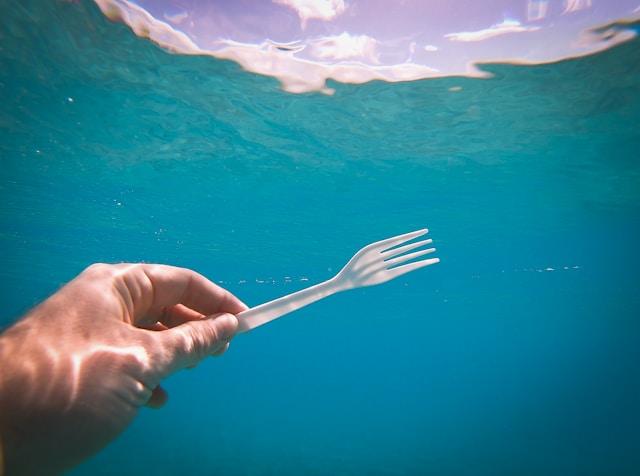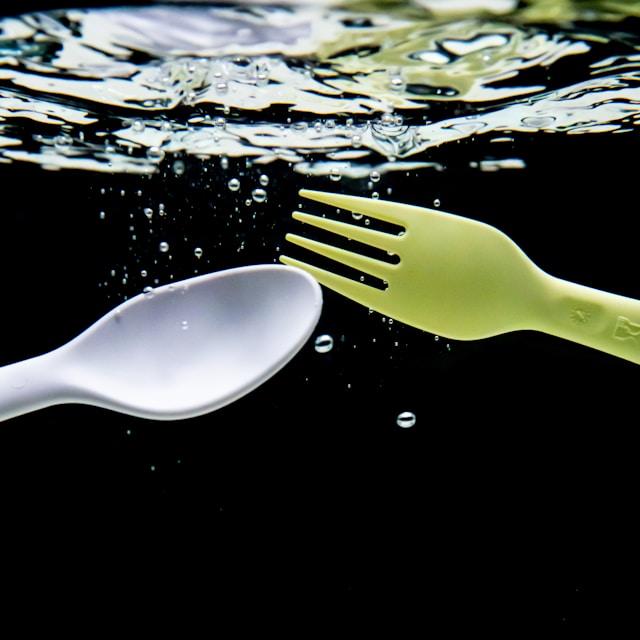
Microplastics have a strange talent for overstaying their welcome. They are not like a bruise that fades or a food scrap that disappears into compost. They are closer to a story that gets retold until you cannot remember the first version. A bottle becomes fragments, fragments become specks, specks become dust, and the original object is gone from sight while the material itself continues to circulate. When people ask why microplastics persist in the environment for so long, they are really asking why the world cannot simply “digest” them the way it digests leaves, wood, or paper. The answer sits at the intersection of chemistry, physics, and the messy reality of where plastics end up once they leave our hands.
The most important thing to understand is that plastic was designed to last. The everyday plastics that show up as microplastics, such as polyethylene, polypropylene, polystyrene, and PET, are built from long chains of molecules called polymers. Those chains are strong, stable, and stubborn in the face of the natural forces that usually break materials down. Nature is full of organisms that evolved to break apart natural polymers like cellulose in plants or chitin in shells. There are enzymes that make quick work of things that have existed in ecosystems for millennia. Plastics are different. They are relatively new to the planet’s biological toolkit, and most microbes do not have an easy, efficient way to treat them as food. Even when microorganisms cling to plastic surfaces, they often use them as a place to live rather than a meal to consume. The plastic becomes a tiny raft, not a buffet.
That “designed to last” quality is only half the story. The other half is the way we imagine the word “decompose.” In everyday language, decomposition implies vanishing. A banana peel turns soft, collapses, and eventually becomes part of the soil. Plastic rarely follows that path. Plastic can break down, but “break down” often means it breaks into smaller and smaller pieces without fully turning into harmless basic substances. Instead of disappearing, it multiplies. One piece becomes hundreds, then thousands. The environment ends up with more particles, not less plastic.
Sunlight can kick off the changes that weaken plastics, but sunlight is not a universal cleaning service. Ultraviolet radiation can cause photo-oxidation, a process that makes plastics brittle. Over time, brittle plastic cracks, flakes, and fragments. This is one reason outdoor plastic items can get chalky and crumbly. Yet sunlight reaches only certain parts of the environment. A plastic fragment floating at the surface of the ocean might get steady exposure. A fragment buried in sand, sunk into sediment, shaded by algae, lodged under rocks, or trapped in murky water gets far less UV. A piece hidden in a landfill, under layers of waste, gets almost none. Plastics often accumulate in places that are literally dark, covered, or oxygen-poor, and those conditions slow the chemical reactions that might otherwise help them age.
Even when sunlight does its work, the result is usually fragmentation rather than true elimination. A bottle that cracks into pieces may look like it is “going away,” but it is really spreading. The same material is now scattered into smaller forms that are harder to see and far harder to remove. This is one reason microplastics feel so unsettling. The pollution becomes less visible and more pervasive at the same time. You lose the dramatic image of a large piece of trash and gain an invisible dust that can travel through water, air, and soil.
Water does not solve the problem either, and in some ways it reinforces it. Many common plastics are hydrophobic, meaning they do not mix well with water. That trait can limit certain chemical reactions that rely on water to help break bonds. Natural materials often break down faster because water penetrates them, swells them, and creates a welcoming environment for microbes and chemical processes. Plastics resist that soaking-in effect. They do not absorb water the way wood does. They do not soften and collapse the way leaves do. They remain intact longer, even while their surfaces slowly weather.
The physical environment keeps pushing plastics around, but it does not reliably erase them. In the ocean, waves and sand can grind plastic into smaller pieces. Wind can move lightweight fragments. Currents can transport particles across vast distances. At first glance, that movement seems like it would speed up breakdown, but it often does the opposite for cleanup. A large item can be spotted and collected. A cloud of microplastic particles can spread into places where no cleanup crew can realistically reach. The deeper the particles travel, the more they escape sunlight and oxygen, and the more persistent they become.
Then there is the role of biofilms, a detail that sounds small but matters. In water and soil, surfaces quickly become coated with a layer of microorganisms and organic matter. Microplastics are no exception. Once coated, a particle can behave differently. It might become heavier and sink, or it might stick to other materials. Biofilms can also act like a shield, reducing UV exposure and limiting the oxygen contact that drives oxidation. The particle becomes less exposed to the very forces that might help degrade it. In other words, even the living layer that colonizes plastic can slow the aging process rather than accelerate it.
Plastic additives add another layer of persistence. Plastic is rarely pure polymer. Manufacturers often add stabilizers, colorants, flame retardants, plasticizers, and UV inhibitors to achieve specific performance goals. A chair should not crumble in the sun. A bottle should not become brittle in storage. A toy should keep its color. Those additives can keep working after the item becomes waste, slowing degradation in real environmental conditions. This is why two pieces of plastic that look similar can behave very differently. The polymer matters, but so does the chemical recipe inside it.
Size is also a trap, and it works in a way that confuses people. Smaller particles have more surface area relative to their volume, which can make them more reactive in some situations. You might assume that means microplastics should break down faster than a big chunk of plastic. But what matters most is not only the speed of chemical change. What matters is the particle’s ability to escape removal and move into protected environments. Microplastics can slip through wastewater treatment systems, settle into sediments, wedge into soil pores, and lift into the air with dust. They become part of the physical circulation of the planet, like pollen or silt, except they do not have a natural life cycle that ends. The smaller the particle, the more routes it has to travel, and the more difficult it becomes to intercept.
This is why the persistence question cannot be answered with a single number like “plastic lasts 500 years.” Different plastics last different lengths of time, and the same plastic behaves differently depending on where it is. A sun-baked shoreline is not the same as a deep-sea trench. A hot compost pile is not the same as compacted landfill waste. A windy road shoulder is not the same as a riverbed. When people talk about plastics lasting decades or centuries, they are pointing to the fact that, in many common environmental conditions, the processes that would fully break plastic down to basic substances are extremely slow.
Another reason microplastics persist is that, even when degradation happens, it may stop at a stage that is still harmful. A plastic fragment may become more brittle, crack, and shed particles. Those particles may become small enough to be eaten by plankton, worms, fish, or birds. They can move up food webs. The original object is no longer recognizable, but the material is still present and still interacting with living organisms. In that sense, persistence is not only about time. It is also about transformation into forms that are more mobile and more easily absorbed into ecosystems.
On land, persistence is reinforced by the way plastics get stored rather than processed. Landfills do not function like compost. They are often low-oxygen and low-light, especially deeper down. Organic waste may degrade slowly in pockets, but plastics can remain essentially preserved. In soils, microplastics can be mixed down through tilling, carried by water infiltration, or moved by organisms that burrow and shift material. They become embedded. Once embedded, they may be shielded from UV exposure and less likely to undergo the kind of surface oxidation that leads to fragmentation. They can sit in place for long periods, then get disturbed by erosion or development and reintroduced to surface systems again.
In water, the cycling can be just as persistent. Microplastics can float, sink, and float again depending on what sticks to them and how they weather. A particle that sinks into sediment may remain there for a long time, protected from sunlight. If that sediment is later disturbed by storms, dredging, or biological activity, the particle can re-enter the water column. Persistence is not just about a slow decline in concentration. It is also about repeated redistribution, like a mess that keeps getting swept from one room to another instead of thrown out.
There is also a simple but powerful reason microplastics persist: we keep making more of them. Even if the environment had a moderate capacity to slowly reduce existing microplastics, ongoing input can overwhelm that capacity. Microplastics are not only produced by the breakdown of big plastic items. Many are generated directly through use. Tire wear releases particles. Synthetic textiles shed microfibers in laundry and everyday wear. Paints and coatings chip. Packaging fragments. Every day brings new emissions into the system. When the source is continuous, persistence becomes less about how long any single particle lasts and more about the steady accumulation of particles over time.
All of this can feel heavy, especially because the word “microplastics” has become a symbol of modern anxiety. It is small enough to feel personal. You can imagine it in your water, your air, your tea. You can imagine it in your child’s lunch box. You can imagine it floating in the ocean like a quiet curse. But the science beneath the fear is, in a way, straightforward. Microplastics persist because the materials are durable, because breakdown often means fragmentation rather than disappearance, because environmental conditions that would speed degradation are uneven and often absent where plastics accumulate, and because the particles become increasingly difficult to remove as they shrink.
Understanding persistence also clarifies why solutions that focus only on cleaning up existing plastic, while helpful, cannot be the whole plan. Cleanup works best when pollution is large and visible. Microplastics are neither. They are a diffuse form of contamination. You can filter, trap, and capture some fraction in certain systems, especially in controlled environments like industrial wastewater or stormwater treatment. But once particles are distributed through oceans, soils, and air, the practical ability to remove them drops dramatically. The most effective leverage point becomes prevention, meaning reducing the amount of plastic entering the environment in the first place and reducing the shedding of microplastics from major sources. That does not mean individual choices are the entire answer, but it does mean the direction is clear. Materials designed to resist decay will linger when they escape human control. They will fragment instead of vanish. They will travel instead of staying put. If we continue to treat plastic as disposable while it behaves like a permanent material, the environment will keep collecting the evidence.
Microplastics persist, then, not because the planet is failing to do its job, but because we introduced a material that was never meant to fit neatly into natural cycles. We built something to endure, used it briefly, and then scattered it into ecosystems that are not equipped to fully dismantle it at the speed our consumption demands. The result is a kind of long-term residue that does not announce itself loudly but remains present, quietly accumulating and moving through the world.
In the end, the persistence of microplastics is not a mystery. It is a consequence. It is what happens when durability becomes disposal, when breakdown becomes fragmentation, and when a global system keeps generating tiny particles faster than any natural process can remove them. That is why microplastics stay. They do not simply fade away. They become smaller, harder to see, and easier to spread, and in doing so, they make their own presence last.
 WhatsApp
 Instagram
 Threads