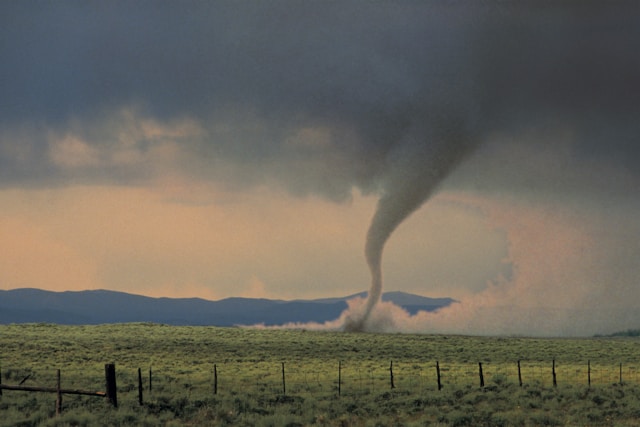
A cyclone can look like something sudden, as if the sky wakes up and decides to twist itself into a spiral. On a satellite image, the clouds tighten into a clean swirl, a center appears, and the whole system starts to feel purposeful. In reality, a tropical cyclone forms the way a powerful engine forms: not in one dramatic moment, but through a chain of conditions that build on each other until the atmosphere becomes organized enough to sustain a storm. At the heart of cyclone formation is energy, and the first place that energy comes from is the ocean. Tropical cyclones need warm water because warm water evaporates easily, loading the air above it with water vapor. That moisture is not just a detail. It is fuel stored in an invisible form, waiting to be converted into something stronger. When the sea surface is warm enough, the air just above it becomes warm and humid. Warm air is lighter than cool air, so it rises. As it rises, it leaves behind slightly lower pressure near the surface, and nearby air begins to move in to fill the gap. This is the first hint of organization: rising air, falling surface pressure, and inflow beginning to converge.
Even with warm water, though, most tropical weather never becomes a cyclone. The tropics constantly produce thunderstorms, and many of them fade as quickly as they form. For a cyclone to develop, the atmosphere usually needs a starting disturbance, such as a tropical wave or a loosely defined low pressure area. This disturbance matters because it gives storms a shared focal point. Instead of thunderstorms popping up randomly and scattering their winds, the system begins to pull air toward a common center. Convergence increases, rising motion strengthens, and clouds thicken.
The crucial transformation happens inside those clouds. As warm, moist air rises, it cools. Cooler air cannot hold as much water vapor, so the vapor condenses into tiny droplets that form clouds and rain. Condensation releases latent heat, meaning the heat that was “hidden” in water vapor is released back into the atmosphere when the vapor becomes liquid. That heat warms the surrounding air aloft, making it more buoyant, encouraging even more rising, which leads to more condensation and more heat release. This creates a feedback loop that can accelerate quickly once it gets going. The storm is no longer just borrowing energy from the ocean. It is converting that energy into sustained upward motion and a deepening low pressure core. As the surface pressure drops further, air rushes inward more strongly to replace the air that is rising. This inward flow is where the storm starts to feel alive. The cyclone begins drawing in more warm, moist air from the ocean surface, replenishing its fuel supply. The faster the air flows inward, the more moisture it collects, and the more moisture it collects, the more latent heat can be released when that moisture condenses. The storm starts to build itself.
But a cyclone is not only a heat engine. It is also a spinning heat engine, and that spin is tied to Earth’s rotation. On a rotating planet, moving air does not travel in perfectly straight paths relative to the surface. In the Northern Hemisphere, air moving toward low pressure is deflected to the right; in the Southern Hemisphere, it is deflected to the left. This deflection is called the Coriolis effect, and it is one reason cyclones rarely form right at the equator, where the effect is too weak to help organize rotation. As air rushes toward the developing low, the Coriolis effect nudges it into a curve. With enough inflow and enough deflection, the air begins to spiral rather than collapse straight inward, and rotation becomes established around the center. This is the point where a developing system can cross an invisible threshold. Instead of being a messy cluster of storms, it becomes a coherent circulation. Bands of rain can start to arc around the center. The storm’s structure becomes more symmetrical. The atmosphere has, in a sense, agreed on a pattern.
However, this agreement is fragile. One of the most common reasons cyclone formation fails is wind shear, which is the change in wind speed or direction with height. A developing cyclone needs its circulation near the surface and its circulation higher up to stay roughly aligned, stacked like a column. Strong wind shear can tilt that column. When the storm tilts, the strongest thunderstorms can be blown away from the low pressure center, and the heat released by condensation no longer strengthens the core where it is most needed. The system can lose its organization and return to being a disjointed storm cluster. This is why cyclone forecasting often focuses not only on sea surface temperatures, but also on the atmospheric environment above a storm. Warm water may provide fuel, but the storm still needs stable architecture.
If the environment stays supportive, a stronger tropical cyclone begins to develop a familiar internal structure. Air spirals inward near the surface, rises vigorously near the center, and then flows outward at high altitude. That outward flow is important. Rising air has to escape somewhere. If the storm cannot vent efficiently at the top, it can struggle to intensify, almost as if it is breathing through a blocked airway. When outflow aloft is strong and well organized, the surface pressure can fall further, the inflow can increase, and winds can strengthen. In this way, a mature cyclone behaves like a system with intake, combustion, and exhaust: moisture-rich air enters near the ocean, energy is released through condensation in towering clouds, and air exits outward at the top.
As intensification continues, some cyclones form an eye. The eye can seem mysterious because it looks calm, a clear hole surrounded by violent clouds. The calmness happens because the storm’s circulation can produce sinking air in the center. Air that sinks warms and dries, which suppresses cloud formation. Around the eye, the eyewall forms a ring of powerful thunderstorms where air rises most violently. This ring is typically where the strongest winds and heaviest rain occur. The eye is not a sign that the storm is weakening. Instead, it often signals that the storm has become highly organized, with rising motion concentrated in a tight ring and compensating subsidence in the center. It also helps to remember that “cyclone” is not one single label worldwide. Depending on where the storm occurs, it may be called a hurricane, a typhoon, or a cyclone. The physics is essentially the same. The name changes with the ocean basin, not with the basic mechanism. These storms are called tropical because they are driven primarily by warm ocean heat and the release of latent heat from condensation, rather than by clashes between warm and cold air masses that power many storms in the mid-latitudes.
Understanding what strengthens a cyclone also clarifies what weakens it. Tropical cyclones thrive over warm water because warm water supplies steady evaporation and moisture. If a cyclone moves over cooler water, evaporation drops and the storm’s fuel supply shrinks. Sometimes the storm can even cool the water beneath it by churning up colder water from below, limiting its own ability to intensify. Landfall is another classic weakening pathway. Once a cyclone moves over land, it loses direct access to the ocean’s moisture and heat. The roughness of land increases friction, disrupting the circulation, and drier air can intrude into the system. Terrain can further break apart the storm’s structure. A cyclone can still produce damaging winds and catastrophic flooding after landfall, but its heat engine is typically cut off.
Dry air can also weaken or prevent development, even over warm water. If dry air is pulled into the storm, it can erode clouds and reduce the sustained condensation that powers the system. Wind shear remains one of the most effective disruptors at any stage, because it interferes with the storm’s vertical alignment and can separate thunderstorms from the core. In simple terms, a cyclone is a machine that needs both fuel and balance. It needs moisture and heat, and it needs the circulation to remain upright and coherent.
Seen this way, cyclone formation is not random, even though it can feel unpredictable in everyday life. A cyclone forms when warm ocean water, humid air, a triggering disturbance, low pressure development, rotational effects, and a supportive upper atmosphere all line up. Once the feedback loop is established, the storm can strengthen rapidly because it continually pulls in moisture, converts it into heat through condensation, deepens its core, and accelerates its winds. The famous spiral is the visible signature of that organization, a pattern that emerges when the atmosphere’s forces reinforce each other instead of competing.
There is something unsettling about how efficient this process can become. The storm does not need intention. It needs only conditions. When those conditions cooperate, the result is a powerful system that sustains itself until something interrupts its fuel supply or disrupts its structure. That is why learning how cyclones form can be oddly grounding. It replaces the sense of mystery with mechanism. It does not make the storm less dangerous, but it explains why it behaves the way it does, why certain regions face greater risk in certain seasons, and why a small cluster of storms over warm water can, under the right circumstances, assemble into a force strong enough to reshape coastlines and lives.
 WhatsApp
 Instagram
 Threads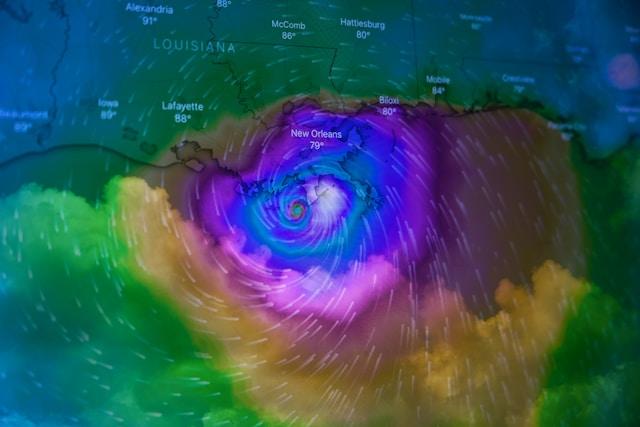





.jpg&w=3840&q=75)