Fiber rarely gets the spotlight in the way other nutrition trends do. It does not arrive with flashy promises or a dramatic before and after story. Most of the time, it is mentioned in passing, usually as the thing people know they should eat more of but never quite prioritize. Yet if you are trying to build a heart healthy diet that actually holds up in real life, fiber deserves to be treated as a foundation rather than an optional extra. It supports your cardiovascular system in multiple, overlapping ways, and that matters because heart health is not shaped by one single food rule. It is shaped by patterns that repeat quietly for years. Part of fiber’s power is that it changes the frame of what “healthy eating” looks like. Many people approach heart health by focusing on what to remove. Less saturated fat, less sodium, less sugar, less of everything that tastes like comfort. Fiber works in the opposite direction. It encourages you to add foods that naturally come with heart supportive benefits, like beans, lentils, oats, vegetables, fruit, and whole grains. When those foods become normal on your plate, they tend to crowd out more refined options without you needing to treat every meal like a test of discipline. That shift, from restriction to structure, is one reason fiber is so practical as a long term strategy.
One of the most direct ways fiber supports the heart is through cholesterol management, particularly LDL cholesterol. Soluble fiber, the kind found in foods like oats, barley, beans, and some fruits, behaves differently once it reaches your digestive tract. It forms a gel-like substance that can bind to bile acids and cholesterol-related compounds in the gut. Because bile acids are made using cholesterol, the process of binding and excreting them can push your body to draw more cholesterol from the bloodstream to replace what is lost. Over time, that can help lower LDL levels. This is not a miracle effect, and it is not an excuse to ignore the rest of your diet, but it is a meaningful lever because it targets a well-known cardiovascular risk pathway in a steady, food-based way.
Fiber also supports blood pressure, though the path is less dramatic and more layered. Diets that are naturally higher in fiber often include more plant foods overall, and those foods tend to bring potassium, magnesium, antioxidants, and a healthier balance of nutrients that support blood vessel function. Fiber-rich meals can also be more filling, which helps with weight stability over time, and body weight is closely tied to blood pressure for many people. In other words, fiber often works as part of a bigger pattern that creates a calmer internal environment, one where your cardiovascular system is not constantly dealing with extremes.
Another reason fiber belongs in a heart healthy diet is that it helps regulate blood sugar. This might sound like a concern mainly for people with diabetes, but blood sugar stability is a heart issue even for those without a formal diagnosis. When blood sugar spikes sharply after a meal, the body responds with larger insulin demands. Over time, repeated spikes can contribute to insulin resistance, and insulin resistance is linked to higher cardiovascular risk. Fiber, especially soluble fiber, slows digestion and reduces how quickly glucose enters the bloodstream. Meals land more gently. Energy tends to feel steadier. You are less likely to experience that cycle of feeling satisfied for a moment, then suddenly hungry again. This matters because the heart is influenced by metabolic health, not just the cholesterol number you see on a lab report.
Fiber’s relationship with the gut is also part of the story, and it is more than a wellness trend. Certain fibers feed beneficial gut bacteria, which then produce compounds such as short-chain fatty acids. These byproducts are being studied for their role in inflammation and metabolic regulation. Chronic low-grade inflammation is often part of the long-term build-up of cardiovascular disease, so anything that supports a healthier inflammatory balance is relevant. The gut is not separate from heart health. It is one of the systems that influences how the body processes nutrients, produces signaling molecules, and maintains immune balance. When you consistently eat fiber-rich foods, you are not only helping digestion. You are shaping what your internal ecosystem produces and how it communicates with the rest of your body.
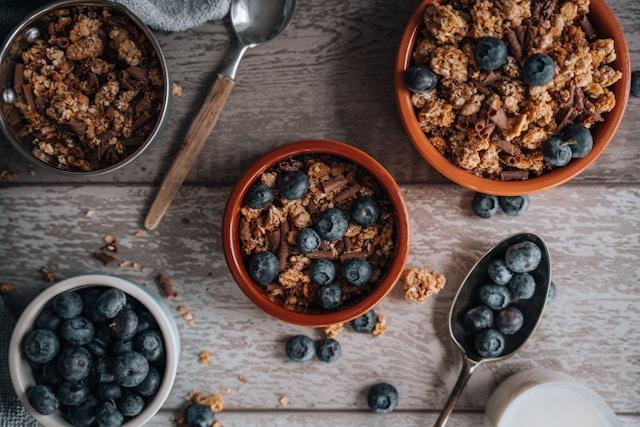
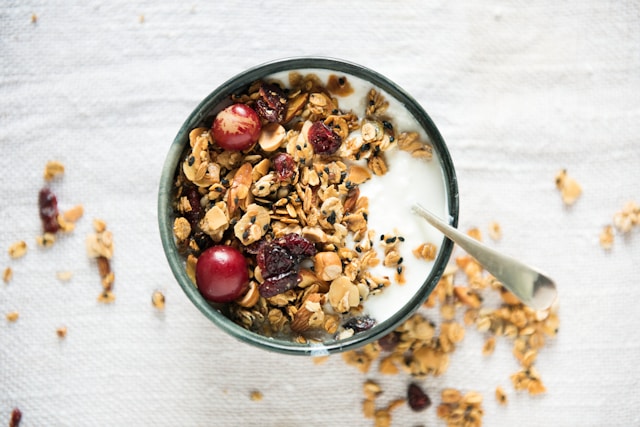
There is also a more ordinary reason fiber matters, and it may be the one that makes the biggest difference day to day. Fiber helps you stay full. It adds bulk, slows eating, and makes meals feel more satisfying. That fullness is not about dieting or shrinking your appetite into silence. It is about making your eating pattern less chaotic. A breakfast with fiber can change the entire day because you are not fighting hunger by mid-morning. A lunch with beans and vegetables can reduce the urge to chase snacks that never quite satisfy. When you feel steadier, you make steadier choices, and those choices accumulate into a pattern that supports heart health.
If fiber is so helpful, the natural question is why so many people fall short. The answer is not that people are lazy or uninformed. The modern diet makes it easy to eat plenty of calories without much fiber at all. Refined grains replace whole grains. Fruit becomes juice, which removes much of the fiber and changes how quickly the body absorbs sugar. Many convenient meals are built around protein and fats, with vegetables treated like decoration rather than substance. You can eat what looks like a normal, filling diet and still end up with fiber intake that is far below what your body would benefit from.
The goal is not to obsess over grams, but having a basic sense of fiber targets can help you see the gap more clearly. Many nutrition recommendations suggest around 25 to 38 grams per day depending on age, sex, and calorie needs. For many people, getting there does not require a dramatic overhaul. It requires making fiber show up consistently, not occasionally. When fiber is only something you eat during a “healthy week,” it will always feel like a chore. When it is built into your default meals, it becomes normal. It can help to know that fiber comes in different forms. Soluble fiber is the type most strongly associated with cholesterol improvements because of its gel-forming effect. Insoluble fiber is often associated with stool bulk and regularity. Both matter, and most whole plant foods contain a mix. You do not need to treat it like a complicated science project. The simplest approach is variety. If your week includes oats, legumes, vegetables, fruit, and whole grains, you are likely covering different fiber types without needing to categorize every bite.
Some people wonder whether fiber supplements can do the job. Supplements can help in certain situations, particularly for people who struggle to eat enough fiber due to appetite, access, or specific dietary needs. Still, whole foods tend to be the best first choice because they deliver fiber alongside nutrients and plant compounds that support heart health in broader ways. Whole foods also change eating habits naturally. A bowl of oats is not only a fiber source. It is a different breakfast pattern than a pastry. Beans are not only fiber. They often replace more processed sides and add protein in a form that supports cardiovascular goals. If you are increasing fiber, the most important thing is to do it gradually. Going from very low fiber to very high fiber overnight can cause bloating, cramps, or discomfort. Your gut needs time to adapt, and drinking enough water matters because fiber works best when there is adequate fluid to help it move through the digestive system. Think of it like training, not punishment. Small changes repeated are better than a sudden surge that makes you give up.
There is also a gentle truth worth saying out loud. Heart health is not built by one perfect decision. It is built by the decisions that are easy enough to repeat. Fiber fits that reality because it does not require you to eliminate entire food groups or live in a state of constant vigilance. It asks you to return, again and again, to foods that support your body’s long game. So why should fiber be a key part of a heart healthy diet? Because it does not only do one thing. It supports cholesterol management, steadier blood sugar, healthier gut signaling, appetite regulation, and the overall plant-forward pattern that shows up in nearly every credible approach to cardiovascular wellness. Fiber is not a cleanse, a reset, or a personality. It is a baseline. When you make it central, your diet becomes less about fear and more about building a structure your heart can rely on.
 WhatsApp
 Instagram
 Threads