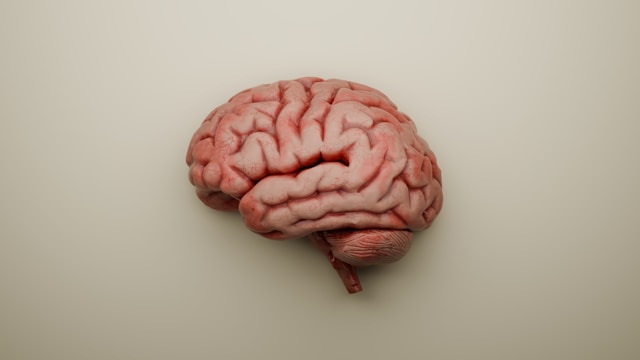
Healthy fats matter for brain function because the brain is not only powered by what we eat, it is physically built from it. People often talk about brain performance as if it is a software issue, something you can fix with better habits, sharper routines, and more willpower. But the brain is an organ with structure, and structure depends on materials. Once you see that, the conversation about fats changes. It stops being a debate about whether fat is “good” or “bad” and becomes a practical question about what kinds of fats help the brain maintain the tissues that make thinking possible.
A useful place to start is with a simple reality that surprises many people the first time they hear it: the brain is rich in lipids. In plain terms, it contains a lot of fat. That fact is often repeated because it is foundational. The brain is dense with membranes, and membranes are partly made from fats. Every nerve cell is wrapped in a membrane that acts like a boundary, a communication surface, and a control panel. The membrane is where receptors sit, where channels open and close, and where the cell decides what can enter or exit. In that sense, membranes are not packaging. They are function.
The kinds of fats that make up these membranes influence how the membrane behaves. Some fats help keep membranes flexible, which matters because brain cells need to adapt quickly. Signals are constantly moving, receptors need to shift and respond, and the whole system depends on membranes that can support that rapid activity. When a membrane is too rigid, cellular communication can become less efficient. When it is appropriately fluid, cells can respond with more agility. Healthy fats, especially certain polyunsaturated fats, support the kind of membrane environment neurons rely on for smooth signaling.
This is where omega-3s enter the conversation, not as a trend but as a structural ingredient. Docosahexaenoic acid, often shortened to DHA, is a prominent omega-3 fat found in brain tissue. People sometimes treat DHA like a marketing word, but the brain’s relationship with it is tangible. DHA contributes to the makeup of neuronal membranes and is associated with processes tied to signaling and function. When discussions about focus, memory, and cognitive health bring up omega-3s, the underlying reason is often that the brain is using these fats as part of its own construction.
If membranes explain how brain cells communicate, myelin explains how quickly those messages travel. Myelin is the insulation that wraps around many nerve fibers. It allows signals to move faster and more efficiently, and it helps prevent communication from becoming noisy or inefficient. If you think of the nervous system as wiring, myelin is the protective coating that keeps that wiring working at a high level.
Myelin is also fat-rich. It contains a large amount of lipids, including cholesterol, which is an awkward fact in a culture that has spent decades treating cholesterol as a simple villain. The brain does not share that simplistic view. Cholesterol plays a structural role in myelin, which means it supports the physical properties that allow myelin to do its job. This is not an invitation to ignore heart health or to treat nutrition as a free-for-all. It is a reminder that biology uses the same molecules in different ways, and context matters. In the brain, fats are not merely fuel. They are architecture, and myelin is a clear example of that.
Another reason healthy fats are so important is that some of them are essential. In nutrition, “essential” has a specific meaning: the body cannot manufacture enough of these fats on its own, so they need to come from food. The omega-3 family includes alpha-linolenic acid, often called ALA, which can be found in certain plant foods. The body can convert some ALA into other omega-3s like EPA and DHA, but the conversion tends to be limited. That limitation matters because it helps explain why some people focus on direct sources of EPA and DHA. If your goal is to support the brain’s supply of these particular fats, relying only on conversion can be a narrow pipeline.
That said, the bigger point is not to turn this into a single-nutrient obsession. The brain does not operate in isolation from the rest of the body. Brain function is connected to blood flow, metabolic stability, and the balance of inflammation over time. When a person’s overall health is strained, cognitive function often feels strained too. In that sense, healthy fats support the brain both directly, through structural roles in membranes and myelin, and indirectly, through their relationship with broader health patterns.
This is one reason why the phrase “healthy fats” tends to show up alongside certain dietary patterns instead of being treated as a stand-alone hack. When people talk about brain-friendly eating, they often end up describing the same family of foods and habits: fats that come from whole-food sources, meals that include unsaturated fats rather than relying on highly processed fats, and a consistent pattern that supports cardiovascular health as well as cognition. It is not glamorous, but it is coherent. A brain that depends on steady blood flow and stable metabolic conditions benefits when the rest of the system is supported.
There is also a emotional side to this conversation that is easy to overlook. Many people come searching for “brain foods” because they want sharper focus, but what they are really chasing is relief from an internal sense of friction. They feel foggy. They feel moody. They feel more reactive than they want to be. Mood and brain function are closely linked because mood is not just an attitude. It is a biological state influenced by sleep, stress, nutrition, and countless internal signals. Healthy fats, especially omega-3 fats, are often discussed in connection with mental well-being because they sit near processes tied to signaling and inflammation. This does not mean eating salmon turns into instant calm or taking a supplement erases anxiety. It does mean that what you build your brain from can influence how resilient that system is over time.
A modern problem is that it has become increasingly easy to eat enough calories while missing the kinds of fats that support the brain’s structural needs. Many people are not “low-fat” on paper, but they still might not be getting the fats that matter most. Ultra-processed foods can be energy-dense without providing a balanced profile of essential fats. At the same time, diet culture has trained many people to fear fat or to treat it as optional. Even people who consider themselves health-conscious can fall into patterns where meals look clean and disciplined but are missing key building blocks.
When that happens, the signs are rarely dramatic. The body does not usually throw an immediate alarm that says, “Your membrane composition is off.” Instead, the experience can be subtle and frustrating. Concentration feels more effortful. Emotional regulation feels less steady. Sleep feels less restorative. The day feels noisier. Of course, those experiences can come from many causes, including stress, poor sleep, burnout, medical issues, or too much screen time. Nutrition is not the only lever. But fat quality is one lever that is deeply structural and surprisingly neglected in many everyday diets.
It is also worth naming the temptation that inevitably appears once people realize fats matter: the supplement shortcut. Capsules feel simple. They fit into a routine. They let people feel proactive without changing how they cook or shop. Omega-3 supplements, in particular, are popular for this reason. For some people, supplements can be a practical option, especially if their diet makes it difficult to get enough of certain fats. But it is still helpful to keep the focus on the bigger picture. Supplements are not food patterns. They can support a gap, but they do not replace the benefits of a consistently nourishing diet that includes fats in a more complete nutritional context.
The most grounded way to think about healthy fats for brain function is to stop treating the brain like a productivity app and start treating it like tissue. Tissue needs maintenance. It needs materials. It needs a steady supply of what it uses to rebuild and repair itself. Healthy fats support the brain because they help form the membranes where signaling happens, they help support the insulation that keeps communication fast and efficient, and they provide essential building blocks the body cannot easily create on its own.
In a culture that demands constant attention and rewards constant output, it is easy to treat cognitive strain as a personal failure. If you cannot focus, you assume you are lazy. If your mood is unstable, you assume you are weak. But biology offers a gentler and more practical frame. Your brain is doing physical work all day, every day. It is maintaining its structures while responding to stress, sleep loss, emotional load, and the constant stimulation of modern life. Supporting it is not about chasing perfect optimization. It is about respecting the fact that your brain is made of real materials, and fats are among the most important of those materials.
When you take that view, healthy fats become less controversial and more ordinary. They belong in the same category as hydration, sleep, and movement. You do not need to dramatize them, and you do not need to fear them. You simply need to remember that the brain you are trying to sharpen is also a brain you are constantly building. And building works best when the ingredients are reliable.
 WhatsApp
 Instagram
 Threads




.jpg&w=3840&q=75)