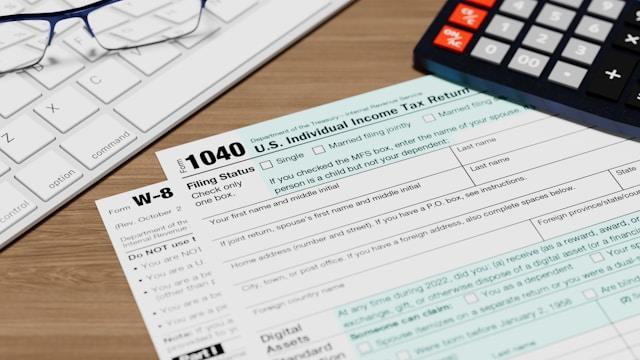
Reducing your taxable income in the United States is less about chasing clever tricks and more about understanding how the tax system is built. The federal tax code rewards certain behaviors because lawmakers want to encourage them. Saving for retirement, paying for health care efficiently, supporting charitable causes, and running a legitimate business all tend to receive some form of tax preference. When you learn to route your money through those preferred channels, you can shrink the amount of income the IRS actually taxes, often without reducing your quality of life. The goal is not to play games or hide income. The goal is to make intentional choices that the rules already allow.
A good starting point is to separate two concepts people often mix together: taxable income and total tax owed. Taxable income is the portion of your income that remains after certain deductions and adjustments are applied. Total tax owed is what you pay after that taxable income is run through tax brackets and then reduced by any credits you qualify for. If you focus only on reducing taxable income, you may miss opportunities to lower your bill through credits. If you focus only on credits, you might ignore powerful ways to keep taxable income from rising in the first place. A smart approach respects both, but it begins with reducing the income that gets exposed to tax.
For many households, the simplest lever is the one that feels almost too basic to matter: choosing between the standard deduction and itemized deductions. The standard deduction is a set amount the IRS allows you to subtract from your income before calculating tax, and it is designed so most taxpayers do not need to track every deductible expense. Itemizing becomes useful only when your eligible deductions add up to more than the standard deduction. That is why some people can dramatically reduce taxable income with mortgage interest, state and local taxes, and charitable gifts, while others do better by keeping things simple and taking the standard deduction. The key insight is that you should not assume itemizing is “more advanced” and therefore better. It is only better if the math works.
Once you understand the deduction foundation, the next major opportunity is pre-tax saving through employer benefits. If your job offers a 401(k), 403(b), or similar plan, contributing pre-tax dollars is one of the cleanest ways to reduce taxable income in the US because it can lower your taxable wages directly. Imagine two employees earning the same salary. One contributes meaningfully to a traditional 401(k) and the other contributes nothing. Even before deductions are considered, the first person may have a smaller taxable income because less of their pay is treated as taxable wages on their W-2. This is not a loophole. It is a deliberate incentive. You save for retirement, and the government gives you a tax benefit today.
That benefit comes with an important trade-off. Traditional retirement contributions generally lower taxable income now, but withdrawals in retirement are usually taxed as ordinary income. Whether this trade-off is worthwhile depends on your current tax bracket, your expected future income, and your broader strategy. In practice, many people like the immediate relief because it makes monthly cash flow easier and reduces the tax bite in high-earning years. Others prefer Roth contributions, which do not reduce taxable income today but may provide tax-free qualified withdrawals later. The best decision is not always the one that produces the largest deduction this year. It is the one that fits your time horizon, risk tolerance, and long-term tax planning.
If you do not have access to an employer plan, or you want additional flexibility, individual retirement accounts can become another pathway. Traditional IRA contributions may be deductible depending on your income level and whether you or your spouse are covered by a workplace retirement plan. Roth IRA contributions do not reduce taxable income because they are made with after-tax dollars, but they can be valuable for future tax diversification. The subtle point is that not all retirement saving reduces taxable income. People sometimes assume that simply putting money into any retirement account will shrink their taxable income, and that is not always true. The question is whether the specific contribution is deductible in the current year.
Health care is another area where the tax code quietly offers powerful advantages, especially if you have access to a Health Savings Account. HSAs have a unique reputation because they can provide a tax benefit when you contribute, allow investment growth without annual taxes, and permit tax-free withdrawals for qualified medical expenses. If you are eligible, an HSA can serve as both a health-care tool and a long-term planning vehicle. Eligibility generally requires enrollment in a qualifying high-deductible health plan and the absence of disqualifying coverage. When those rules are met, contributions can reduce taxable income and build a reserve for future medical costs. For a household that spends consistently on health care, the HSA can feel like a way of paying the same bills through a more tax-efficient channel.
Even if an HSA is not available, other employer benefits can still help reduce taxable income in practical ways. Pre-tax health insurance premiums are common in workplace plans, and flexible spending accounts can allow you to pay for eligible medical expenses or dependent care with pre-tax dollars. These options are not as glamorous as investing or retirement accounts, but they create real savings. They also demand honesty with yourself. Funding a medical FSA requires planning because unused amounts may be forfeited depending on plan rules. The tax benefit is strongest when the expenses are predictable, such as recurring prescriptions, expected childcare costs, or routine medical needs.
If you are self-employed or earn income from freelancing, consulting, or a small business, the opportunities to reduce taxable income can expand, but so does the need for discipline. Business income is typically taxed based on net profit, which means legitimate business expenses can reduce the amount of income that flows into your personal tax return. This is where many people get themselves into trouble. Business deductions are not a personality badge or a way to justify luxury spending. The rules focus on whether expenses are ordinary and necessary for the business. A computer used primarily for client work is different from a computer bought mostly for personal entertainment. A home office can be deductible only if it meets specific requirements, including being used regularly and exclusively for business. The tax savings can be meaningful, but the deductions should be supported by documentation and a clear business purpose.
Self-employment income also opens the door to retirement plans designed for business owners. A Solo 401(k) or SEP IRA can allow contributions based on self-employment earnings, and in some cases those contributions can significantly reduce taxable income. This can be especially useful for someone with inconsistent income who wants the flexibility to contribute more in strong years. The core concept remains the same as an employer plan: shifting income into a tax-advantaged retirement structure can reduce what is taxed today, while building long-term savings.
Beyond retirement and business expenses, many taxpayers overlook adjustments to income, sometimes called above-the-line deductions. These are valuable because they can reduce your adjusted gross income regardless of whether you take the standard deduction or itemize. Depending on eligibility rules, this category may include items such as student loan interest, educator expenses, and certain self-employment-related deductions. The reason these matter is that they reduce income earlier in the calculation, which can ripple into other areas of your return. A lower adjusted gross income can affect eligibility for certain deductions and credits, and it can also change how phase-outs apply. When people focus only on itemized deductions, they can miss these quieter levers that still shape taxable income.
Charitable giving is another classic way to reduce taxable income, but it needs to be approached with clarity. The deduction for charitable contributions generally benefits taxpayers who itemize, and it depends on donating to qualified organizations and following documentation rules. For someone who gives consistently but does not normally exceed the standard deduction, timing strategies can help. One common approach is “bunching,” where a taxpayer concentrates multiple years of charitable giving into a single year to push itemized deductions above the standard deduction threshold. This does not change generosity. It changes when the deduction shows up. Some people use donor-advised funds to facilitate this by contributing a larger amount in one year and then distributing it to charities over time, but the central idea is simply to align giving with the tax structure.
Investing strategies can also affect taxable income, although they tend to influence taxes in more indirect ways than retirement accounts and HSAs. Tax-loss harvesting is a well-known technique where you sell investments at a loss to offset gains, and in limited amounts those losses can reduce ordinary taxable income. This is not a magic wand for wage income. It is a method for managing the tax impact of investment activity. A more important long-term investing factor is the timing of realizing capital gains and the placement of assets in taxable versus tax-advantaged accounts. Interest and non-qualified dividends are often less tax-friendly than long-term capital gains and qualified dividends, so the type of investment income you generate matters. Over time, thoughtful asset location can reduce the amount of taxable income and taxes triggered each year.
Timing, in general, is a surprisingly powerful element of tax planning because the tax system is built on annual measurement. If you can legally accelerate deductions into the current year or defer income into a future year, you may be able to reduce taxable income in the year you care about. For employees, timing control may be limited, but there are still choices, such as adjusting retirement contributions before year-end or planning deductible expenditures. For self-employed individuals, timing can be more flexible depending on accounting methods and invoicing practices. The caution here is that timing strategies should serve a purpose rather than become an obsession. Moving deductions into a year when your income is already low may not create meaningful benefits, while deferring income might have unintended consequences if it pushes you into a higher bracket later.
There is also a bigger truth that is easy to miss: the best strategy is not always to drive taxable income as low as possible. Sometimes you want taxable income in a certain range because credits phase in or phase out, because health insurance subsidies depend on income, or because you are planning around future tax brackets. A person who cuts taxable income aggressively in one year may inadvertently lose an opportunity that would have been more valuable than the deduction itself. That is why a strong plan feels less like a set of tricks and more like a coordinated system. You are not just reducing income. You are shaping your overall financial life so taxes are a smaller drag over time.
In the end, to reduce taxable income in the US sustainably, you want a strategy you can repeat year after year. That usually means prioritizing the moves that are both legal and structurally supported by the tax code: maximizing eligible pre-tax retirement contributions, using an HSA when available, leveraging pre-tax workplace benefits appropriately, claiming legitimate business deductions if you are self-employed, and using charitable timing and investment strategies with care. The best results come from consistency and planning rather than last-minute scrambling. When your taxable income drops because your money is flowing into retirement savings, health-care planning, and disciplined spending, that is not just tax optimization. It is a blueprint for stronger long-term finances.
 WhatsApp
 Instagram
 Threads

.jpg&w=3840&q=75)