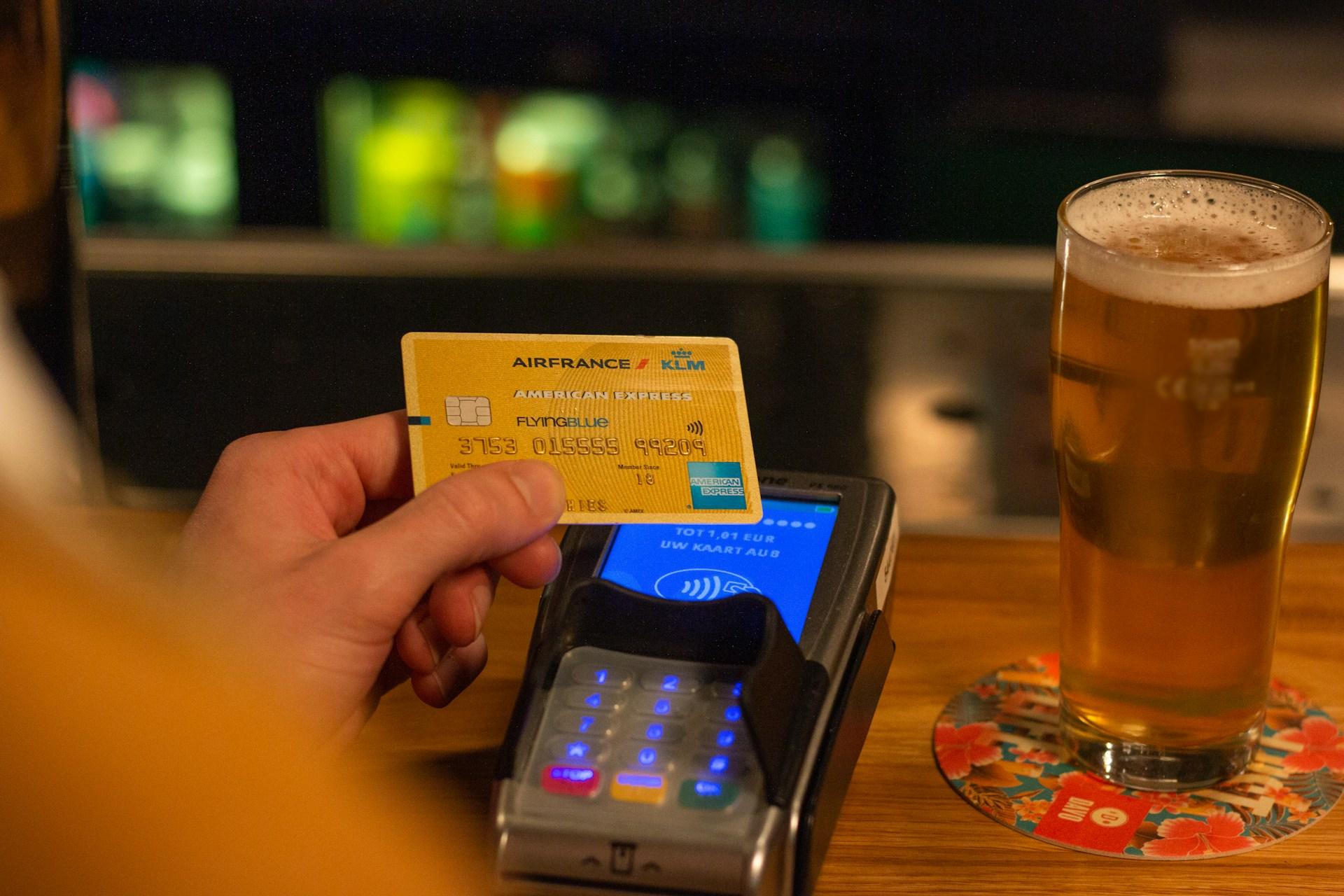
Rewards programs make credit cards appealing because they take something most people already do, spending money on everyday life, and turn it into a story of return. Instead of a purchase ending the moment you pay, it continues as a small promise that something will come back to you later, whether that is a statement credit, a discount, a free flight, a hotel night, or access to a perk that feels a little more premium than the default experience. The appeal is not only in the number printed on a monthly summary. It is in the feeling that you are being smart, strategic, and slightly ahead of the game, even when you are simply buying groceries.
At the simplest level, rewards are a rebate. You spend, and you receive a percentage back. That sounds straightforward, and in a disciplined household it can be genuinely useful. When the rewards arrive as cash back, the benefit is easy to understand. When the rewards arrive as points or miles, the benefit can feel even bigger because the program gives the rebate a different shape. Ten dollars back is ten dollars. Ten thousand points feels like a step toward a vacation. The mind doesn’t process those two things the same way, even if the underlying value is similar. This is where rewards become more than math. They become motivation.
One reason rewards feel so compelling is that they create progress. Most expenses feel like pure outflow. Rent is paid, the number in your account drops, and the transaction is over. Rewards add a second layer to the moment: now you have moved closer to a goal, even if it is a small move. That sense of progress is powerful because it taps into how people build habits. When progress is visible, people repeat the behavior that created it. Credit card apps reinforce this by showing points totals, next-tier milestones, and redemption options in a clean interface. The user experience is designed to make you feel like you are building something, not merely spending. It is no accident that the language often resembles achievement. Earn. Unlock. Redeem. Upgrade. These words turn consumption into a journey.
Rewards are also appealing because they make a credit card feel personal. Cards are no longer positioned as generic payment tools. They are lifestyle products. One card signals practicality and simplicity, another signals travel and mobility, another signals dining and city life, another signals status and comfort through airport lounges and concierge access. Even when two cards might deliver similar value in a spreadsheet, the narrative around them can be entirely different. People choose the one that reflects who they are, or who they want to be. Money decisions are often identity decisions, and rewards programs give identity a place to land.
The strongest emotional hook may be the feeling of getting something for nothing. A purchase is already planned. You already need to buy milk, pay your internet bill, or replace a worn out pair of shoes. A card that gives cash back or points makes that purchase feel slightly improved, as if you have negotiated a better deal without bargaining. Even modest rewards can feel meaningful when they are framed as “extra.” A small percentage becomes a psychological discount, and the mind loves discounts because they signal competence. You were savvy enough to capture value others may be leaving behind.
Sign-up bonuses amplify this appeal because they produce a quick win. When someone receives a large lump of points or a big statement credit shortly after opening a card, it can feel like an immediate payoff for making a smart financial move. The bonus becomes proof that the system works. It creates a burst of satisfaction that encourages deeper engagement with the program and strengthens loyalty to the card. The caution, of course, is that a bonus is only a gift if it matches spending you would have done anyway. If the bonus pushes you into spending beyond your normal budget, or into carrying a balance to cover the spending requirement, the “free” reward becomes expensive. The appeal of the bonus is real, but it should never be allowed to rewrite your cash flow reality.
Underneath the user experience and the marketing language, rewards are also appealing because they sit inside an ecosystem that is built to keep you swiping. In many markets, when you pay with a credit card, merchants pay a fee to accept the card. Issuers share part of this economics back to consumers as rewards because it encourages card usage and helps the issuer win your everyday spending. The reward is not only a thank you. It is an incentive that shapes behavior. The more you use the card, the more the issuer benefits from transaction volume, and the more likely you are to remain in the issuer’s orbit for other products and services. This is why rewards programs are designed to feel generous. They are meant to be a reason to choose a card again and again.
Interest revenue plays a role too, and this is where the conversation becomes more honest. Many people intend to pay their balances in full, and many do, but the system also earns substantial revenue from those who carry balances. Rewards programs can look especially attractive to disciplined users who never pay interest, yet the overall economics of the industry are supported in part by those who do pay interest. That reality does not mean rewards are a trap for everyone. It does mean that rewards should always be evaluated alongside repayment behavior. A person who pays in full can treat rewards as a clean perk. A person who often carries a balance may find that interest charges quickly outweigh the value of points or cash back. The appeal of rewards does not change that arithmetic.
Another reason rewards programs make credit cards appealing is that they can simplify decision-making. Many people feel overwhelmed by personal finance because it comes with too many daily choices. A rewards card offers a default. Use this card for dining. Use that card for travel. Use this other one for everything else. Even if someone never becomes a sophisticated optimizer, having a clear “best card” for most purchases reduces friction. Less friction feels like control. And control is a kind of comfort. When people feel they have a system, they feel less anxious about money, even if the system is only a small part of their overall financial picture.
Rewards also become more enticing when they are packaged with benefits that feel protective. Purchase protection, extended warranty coverage, travel insurance, and certain dispute-resolution processes can make a card feel like a safety net. For someone buying electronics, booking flights, or paying for family travel, these benefits can be genuinely valuable. They reduce the fear of something going wrong. This extends the appeal beyond rewards as a perk and into rewards as a form of security. The card becomes a membership with guardrails, not just a way to pay.
Then there is the subtle way rewards change how spending feels in the moment. Paying with cash creates an immediate sense of loss. The money leaves your hand and you feel the cost. Digital payments already reduce that pain because the transaction is more abstract. Rewards reduce it further by adding a small positive sensation to the purchase. Instead of feeling only the outflow, you also feel the “earn.” This matters because wealth-building is often threatened not by a single dramatic mistake but by repeated small decisions that become easy to justify. When a purchase is paired with a reward, it can become easier to rationalize spending that you would not have made otherwise. This is one of the most important truths about why rewards programs are appealing. They do not only reward behavior. They change behavior by changing emotion.
Points and miles deepen the appeal because they can feel like investing, even though they are not. Watching a points balance climb can resemble watching an account grow. The language of earning, accumulating, and redeeming can feel like a return on spending. But rewards do not compound in the way invested money compounds. Points can also be devalued if redemption rates change. The appeal comes from the illusion of growth and progress without the discomfort of volatility or the patience investing requires. For many people, rewards feel like a more approachable version of “making your money work for you,” even though the mechanism is fundamentally different.
The best way to understand whether rewards are truly beneficial is to view them through three lenses: your spending pattern, your fees, and your repayment behavior. The spending pattern determines whether the rewards you earn are meaningful. A card that rewards dining heavily is wonderful for someone who genuinely spends on dining regularly, and less useful for someone who mostly cooks at home. A card that rewards travel expenses is valuable for someone who travels, and irrelevant for someone whose travel is rare. The fee structure determines whether the rewards you earn are eaten up by annual fees or other charges. Premium cards can be worth it when the perks are used consistently, but expensive when the perks are mostly aspirational. Repayment behavior determines whether rewards remain a perk or become a distraction. If you pay in full each month, rewards can be a small advantage. If you routinely carry a balance, rewards can become an expensive consolation prize.
Redemption is another part of the story that people underestimate. A reward is only valuable if it can be used. Cash back is straightforward, which is why it often works well for people who want simplicity. Points and miles can offer excellent value for people who enjoy planning and understand how to redeem efficiently, but they can also create “breakage,” which is the industry term for rewards that expire, go unused, or are redeemed at poor value because the process is confusing. This is not a moral failing. It is a design feature of many programs. The more complicated redemption is, the fewer people will extract maximum value. That complexity is part of how programs protect profitability while still marketing attractive rewards rates.
Fees can quietly erode rewards as well. Foreign transaction fees can undermine travel rewards if the card is used abroad. Interest can overwhelm points value if balances are carried. Some bonus categories have caps that limit the upside, so what looks generous in a headline becomes modest in reality. Some cards require you to remember rotating categories or activation steps, and if you forget, you earn less. These are not reasons to avoid rewards entirely. They are reasons to see rewards as a tool that must fit your habits, not a trophy you chase.
There is also a social element to the appeal. Rewards cards can become conversation starters. People compare sign-up bonuses, lounge access, and the value of certain points. There is a sense of belonging in knowing the tricks of the system. For some, this becomes a hobby. That hobby can be rewarding in itself, but it can also create a strange incentive to spend simply to play the game. When the game drives the behavior, rather than the behavior earning a bonus, the rewards stop being a perk and start being a steering wheel.
A calmer way to approach rewards is to imagine the next twelve months rather than the first month. The first month is where bonuses and excitement live. The year is where true value is measured. Over a year, the best rewards program is often the one you barely notice because it quietly aligns with your normal spending and does not demand constant attention. It does not ask you to track too many categories, juggle too many cards, or justify purchases you would not have made. It simply pays you a small rebate for being consistent.
Rewards programs make credit cards appealing because they offer upside in a world where many expenses feel like pure necessity. They make spending feel smarter, progress feel visible, and everyday transactions feel more personal. They wrap a financial tool in a lifestyle narrative and a sense of membership. And they soften the emotional sting of paying by adding a small, satisfying win to the moment of purchase. When used with discipline, rewards can be genuinely beneficial, especially for people who pay in full and choose a card that matches their actual habits. When used without a plan, they can become a beautifully designed distraction that costs more than it gives. The most practical conclusion is simple: rewards should be your side benefit, not your financial strategy. Your strategy is paying on time, paying in full when possible, keeping spending aligned with your budget, and choosing products that fit your life. When those foundations are steady, rewards can feel like what they are supposed to be, a small extra return for the spending you were going to do anyway.
 WhatsApp
 Instagram
 Threads