
AI has quietly reshaped the way people are hired. For many job seekers, the process no longer begins with a recruiter reading a resume and forming an impression. It begins with a system that collects information, converts it into structured data, and decides whether a human will ever see the application. This shift can feel impersonal, but it becomes far less intimidating once you understand what these tools are actually doing. Most AI-driven hiring systems are not making a deep judgment about a person’s potential. They are sorting signals, reducing uncertainty, and narrowing a large pool into a smaller shortlist that a hiring team can review.
Employers adopt AI and automation mainly to manage volume, standardize decisions, and limit risk. When hundreds or thousands of candidates apply for the same role, organizations need a way to triage efficiently. They also want consistency across departments and locations, especially in larger firms where hiring practices must be documented and repeatable. In many companies, AI is layered on top of an applicant tracking system rather than replacing it. The result is a process that feels like one step to candidates, but is often several stages hidden behind a single “Submit” button.
A practical way to prepare is to picture the hiring funnel in stages. First comes ingestion, where your resume and application details are parsed. The system attempts to identify your job titles, dates, education, tools, skills, and responsibilities. It tries to translate your career story into fields and categories. Then comes screening, which may involve rule-based filters such as work eligibility, salary expectations, or minimum experience, and may also include automated ranking that compares your profile to the role’s requirements. After that, many employers rely on assessments, such as work samples, coding tests, writing tasks, or psychometric questionnaires, because these create standardized outputs that can be compared across candidates. Finally, a human reviews a shortlist, often with system-generated summaries or notes, and decides who moves forward.
Because the process is structured this way, job seekers benefit most from removing avoidable points of failure before trying to polish every detail. The first priority is machine readability. If the system cannot accurately parse your resume, your strengths may never appear in the candidate profile that recruiters see. That means simple formatting matters more than most people realize. A clean, straightforward layout with standard headings makes it easier for software to interpret your information correctly. Heavy graphics, unusual columns, icons used as labels, or text placed inside design elements can lead to missing or scrambled data. For creative roles, a visually rich portfolio can still be valuable, but it is wise to keep a separate, simplified resume version for automated portals so your information is captured reliably.
Once your resume can be read, the next step is to make sure the system can understand what you do. Many candidates focus on listing skills, but AI-driven screening responds better to skills that are supported by evidence. It is not enough to claim stakeholder management, data analysis, or project leadership. Your work experience should show these capabilities through actions and outcomes. When the same competency appears consistently across your title, your tools, your responsibilities, and your measurable results, you become easier to classify as a match. Consistency reduces ambiguity, and reducing ambiguity is one of the main reasons automation exists in the first place.
This is where role language becomes important. Job descriptions use specific terms, and automated systems often match candidates based on that terminology. Candidates sometimes describe the same work using different phrases, then wonder why they are filtered out. For example, one company may use “customer success” while another prefers “client retention and onboarding.” If your experience aligns, it helps to reflect the employer’s wording in a way that remains accurate and honest. This is not about stuffing keywords. It is about making sure the system does not miss an obvious fit because you used different labels. Clear alignment with the role’s language helps both software and humans understand you quickly.
After readability and alignment, the most valuable preparation is building a layer of proof that cannot be dismissed as generic. Many hiring teams are now cautious because polished applications are easy to produce, and templated writing is everywhere. Specificity becomes your advantage. Instead of relying on broad statements, you can highlight a few concrete projects that show constraints, decisions, tradeoffs, and impact. Even in non-technical roles, evidence can be expressed through improvements in speed, cost, quality, customer outcomes, or risk reduction. The more grounded your examples are, the easier it is for a reviewer to trust your claims and imagine you doing similar work in their organization.
At the same time, job seekers should assume assessments will be part of the journey. Employers use them because they create comparable data points across candidates. Preparing for assessments means treating them like a separate deliverable rather than an unexpected hurdle. Work sample tests tend to reward candidates who are clear and structured. Being legible often matters more than trying to appear brilliant. A strong response usually states assumptions, walks through reasoning, and ends with a recommendation tied to the prompt’s constraints. Writing assessments often reward clarity, audience awareness, and purposeful organization. For technical tests, practice and familiarity with the format can reduce stress, but calm execution is often the difference between average and strong performance.
Psychometric and personality questionnaires can feel strange because they reduce complex human behavior into categories. Many candidates try to answer in a way they think an employer wants, but inconsistency can become a red flag. A healthier approach is to answer honestly while keeping a professional context in mind. The aim is not to present a perfect personality. The aim is to present a stable, coherent picture of how you behave at work.
Another major feature of AI-driven hiring is the rise of recorded or AI-assisted interviews. Sometimes the AI is not evaluating you directly, but it may be transcribing, summarizing, or highlighting themes for a recruiter. In other cases, you are asked to record answers to prompts without a live interviewer. Preparation here has two sides. The first is basic signal quality. Clear audio, good lighting, a stable connection, and a distraction-free setting influence how confident and competent you appear. These factors should not matter as much as they do, but they shape perception. The second side is narrative control. AI-driven processes reward candidates who can map experience to requirements quickly and coherently. This does not mean sounding scripted. It means being able to tell structured stories that demonstrate judgment.
A practical way to build that ability is to prepare a small set of examples that cover common interview themes. You can choose stories that show how you handled conflict, managed ambiguity, recovered from a mistake, improved a measurable outcome, and influenced others without direct authority. In each story, what matters is not just what happened, but why you made the choices you made and what changed as a result. Employers are trying to predict future performance from limited data. When you explain reasoning, not just results, you reduce uncertainty and build credibility.
As job seekers adapt, many also use AI tools themselves. Used wisely, these tools can improve clarity, correct grammar, and help tailor wording to a role. They can also support interview practice by simulating questions and giving feedback on concision. The risk appears when tools are used to manufacture accomplishments or create answers that the candidate cannot defend. That approach may help someone pass a first filter, but it produces a fragile profile that collapses in deeper interviews or assessments. Many employers are already responding by adding verification steps and more realistic work samples. The most sustainable strategy is to use AI to express your real experience more clearly, not to replace it.
Privacy is another consideration that grows with automated hiring. When systems store applications, recordings, and assessment outputs, candidates are providing more data than a resume alone. It is worth being deliberate about what you share and ensuring you are comfortable with the platform’s requirements. While candidates often have limited control over these systems, awareness helps you make informed choices, especially when a process asks for one-way video or extensive personal details beyond what the role requires.
Concerns about bias also deserve to be taken seriously. Automated screening can reflect historical patterns and may disadvantage certain groups if trained or configured poorly. Candidates cannot fix the system, but they can reduce dependence on any single funnel. A balanced approach includes applying through multiple channels and adding human pathways when possible, such as referrals, recruiter introductions, industry events, and direct engagement with hiring managers. AI-driven processes are most powerful at filtering strangers. The moment you become a known quantity, the process tends to become more nuanced.
This matters particularly for early-career candidates and career switchers. Automated systems often prefer linear, easily categorized trajectories. If your path is non-traditional, it helps to be explicit about transferability. Naming equivalent skills is useful, but proof is what persuades. If you are moving into a new function, show examples that demonstrate the core activities of that function, whether that is analysis, stakeholder alignment, experimentation, delivery, or measurable improvement. Do not assume the system will infer the connection, especially when job titles vary across industries and regions.
In the end, preparing for AI-driven hiring is less about tricking technology and more about making yourself easier to evaluate. When your resume is readable, your language aligns with the role, your skills are supported by evidence, and your interview stories show judgment, you are working with the process rather than fighting it. The irony is that clarity, not cleverness, is often the strongest advantage in automated funnels. Employers use AI to reduce ambiguity, and candidates who reduce ambiguity about their value tend to rise.
If you approach the modern job search like a system, you regain control. You start by ensuring clean inputs, then you strengthen the signals that matter, and finally you provide proof that holds up when the process becomes more demanding. AI may shape the pathway, but it does not eliminate what employers ultimately want. They still want people who can do the work, learn quickly, communicate clearly, and make good decisions. Your preparation is simply the art of making those qualities visible in a world where the first reader is often a machine.
 WhatsApp
 Instagram
 Threads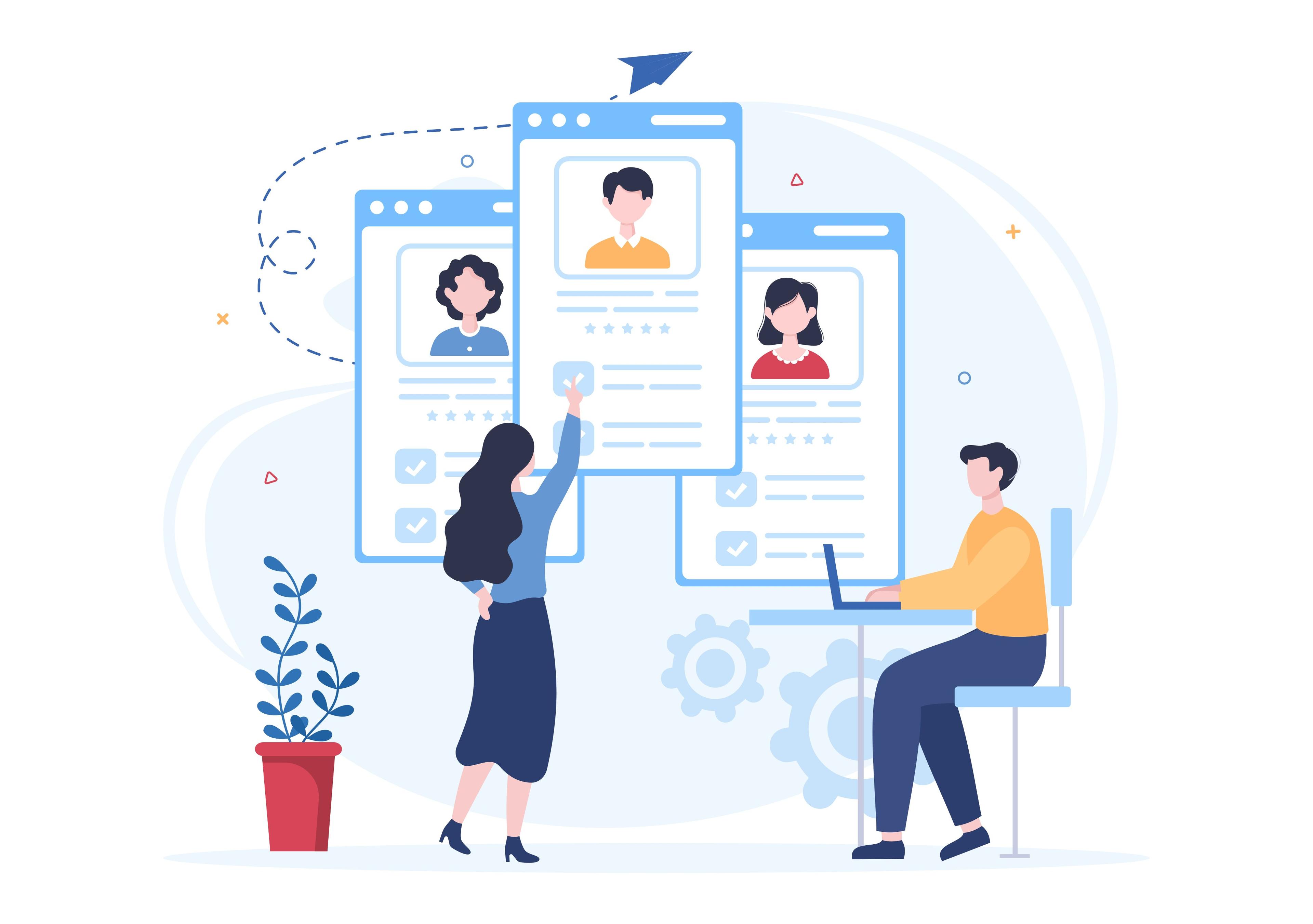

-1.jpg&w=3840&q=75)






.jpg&w=3840&q=75)