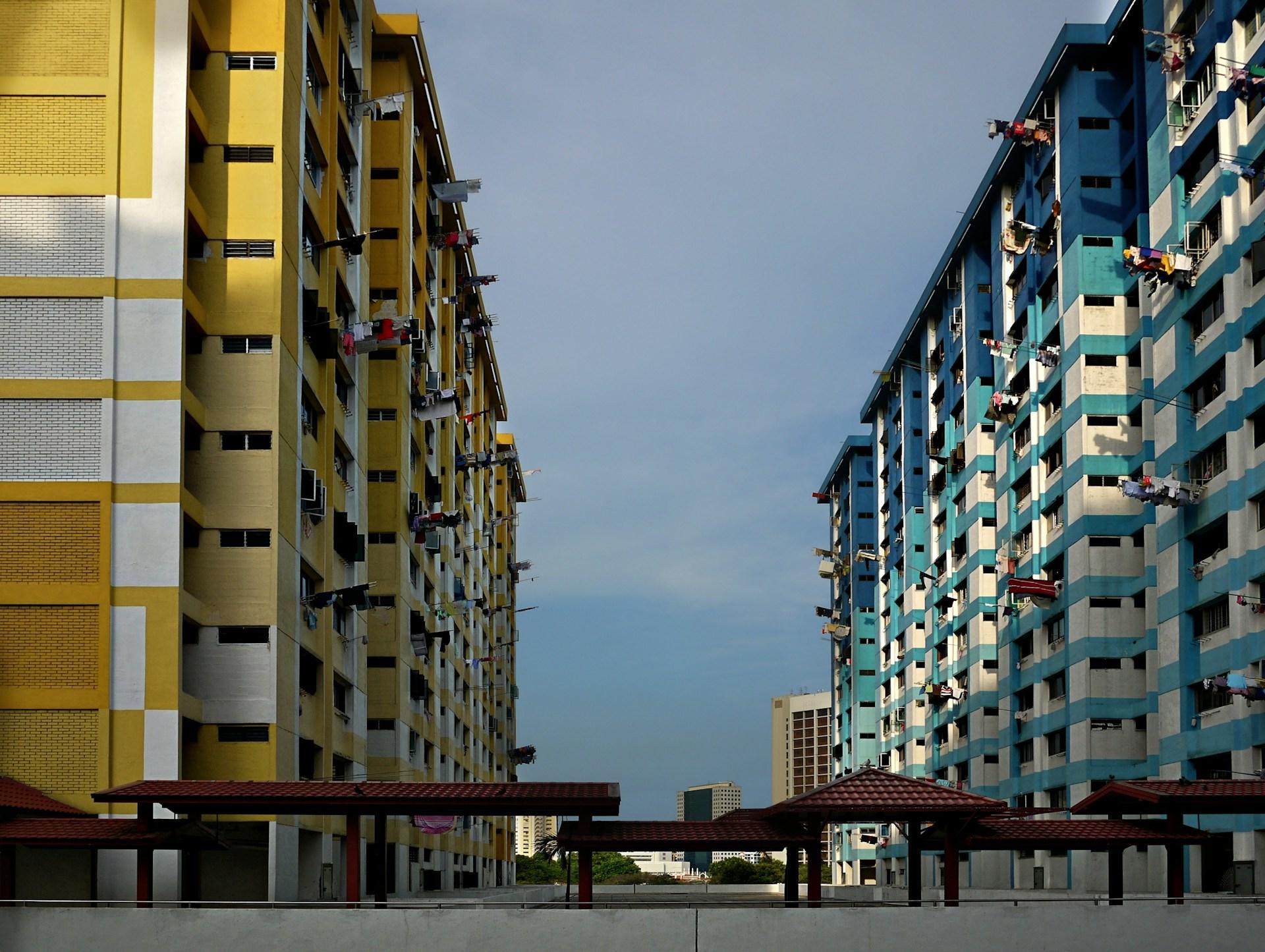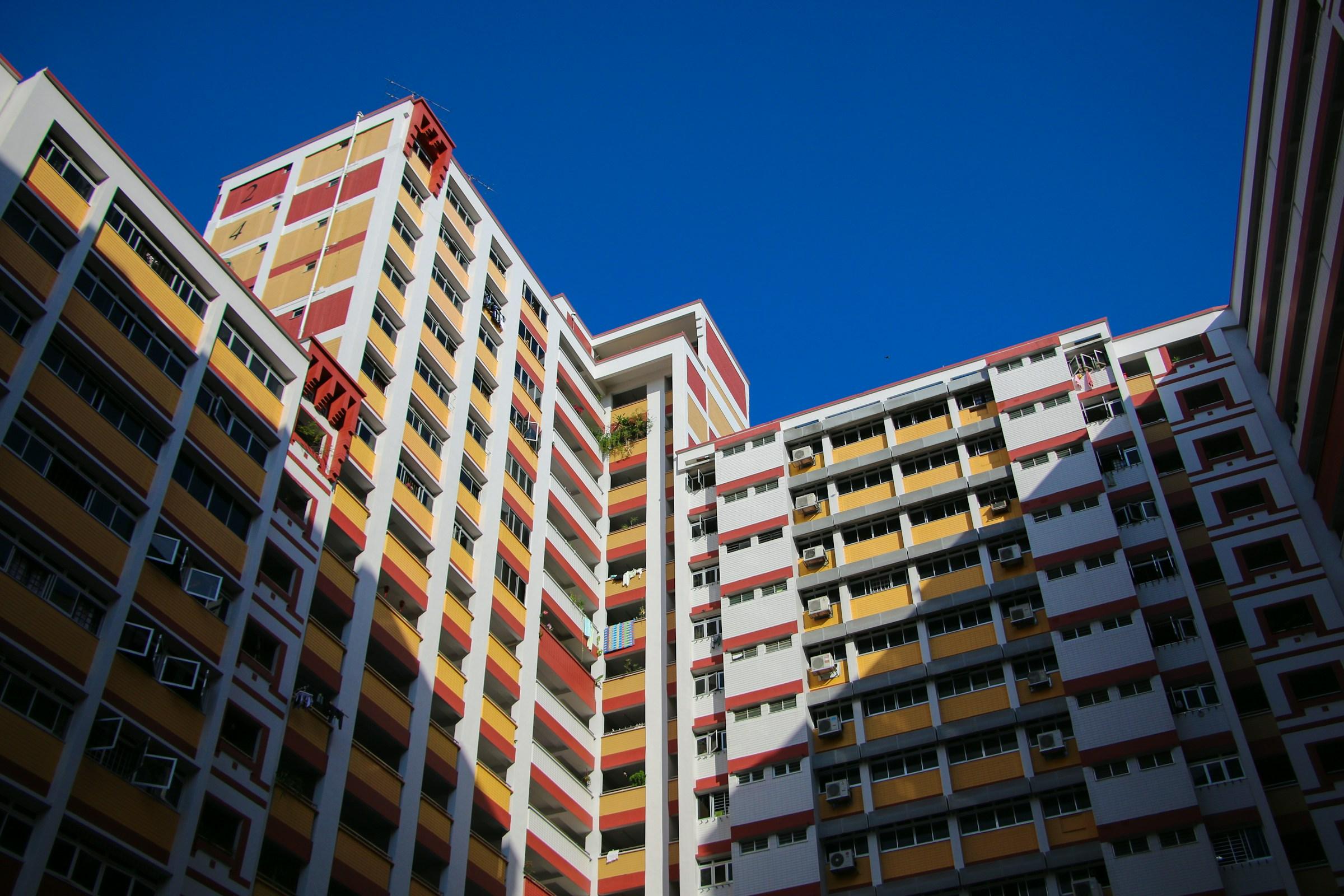
Not all HDB flats are priced the same, even when their floor areas and completion years look similar on paper. For years, this has been treated as a quirk of the resale market: certain towns are seen as “lotteries”, certain blocks become legends. Yet from a macro financial perspective, these price gaps are neither random nor purely emotional. They reflect how Singapore’s public housing system converts state land, policy signals and household expectations into differentiated capital values over time.
At the margin, these differentials matter. They influence how households allocate savings between CPF and housing, how much leverage they take on, and how they interpret the implicit promise that HDB remains both a home and a reasonably stable store of value. Understanding what actually drives higher valuations is therefore not just a consumer question. It is a window into how the system is managing intergenerational equity, spatial planning and the political acceptability of wealth effects concentrated in specific estates.
The first determinant is structural and quantifiable: remaining lease. HDB flats are 99 year leasehold assets. As the remaining lease falls, banks and buyers reprice risk, and that repricing is not linear. Policy guidance from the Ministry of National Development and MAS on loan and CPF usage for older flats has made this explicit, turning lease decay into a visible discount function, especially once the remaining lease dips below thresholds such as 60 and 40 years. The market has internalised this. Two otherwise similar units can diverge sharply in value based purely on whether their leases allow a typical buyer to span a full mortgage tenure and retirement timeline.
This lease effect is accentuated by expectations about redevelopment. For years, the Selective En bloc Redevelopment Scheme introduced an element of optionality into certain older towns, creating a soft “SERS premium” for blocks perceived as more likely candidates. Once the government clarified that only a small minority of flats would ever be selected, and that the new Voluntary Early Redevelopment Scheme would operate on very long time horizons, that optionality was reduced. What remains, however, is a meaningful divergence between flats whose leases comfortably cover a buyer’s lifetime and those where the end date is within visible planning range. In capital terms, the former are closer to full duration public housing bonds, the latter to shorter, amortising notes with limited resale liquidity.
Location still matters, but in Singapore it is not just “near town equals expensive”. It is proximity to transport nodes, employment clusters and established amenities, shaped by the government’s long running decentralisation strategy. Flats near MRT interchanges, regional centres and large healthcare or education hubs command persistent premiums because they sit inside well serviced, high accessibility catchments. Once a town matures with a full stack of amenities, its flats behave more like core infrastructure assets in household portfolios: less speculative, more defensible. Conversely, units in less connected peripheries function more like options on future infrastructure. They can re-rate significantly when new MRT lines or expressways arrive, but until then carry a discount for time and uncertainty.
Within estates, micro location creates further value stratification. Blocks that are shielded from expressway noise, enjoy unblocked views, or are oriented to reduce heat gain are consistently repriced upward relative to their immediate neighbours. In dense public housing, these small spatial advantages translate into differentiated willingness to pay, especially among upgraders with higher household incomes. The premium here is effectively for quality of life and long term livability, but it also reveals something about demand elasticity at the upper end of the HDB income band. These buyers behave more like private-market participants, arbitraging fine grained locational differences with decades-long horizons.
Flat type and internal configuration are another source of persistent value difference. Larger flats are scarce by design. As household structures change and multigenerational living remains relevant for parts of the population, five-room and executive units in well located estates have become quasi institutional assets for families, supporting both co-residence and future flexibility. Newer configurations, such as those with more efficient layouts or additional bathrooms, are priced not only on square footage but on how well they align with modern lifestyle expectations. In capital flow terms, this is a shift from valuing gross floor area to valuing usable, adaptable space, with premiums accruing to units that minimize retrofit costs.
Policy classification is now an explicit value driver. The introduction of Prime and Plus flat categories formalised something the market had already sensed: certain locations offer such strong accessibility and amenity stacks that, without tighter resale conditions, their prices would detach even further from the broader HDB universe. By imposing longer minimum occupation periods, tighter income ceilings for resale buyers or restrictions on renting out entire flats, the state is dampening the capital gains trajectory of these units in exchange for stronger owner occupation and social mix. This is, in effect, a regulatory cap on the asset like behaviour of the most desirable flats. Yet even with these constraints, the embedded locational advantages mean they are likely to remain at the upper end of the HDB valuation spectrum. The premium is simply moderated and stretched over a longer holding period.
Ethnic integration and SPR quota policies add a uniquely Singaporean layer to valuation. These quotas are designed to preserve social cohesion and prevent racial clustering. At the micro level, however, they periodically constrain the effective buyer pool for specific units when certain quotas are filled, temporarily suppressing achievable transaction prices. Over long horizons, this creates episodic volatility around an underlying value trend. Importantly, this is not a classic market risk but a policy engineered friction. It demonstrates that in Singapore’s public housing system, social objectives are allowed to override pure price discovery, with the cost of that override borne unevenly by different households at different points in time.
One should also not ignore the role of upgrading programs and estate level investment. Blocks that have undergone comprehensive lift upgrading, Home Improvement Programme works, or precinct level enhancements typically see a step up in perceived quality, which the resale market is willing to recognise. These are essentially state funded capital injections into aging assets, extending their functional lifespan and partially offsetting lease decay. The value uplift, however, is not uniform. It tends to be higher where the surrounding urban fabric is also being renewed, for example through new community facilities or transport links, and lower where the broader town still feels structurally dated. That interaction reinforces the idea that HDB values are as much about the ecosystem around each block as about the unit itself.
Household finance and credit conditions complete the picture. MAS macroprudential measures, including loan to value limits, total debt servicing ratios and minimum cash downpayment requirements, shape how much leverage households can deploy into any given flat. When these levers are tightened, higher priced units shoulder more of the adjustment because their marginal buyers are more constrained. In periods of looser financial conditions or strong income growth, by contrast, the upper tier of the HDB market can reflate more rapidly than the median unit. From a system perspective, this is a reminder that public housing prices sit inside a larger macro policy framework designed to prevent excessive household leverage, particularly for segments already close to private housing thresholds.
Market sentiment and narrative also matter, though less than headlines suggest. Stories of record resale prices in particular towns can trigger localised waves of optimism, drawing in marginal buyers who fear missing out on future appreciation. Yet these waves are ultimately gated by policy, financing rules and the hard constraint of household incomes. Over time, the more durable premiums accrue to flats whose fundamentals align with long term planning priorities: strong connectivity, robust estate level amenities, demographic resilience and a lease profile that does not collide with buyers’ retirement horizons. Shorter term sentiment can amplify or dampen these differentials, but it rarely reverses them.
For policymakers and sovereign allocators, the pattern that emerges is clear. HDB valuations are not an uncontrolled byproduct of market forces. They are the outcome of a layered design that combines lease tenure, locational planning, social policy and macroprudential rules to engineer a constrained asset class that still delivers meaningful wealth effects for the median household. When some flats are systematically more valuable than others, it is often because they sit at the intersection of several of these design choices at once. Prime locations with long leases, upgraded infrastructure and large unit types are effectively the “blue chips” of the system, but their upside is increasingly managed through tighter usage conditions and resale constraints.
What looks, from street level, like a story of lucky floors, good views or desirable schools is, at scale, a map of how Singapore channels capital, expectations and social objectives through its public housing stock. The factors that make some HDB flats more valuable are therefore not merely features to be exploited by individual buyers. They are signals of how the state continues to balance housing affordability, asset appreciation and macro stability in a city where public housing remains the dominant, and politically central, form of household wealth.
 WhatsApp
 Instagram
 Threads
.jpg&w=3840&q=75)