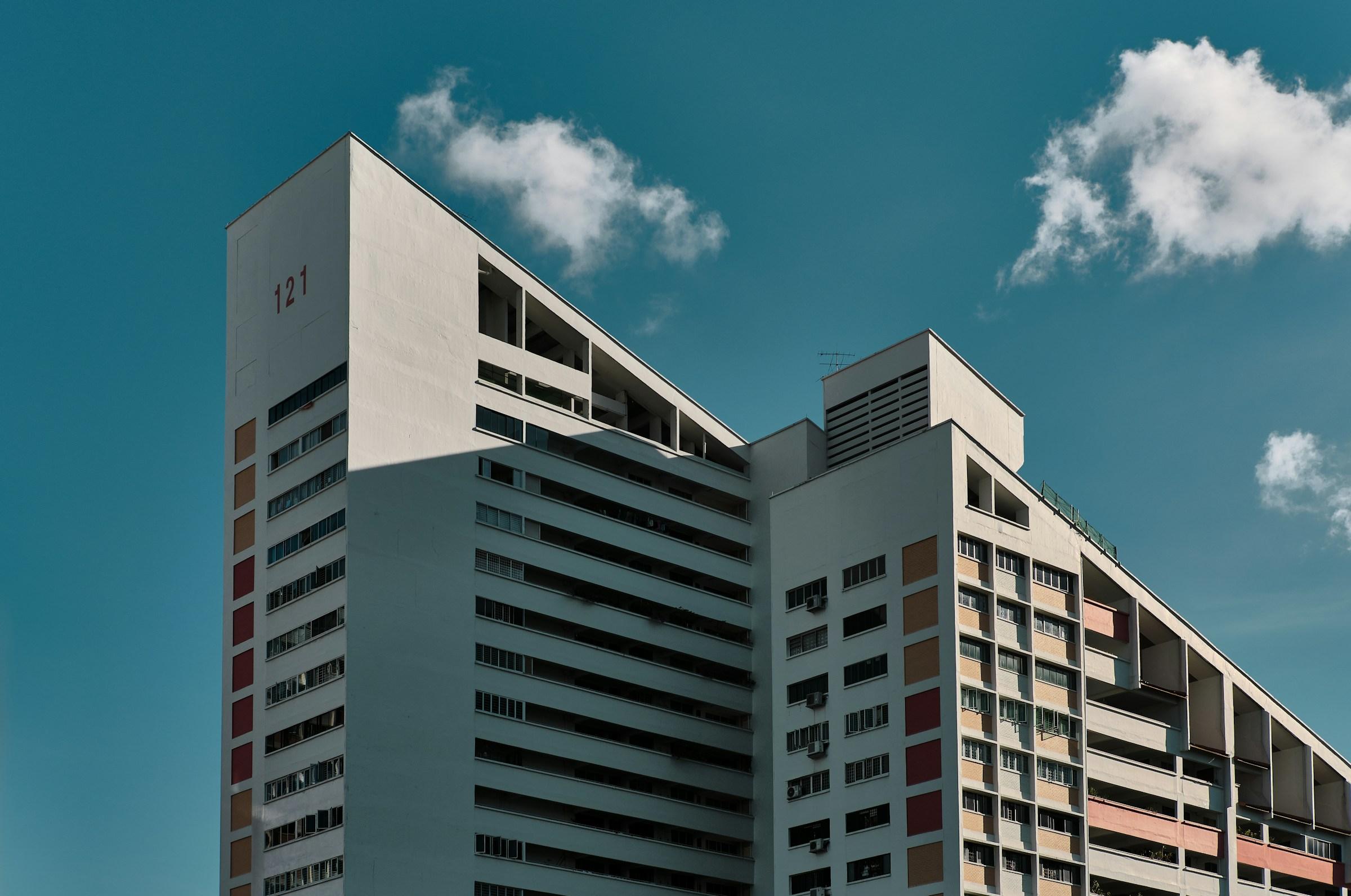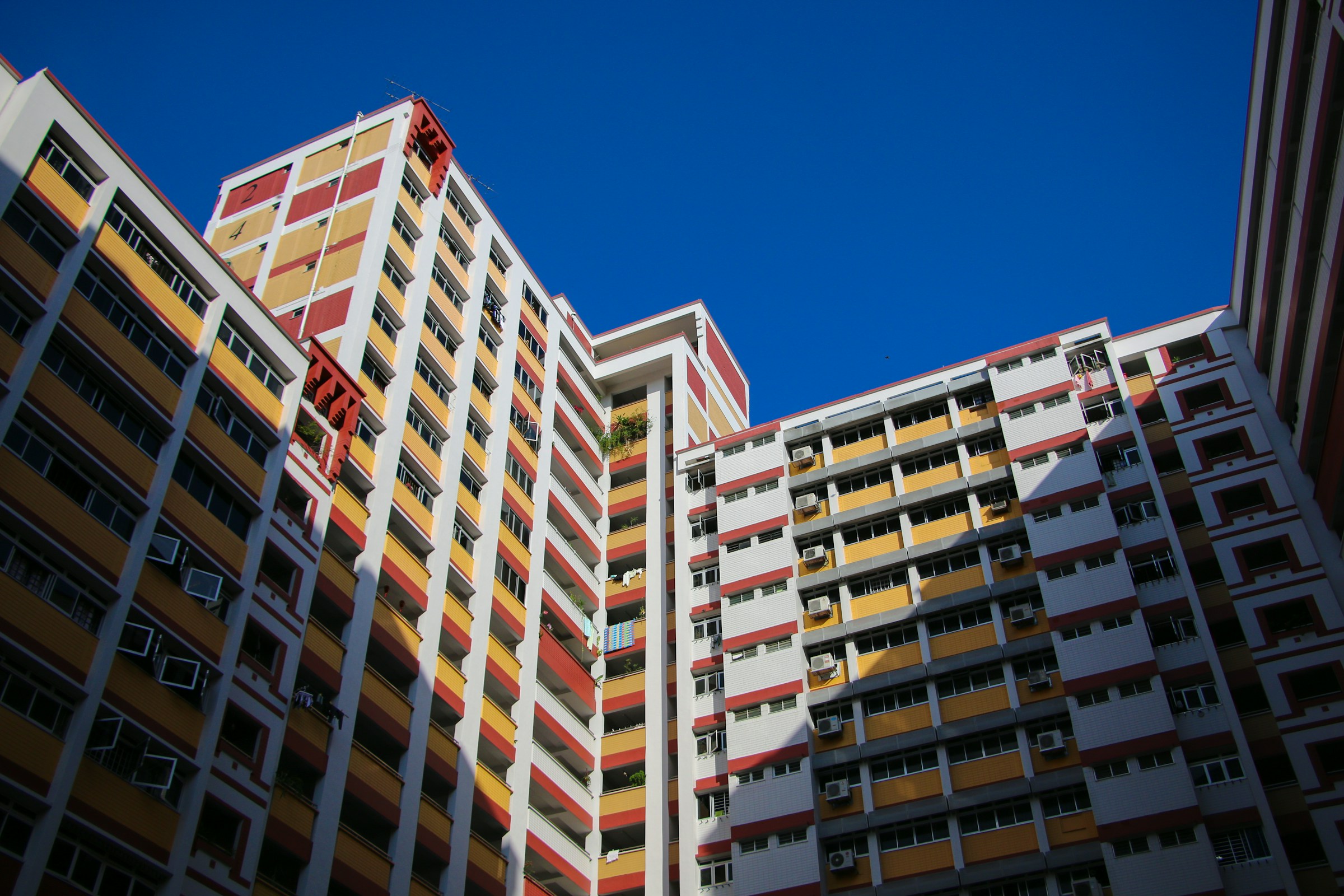
When people talk about rising HDB prices and limited supply, they often frame it as a simple issue of demand outpacing supply. Too many buyers, not enough flats, prices go up. That explanation is not wrong, but it is incomplete. It treats each unit as an isolated transaction and ignores the fact that HDB is a system designed and managed by the state. It is not just public housing in the narrow sense. It is an engineered asset class that sits at the center of Singapore’s social contract.
Once you see HDB as a system rather than a collection of flats, the story changes. Prices are no longer just a result of what buyer and seller agree to on a particular day; they are signals of how well the system is balancing three competing goals. It must keep housing affordable for new households. It must allow existing owners to enjoy some capital appreciation over time. It must preserve political legitimacy by showing that the promise of home ownership still works for the next generation. Rising prices and limited supply create tensions across all three dimensions at once, and those tensions are what really shape HDB values.
The first way these pressures show up is through expectations. Buyers do not come to the market with a blank slate. They absorb headlines about record resale prices, hear friends talk about bidding wars, see social media posts celebrating million dollar HDB deals, and experience BTO launches that are heavily oversubscribed. Over time, they internalize a simple fear. If they do not buy soon, they might be locked out of the market forever. That fear brings forward decisions. Couples try to secure a flat earlier in their life stage, accept longer loan tenures, and become more willing to pay a premium for location, remaining lease, or specific flat types.
In this environment, cash over valuation stops looking like an indulgence. It begins to feel like an entry ticket. For certain towns and blocks, every viewing becomes a test of how much urgency the buyer feels. In a tight supply situation, this urgency stacks on itself. One aggressive offer resets the reference point for everyone else. Even buyers who would prefer to be cautious start wondering if caution is a luxury they cannot afford. Rising prices and limited supply create a feedback loop between expectations and behavior, which in turn reinforces higher valuations for the most desirable units.
These dynamics are not uniform across the island. Limited supply is not evenly distributed across all towns, flat types, or ages of development. It is concentrated in specific micro segments. Large flats near established schools, integrated transport nodes, and mature town centers are a good example. There may be relatively few of such units and their owners may not move often. When one of these flats enters the market, it attracts a cluster of serious buyers who all know that similar options rarely appear. The result is a small scale auction where scarcity, more than cost, becomes the dominant variable.
Each time such a flat transacts at a higher price, it sends a signal far beyond the individual block. Buyers in neighboring estates benchmark their own willingness to pay against what they see in that scarce micro market. Agents use these results as reference points in negotiations. Over time, the scarcity premium spills over into surrounding areas and forms a higher baseline for what is considered normal. Even though the country continues to build new flats in absolute terms, many of those new units are not direct substitutes for these scarce, amenity rich locations. They may require long construction waits or sit in developing towns where social and commercial infrastructure has not yet caught up. As a result, the perception grows that truly attractive HDB units are becoming a vanishing resource, which further supports high values for those limited segments.
Rising prices and constrained supply also reshape how people think about HDB as an asset compared to a home. When values increase sharply, owners who bought earlier face a different set of choices. Their flat is no longer just a place to live; it looks and feels like a significant financial stake. If they sell, they want to make sure the next step is clearly superior, whether that is a private condominium or a larger unit in a better location. Many owners anchor their expectations to the latest record transaction in their block or town. Unless they receive offers that match or exceed that anchor, they feel comfortable staying put.
This stickiness has system wide consequences. When more owners decide that holding is safer than moving, resale supply tightens even further. Young buyers are not only competing with each other; they are chasing a small pool of owners who do not need to move and can choose to wait for the right price. That imbalance strengthens the bargaining position of sellers and reinforces the sense that HDB ownership is a one way bet that must be secured as early as possible. The market begins to feel less like a fluid marketplace and more like a series of closed doors that occasionally open.
Because HDB operates within a tightly managed policy framework, rising prices and limited supply do not only create market risk; they also increase policy risk. The state tracks affordability ratios, debt levels, and public sentiment closely. When indicators show that housing is stretching too far beyond what median incomes can support, or when younger households express frustration about access, policymakers have to intervene. They have a wide toolkit: loan to value adjustments, changes to grants, restrictions on multiple property ownership, and various forms of stamp duties. Some measures are aimed at speculative behavior, but others affect regular owner occupiers directly.
For HDB values, this means prices are always co determined by market forces and policy decisions. The steeper the rise and the tighter the supply, the greater the probability that new measures will arrive. Every sudden spike invites scrutiny. Policy makers are not only worried about short term heat in the resale charts. They are also concerned about long term social cohesion and economic resilience. From a buyer’s perspective, it becomes important to ask not just what the current market can bear, but also how likely further policy tightening is if the present trend continues.
At the same time, tight supply pushes the market to discriminate more sharply between flats with strong second cycle potential and those that are more exposed to future demand risk. When buyers are already stretching their finances, they try to reduce uncertainty by paying up for attributes that are more resilient. Proximity to MRT lines, integrated transport hubs, popular schools, healthcare facilities, and job dense commercial centers becomes even more valuable. These factors shorten daily commute times, reduce lifestyle friction, and provide clearer resale narratives. Over time, units that combine these features with a healthy remaining lease can decouple from the broader market. Even when overall sentiment softens, demand for these pockets of scarcity often remains firm because the underlying supply is structurally limited.
There is also a generational layer to this story. For older cohorts who bought their flats at much lower absolute prices, rising values validate the idea that HDB is both a home and a crucial pillar of retirement security. Their experience of the system is that it works as promised. For younger cohorts entering at a much higher price level and facing heavier competition, the story feels different. For them, HDB can begin to look less like a universal escalator to asset growth and more like a gate that is harder to get through.
When high prices and limited supply persist, some young adults delay forming their own households. Others extend their stay with parents while saving longer. A subset looks at cross border options or alternate housing paths that give them more flexibility or lower initial costs. These choices, aggregated across hundreds of thousands of households, feed back into Singapore’s broader economic patterns. Housing costs influence how much risk people are willing to take with their careers, how easily they can switch industries or start businesses, and how confident they feel about raising children. A heavily leveraged household with a large mortgage is more sensitive to income shocks and less inclined to pursue uncertain opportunities, even if those opportunities have higher long term upside.
Finally, the effect of rising prices and limited supply extends to how external investors and observers view Singapore’s property ecosystem as a whole. Even though HDB flats are not a speculative playground in the way some private markets are, their performance still sends a signal about the stability of the country’s housing policies and the discipline of its macro management. If the authorities demonstrate that they can contain heat in the HDB system without triggering severe corrections, that strengthens confidence in the broader real estate environment. It suggests an ability to manage cycles in a measured way. If affordability strains become a recurring flashpoint, the perception may shift. The system can still be seen as safe, but expectations of further price growth may gradually be tempered.
Underneath all these moving parts lies a design question. HDB was established as a mass access platform: a way for most citizens to own a home and participate in a controlled form of asset appreciation. As the system matures, land becomes scarcer, and household preferences diversify, the original design parameters are under greater stress. Rising prices and limited supply are not just outcomes; they are indicators of where the model is being stretched. They raise a series of difficult but necessary questions. Should more resources be directed toward building centrally located flats even at higher initial state cost. Should new lease or tenure structures be introduced to give households greater flexibility over their housing trajectory. Should there be clearer segmentation between units intended primarily as stable long term homes and those intended for higher mobility or shorter holding periods.
These are not questions about individual negotiation tactics or whether to pay a particular cash over valuation amount. They are product and system questions that will influence HDB values more than any single cycle of price increases. For now, what can be said with confidence is that rising HDB prices and constrained supply do much more than lift transaction values. They redistribute bargaining power between generations, compress decision timelines for young households, and raise the odds that policies will have to adjust quickly and decisively.
If you want to read HDB values properly, it helps to stop treating them as a simple up or down chart. Instead, think of them as a live dashboard of system pressure. When prices rise and supply tightens, the numbers are telling you not only what people are paying today, but also how much strain is building inside the model that makes Singapore’s housing system possible.
 WhatsApp
 Instagram
 Threads