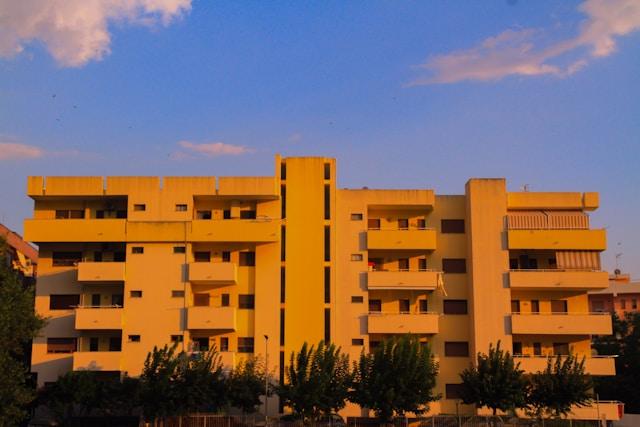
For a long time, the idea of buying a home followed a familiar script. You found stable work, saved a down payment, secured a mortgage, and watched your home become both a place to live and a stepping stone to something bigger. The market moved slowly enough that a small misstep did not feel fatal. Waiting a year rarely changed the entire trajectory of a person’s financial life. That sense of predictability is fading. A changing housing market is forcing future homeowners to think differently, not because homeownership is no longer valuable, but because the environment around the purchase has become more complex, more segmented, and less forgiving of assumptions.
What is shifting first is the way housing behaves. In many places, it no longer feels like a stable store where prices adjust neatly and gradually. It behaves more like a marketplace where outcomes depend on timing, supply, and who else arrives with the same intention. A buyer is not simply choosing a property. A buyer is entering a competition shaped by interest rates, investor behavior, local scarcity, and sentiment. When mortgage rates rise, monthly payments can jump immediately even if list prices do not move much. When rates fall, demand can surge faster than supply can respond, and bidding wars return even when the underlying housing stock has not improved. The practical consequence is that future homeowners must learn to think in terms of payment streams and long-term carrying costs rather than anchoring solely to the sticker price.
This is why the popular strategy of “I’ll wait until prices drop” often disappoints. In many markets, prices do not fall cleanly. Instead, the system tightens. Owners who locked in low mortgage rates hesitate to sell because moving would mean trading a manageable payment for a far higher one. Builders slow down when financing costs rise and buyers become cautious. Inventory thins, not because demand disappears, but because supply stops flowing. The result can be a frozen market where buyers are not seeing meaningful discounts, only fewer options and more frustration. In that environment, waiting is not always a mistake, but it is not automatically a solution either. A future homeowner needs to understand the difference between a market that is correcting and a market that is simply stuck.
Because of this, affordability has become a more layered concept than it used to be. It is no longer enough to ask whether you can handle the payment at today’s rate. A responsible buyer has to ask whether the purchase is still workable if rates move again, if income dips, if insurance costs climb, or if a major repair appears earlier than expected. Even with a fixed-rate mortgage, many of the costs that surround a home are not fixed. Property taxes can be reassessed. Home insurance can reprice after climate-related events. Maintenance does not arrive smoothly each month, it shows up in expensive bursts. A buyer who stretched to win a bidding war can discover quickly that the real strain is not the loan itself, but the lack of margin when the house demands ongoing investment.
This is where the core shift appears. The idea of finding the perfect time to buy is becoming less useful than the idea of choosing the right structure for buying. In a more volatile market, the purchase needs to be resilient, not just aspirational. That resilience is built through things that are easy to dismiss when emotions run hot: a real emergency fund, a payment that leaves room for life, and a buffer for costs that are hard to predict. It also shows up in the type of home you choose. A property that requires immediate renovation may be exciting, but it is also a commitment to spending money and managing risk in the same period when you are adjusting to the largest payment of your life. In a calm market, that may have been manageable. In a market defined by uncertainty, it can turn into a compounding strain.
At the same time, the housing market itself is segmenting more sharply. Broad headlines about housing being up or down have become less informative because different slices of the market move differently. A condo near transit can behave unlike a suburban house. A city with meaningful new supply can feel different from a city limited by land scarcity or zoning constraints. A neighborhood driven by strong school demand does not respond the same way as a neighborhood shaped by investor rentals. For future homeowners, this means the important market is not “housing” in general, but the specific segment you can actually buy in. The signals that matter are local and granular: days on market, the frequency of price reductions, changes in supply, and whether buyers are absorbing listings quickly or hesitating.
This segmentation also complicates the old notion of the starter home. For decades, many buyers believed the first purchase was simply a rung on a ladder. You bought something small, gained appreciation, then upgraded. Today, that path is less guaranteed. Transaction costs are higher, interest rate environments can change the economics of moving, and wage growth does not always keep pace with housing inflation. If a buyer chooses a starter home that is hard to resell or difficult to rent out, the result may not be progress but entrapment. The property becomes illiquid, and the buyer’s options narrow at the exact moment life tends to demand flexibility.
That is why future homeowners may need to approach their first purchase as a base camp instead of a stepping stone. The base-camp mindset asks different questions. Could you stay longer than planned if the market turns? Could you rent it out without losing money if you need to relocate? Does the space adapt to changing needs, or does it force a move at the worst possible time? In a market that punishes rigid timelines, the person with optionality often wins. Optionality is not glamorous, but it is powerful. It turns the home from a gamble into a platform.
The changing market is also expanding the menu beyond the simple buy-versus-rent debate. In some places, new housing models are emerging, including build-to-rent communities that offer a home-like experience without ownership, or shared-equity and co-ownership arrangements that reduce the upfront barrier. In policy-driven environments, first-time buyer schemes, eligibility rules, and restrictions on speculation shape the market as much as interest rates do. None of these alternatives are automatically better, and some hide complexity behind attractive marketing. Still, their existence reflects a broader truth: future homeowners are no longer making a single binary choice. They are navigating a spectrum of tradeoffs between control, cost, flexibility, and risk.
Another subtle shift is the kind of edge that matters. It used to be that buyers gained advantage through local knowledge, personal networks, or a talent for spotting undervalued properties. Those strengths still help, but the new edge is financial and behavioral. Markets are increasingly shaped by rate psychology. Many buyers anchor on monthly payments. When payments feel intolerable, demand drops sharply. When payments feel manageable, demand returns quickly. This can create waves of activity that move faster than housing supply can respond. For future homeowners, the danger is becoming purely reactive, chasing hype when the market heats up and freezing when headlines feel bleak. Housing is too expensive and too slow for trend-chasing to work as a serious strategy.
A healthier approach is to build a decision rule you can live with and execute when it is met. A decision rule respects your cash flow, your time horizon, and your temperament. If you plan to stay for a decade, short-term price swings matter less than the quality of the location, the durability of the home, and the stability of the payment. If you plan to stay for only a few years, transaction costs and resale risk become decisive. If you cannot tolerate uncertainty, stretching to the maximum a bank will approve is not courage. It is fragility disguised as optimism.
Finally, the cultural meaning of homeownership is changing alongside the economics. Many younger buyers still want to own for good reasons, including stability, autonomy, and protection against rent inflation. But they are also watching cautionary stories unfold around them: overbidding, renovation overruns, HOA disputes, insurance shocks, layoffs that turn a mortgage into a burden. These stories are pushing a more realistic perspective. A home is not just an asset. It is an operating system with ongoing costs, responsibilities, and risks. This realism is not a rejection of homeownership. It is a more mature way of approaching it.
In the end, a changing housing market does not mean future homeowners should abandon the goal. It means they should shift the goal from winning the market to designing a purchase that survives the market. The most durable path is not built on perfect predictions. It is built on margin for error, flexible options, and a structure that can hold up through noise. In a world where rates can swing, supply can dry up, and affordability can change quickly, the person who buys thoughtfully, with room to breathe, may find that steadiness itself becomes the advantage.
 WhatsApp
 Instagram
 Threads



.jpg&w=3840&q=75)