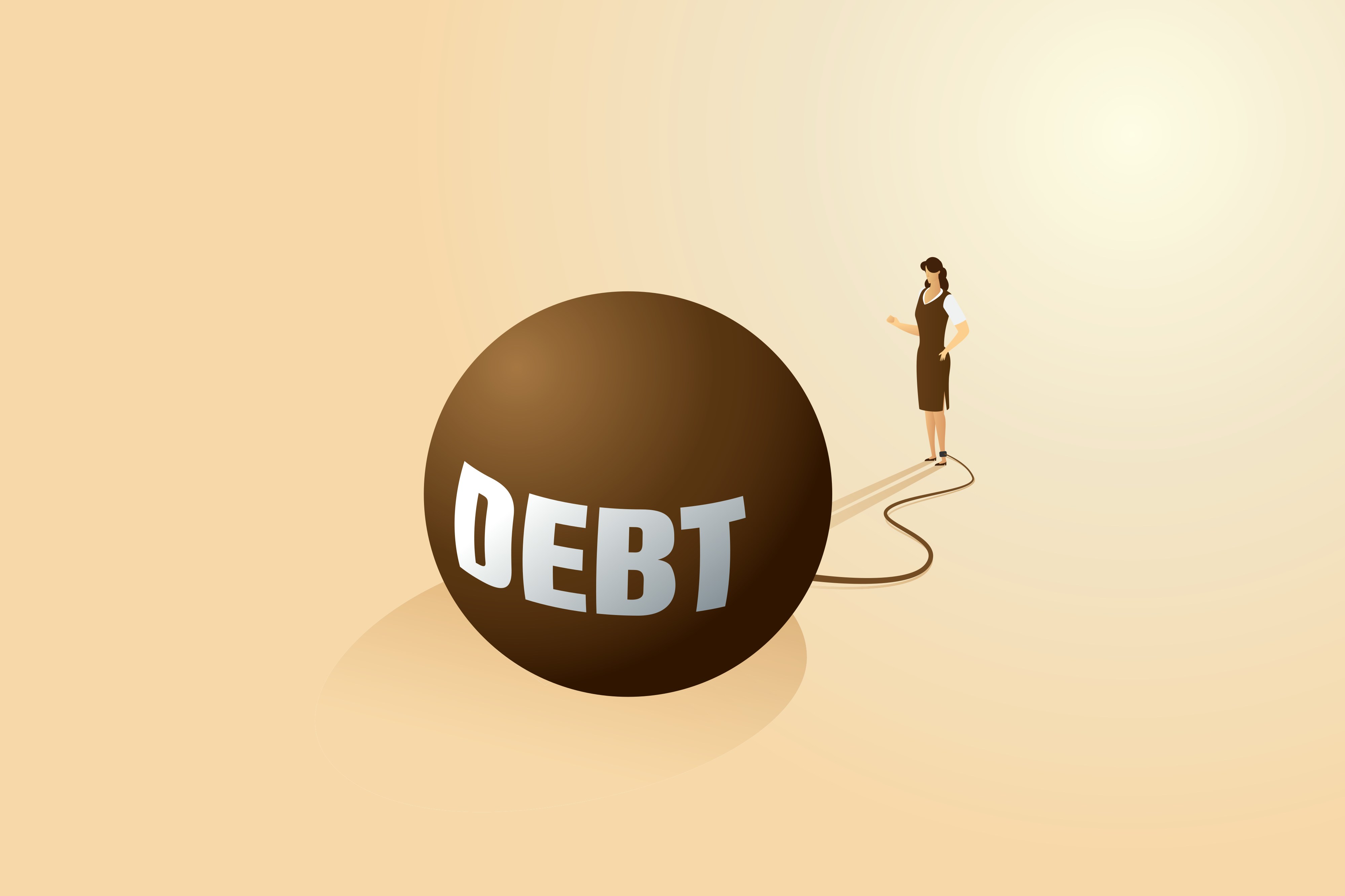
Debt shapes Gen Z’s ability to save and invest in ways that are both obvious and surprisingly subtle. On the surface, the impact looks simple: if a portion of your income is committed to repayments, there is less left over to put into a savings account or investment portfolio. Yet the deeper effect of debt is not only that it reduces your monthly surplus. It also changes your financial behavior, influences your risk tolerance, and increases the cost of future decisions. Over time, those changes can slow wealth building even for people who are earning steadily and making generally sensible choices.
For many in Gen Z, the first and most immediate barrier is cash flow. Savings and investing require leftover money after essentials are covered, and debt repayments often behave like a fixed bill that arrives regardless of what else happens in a given month. Rent, groceries, and transport costs might be adjusted slightly from month to month, but a loan installment or a required minimum payment is far less flexible. When your budget has a large fixed commitment, your ability to save becomes fragile. A single unexpected expense can wipe out what you planned to invest, pushing you into a cycle where you save in good months and pause in hard months. That stop start pattern is one of the quiet ways debt slows progress, because investing benefits most from consistency rather than occasional bursts.
This cash flow strain becomes especially intense when debt is expensive. High interest credit card balances, for instance, do not simply require repayment. They also generate ongoing charges that keep draining your monthly income. Minimum payments are structured to feel manageable, but they can keep balances lingering for years if spending habits do not change or if the interest rate is steep. In that scenario, a significant slice of your income is not going toward your future goals at all. It is maintenance, a fee for yesterday’s purchases. When that becomes normal, even a motivated saver can feel like they are running in place.
Debt also competes with investing on the level of returns. Investing is often framed as a way to grow money over time, but paying down high interest debt is also a form of growth in reverse. Every dollar you use to reduce a costly balance effectively earns a guaranteed benefit equal to the interest rate you avoid. This is why the invest versus repay debate can become confusing for Gen Z. Many young adults hear, correctly, that investing early matters because time and compounding are powerful. At the same time, they are living with debts that compound as well, only in the opposite direction. When the cost of borrowing is high, it can be difficult for an investment portfolio to outpace that cost consistently, especially in the short term. The result is not simply slower wealth building. It is also a sense of being stuck, where effort does not seem to produce visible progress.
Even when debts are not extreme, they can change behavior in ways that reduce long-term outcomes. Carrying repayments can make your financial life feel less predictable, and unpredictability encourages caution. A common response is to keep more money in cash because you want a buffer for surprises. That instinct is sensible, particularly if your income is irregular or your expenses are volatile, but it can delay investing longer than necessary. People often talk about emergency funds and investing as separate topics, yet debt links them. When your fixed commitments are high, your need for a safety net rises. The risk of missing a payment, paying a fee, or needing to borrow more during an emergency becomes more serious. So you hold more cash, then feel guilty for not investing, then try to invest aggressively, then stop again when life happens. Debt creates the conditions for this emotional and financial whiplash.
One of the most overlooked effects of debt is the way it influences your cost of living through credit. Debt itself is not inherently negative, but the way it is managed can affect credit scores and borrowing access. High utilization, missed payments, or accounts that move into delinquency can lower your score. A lower score can mean higher interest rates on future loans, larger deposits for housing, or less favorable terms when you need credit for practical reasons. This matters for Gen Z because early adulthood is often filled with transitions. People are moving for work, leasing or buying vehicles, applying for rentals, and setting up basic financial infrastructure. When debt management reduces creditworthiness, those transitions become more expensive. And when life becomes more expensive, saving becomes harder, which then delays investing again. In this way, debt can echo through your finances long after the original purchase is forgotten.
Debt also changes the way Gen Z experiences the idea of opportunity cost. Many young adults today understand investing earlier than previous generations did, and that awareness can be both empowering and stressful. When you know how compounding works, you can also feel the weight of delay. If you cannot invest as much as you want because your paycheck is already committed to repayments, you may feel behind even if you are doing fine in absolute terms. That feeling can lead to unhelpful extremes. Some people respond by chasing higher risk opportunities because they want to catch up quickly. Others freeze because the gap between where they are and where they want to be feels too large. Debt can turn investing from a steady habit into a high pressure attempt to make up time, which is rarely the mindset that leads to good decisions.
A particularly important issue is what debt does to your resilience during market downturns. Investing is not only about choosing assets. It is also about having the ability to stay invested. If your budget is tight because of debt payments, your investments can start to feel like a potential emergency fund. In a rough month, you might be tempted to sell, or you might have to sell, at the worst possible time. Even if you do not sell, you may stop contributing during volatility because you feel uncertain about your next bill. This matters because some of the most valuable investing periods can occur when markets are down and contributions buy more shares. When debt forces you to pause, you lose the advantage of consistent investing through cycles. You also lose confidence, which makes it harder to restart.
All of these dynamics lead to a more practical conclusion than the usual moral narrative about being “good” or “bad” with money. The real issue is allocation under constraints. The question is not whether Gen Z should invest or repay debt in the abstract. The question is how to structure a plan that reduces costly debt, protects stability, and still keeps long-term investing alive. Many young adults fall into an all or nothing mindset. They either focus entirely on debt and postpone investing, or they invest aggressively while ignoring the drag created by expensive balances. Both approaches can be counterproductive because they ignore the fact that financial progress depends on both momentum and sustainability.
A balanced approach begins by recognizing that different kinds of debt affect saving and investing differently. High interest revolving debt is usually the most urgent because it grows quickly and can keep your cash flow trapped. Lower interest structured debt, like certain student loans or installment loans, may be more manageable if payments are stable and the cost is not crushing. The goal is not to treat every debt the same. It is to reduce the kind that causes the most damage to your monthly flexibility and future borrowing costs. When that damage declines, saving becomes easier, and investing becomes less emotionally charged.
At the same time, investing should not be treated as a luxury that begins only after life is perfectly organized. Investing is partly about habit. If you wait for a moment when you have no obligations, you may delay far longer than necessary. Even small contributions can help you build the routine and the identity of being an investor. That matters because wealth building is often the result of stable systems rather than heroic bursts of discipline. The challenge is to set the investment level at a point you can maintain without needing to stop every time something unexpected occurs. A smaller contribution that continues for years is more powerful than a larger one that collapses under pressure. This is why stability matters so much. If debt makes your month feel unpredictable, the plan should first reduce that unpredictability. That usually means preventing late payments, reducing the debt that carries the highest interest, and building a realistic cash buffer so that normal setbacks do not create new borrowing. When those pieces are in place, saving and investing stop feeling like fragile intentions and start behaving like predictable outcomes. You are not fighting your month anymore. You are designing it.
For Gen Z, there is also a broader emotional layer. Many young adults are navigating high living costs, competitive job markets, and a constant stream of financial content that can make everyone feel behind. Debt can amplify that pressure because it ties your future to your past decisions. It is easy to interpret debt as a personal failure, but that framing is not useful. Debt is better understood as a timeline shaper. It changes how quickly you can move, and it changes how confident you feel while moving. Once you treat it as a timeline issue, you can focus on building a plan that gradually improves your speed without forcing reckless shortcuts.
In the long run, the most important idea is that debt does not only take money. It takes flexibility. When you are more flexible, you can invest consistently, handle emergencies without panic, and make bigger decisions, such as relocating for a better job or taking a calculated career risk, without your entire financial life wobbling. When you are less flexible, you might still invest, but it will often feel like a gamble rather than a strategy. The aim is not perfection. The aim is to build enough breathing room that investing becomes boring and automatic, which is exactly what you want if you are trying to compound for decades.
Debt affects Gen Z’s ability to save and invest because it squeezes cash flow, competes with compounding through interest costs, increases the need for cash buffers, and can raise the cost of future borrowing when credit is strained. Yet the presence of debt does not mean Gen Z is locked out of wealth building. It means the path requires sequencing and balance. When stability is protected, expensive debt is reduced, and investing is maintained at a sustainable pace, Gen Z can still harness time as a major advantage. Over years, that combination turns debt from a dominating force into a manageable chapter, and it allows saving and investing to become what they were meant to be: steady habits that support a future you can actually feel excited about.
 WhatsApp
 Instagram
 Threads