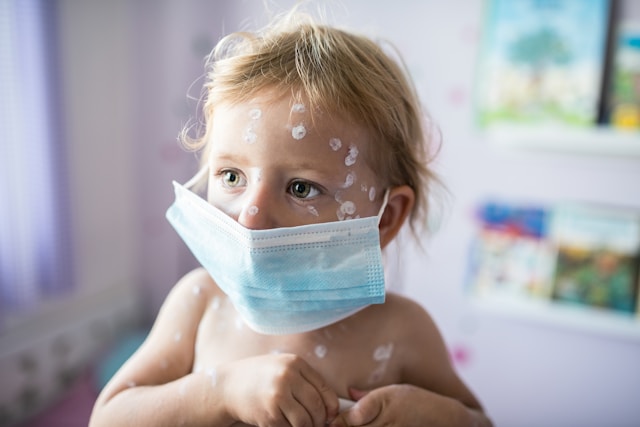
Hand, foot, and mouth disease has a way of unsettling a household because it rarely announces itself with a single, obvious moment of exposure. One day a child seems a little tired or picky about food. The next, a mild fever appears, followed by a sore throat that makes drinking feel like work. Then the spots arrive, first as a few red marks, later as blisters or small ulcers that look far more dramatic than the child’s mood suggests. It can feel sudden, almost random, as if the illness came out of thin air. But HFMD is not random at all. It is the predictable result of common viruses moving efficiently through the close contact and shared surfaces that shape childhood and caregiving.
At its core, HFMD is caused by viruses, not by spicy food, not by hot weather, and not by the vague idea that a child is “run down” in some moral sense. The usual culprits are enteroviruses, a large group of viruses that circulate widely and spread easily where people are in close contact. Among the most common causes are coxsackievirus A16 and coxsackievirus A6. Another virus, enterovirus A71, can also cause HFMD and has been associated with outbreaks in parts of Asia, drawing particular attention because it has been linked with a higher risk of severe complications in some cases. Even so, the broader truth remains steady: HFMD is typically a mild illness, and most children recover fully with time and supportive care.
Understanding what causes HFMD becomes much clearer when you understand how these viruses travel. They do not need elaborate conditions. They move through ordinary life, especially the ordinary life of young children. The virus can spread through saliva and respiratory droplets, meaning it can pass when an infected person coughs, sneezes, or drools, all of which are routine in early childhood. It can also spread through fluid from skin blisters, and through stool, which matters because diaper changes and toilet training involve frequent hand contact and, at times, imperfect hygiene. The virus can also linger on objects and surfaces touched by many hands, then travel from fingers to mouths. That last step is key. With young children, hands and mouths are in constant conversation. Toys, cups, doorknobs, table edges, and rails become part of the same network.
This is why HFMD is often associated with childcare settings, preschools, indoor play areas, and crowded family gatherings. These are places where children share space and share objects, and where they are still learning boundaries that adults take for granted. A toddler is not trying to be careless when they put a toy in their mouth. They are exploring, soothing themselves, and navigating a world that is still new. The same goes for touching faces, rubbing noses, or forgetting to wash hands properly. Even with caring supervision, these behaviors are normal, and normal behaviors create reliable pathways for the virus to spread.
One reason HFMD can feel like it came from nowhere is the incubation period. A child can be infected for several days before showing symptoms. During that time, family routines continue as usual. The child attends school, visits grandparents, shares snacks with siblings, and sits close to caregivers during bedtime stories. By the time symptoms appear, the moment of exposure may already be a blur, and the chain of transmission may already have moved forward. This delay makes it difficult to point to a single source, which often leads parents into a spiral of trying to identify “where it came from.” In most cases, there is no satisfying answer, because the cause is not a single event. It is a set of conditions that make transmission easy.
Another detail that surprises many families is that contagiousness does not necessarily end when a child looks better. HFMD tends to be most contagious in the early days of illness, but the virus can continue to be shed, particularly in stool, for weeks. This does not mean a child will always infect others for weeks, but it does explain why outbreaks can linger in communities and households even after the first wave of visible symptoms has passed. It also helps explain why hygiene measures matter not only during the days when the rash is obvious, but also during the quieter recovery period when everyone wants to return to normal.
The name “hand, foot, and mouth disease” can also mislead people into thinking the illness is narrowly confined to those areas, or that it is related to animal diseases with a similar phrase in their name. In reality, HFMD is a human viral infection, separate from the livestock illness many people have heard about. The rash pattern is common, but not exclusive. Some children develop spots on the buttocks, legs, or around the mouth. Some have a light rash, others have a more intense one. Some experience mostly mouth ulcers, while others have more skin involvement. These differences can depend on the specific virus strain and on the child’s immune response.
In recent years, coxsackievirus A6 has become well known for sometimes causing a broader or more dramatic rash than what older descriptions of HFMD might suggest. Families who expect a few small spots on the hands and feet may be startled by a rash that looks more widespread, or by peeling skin during recovery. This does not automatically signal something dangerous, but it does add to the sense that HFMD is unpredictable. The better interpretation is that the illness has a family resemblance rather than a single uniform look. The underlying cause remains viral, but the body’s response can vary.
When enterovirus A71 is involved, the topic can feel heavier, particularly for parents in regions where it has been part of larger outbreaks. While most HFMD cases are mild, EV-A71 has been associated with more severe neurological complications in some cases. This is why public health authorities sometimes emphasize monitoring and early medical attention for warning signs. It is not meant to scare families, but to ensure that rare severe cases are recognized early. The presence of this possibility is also why it is helpful to avoid dismissing HFMD as “just a rash.” Usually it is mild, but families should still respond with attentiveness, especially when symptoms do not follow a typical recovery pattern.
It is also worth noting that HFMD can affect adults. Adults often have milder symptoms, and some may be infected without obvious signs. However, adults can still transmit the virus, especially when caring for children during an outbreak. In a household, the illness can move in both directions. A child can bring it home from school, but an adult can also introduce it through contact with infected people at work or in the community, then pass it to a child through close caregiving. The household is not a set of isolated individuals. It is a shared space where touch is constant, and viruses treat shared space as an opportunity.
Another common question that sits under “what causes HFMD” is whether it can happen more than once. The answer is yes. When a child gets HFMD, their immune system usually develops protection against the specific virus strain that caused that episode. But because multiple viruses can cause HFMD, a child can catch it again later from a different strain. This can be frustrating for families, especially when it seems as if HFMD is constantly circulating in schools. What is often happening is not a single illness returning, but different viruses taking turns moving through the same networks of close contact.
If you zoom out, the cause of HFMD is best understood as a virus plus a lifestyle reality. The virus is the biological trigger, most often a coxsackievirus or another enterovirus. The lifestyle reality is that young children are tactile, social, and still learning hygiene skills, and caregivers are constantly managing mess, comfort, and connection. In that reality, saliva, mucus, blister fluid, and stool can intersect with hands, surfaces, and shared objects more often than anyone would like. HFMD spreads not because a parent failed, but because the environment of childhood is designed for closeness, and closeness is exactly what these viruses use.
This perspective can be surprisingly freeing. Once you accept that HFMD is not a reflection of personal cleanliness or parenting quality, the focus shifts from blame to practical care. Families can recognize what is actually happening and respond with sensible steps. That might include reinforcing handwashing in a calm way, cleaning the most frequently touched surfaces more consistently for a short period, avoiding sharing cups and utensils, and being mindful during diaper changes and bathroom routines. These actions do not require panic. They are simply ways to interrupt the pathways the virus likes most.
At the same time, the emotional side of HFMD deserves recognition. Mouth sores can be painful, and the pain can make a child refuse fluids. That is often the hardest part for parents, because hydration becomes a daily negotiation. Fever and discomfort can also disrupt sleep, and disrupted sleep makes everything feel bigger. Supportive care, rest, and comfort become the center of the household for a few days. This can be exhausting, especially for working parents or caregivers juggling multiple children. Understanding the cause helps here too, because it frames the illness as a temporary viral detour rather than a crisis that demands constant second-guessing.
Most cases of HFMD improve on their own, but families should know when extra support is appropriate. If a child cannot stay hydrated, is unusually drowsy, has a persistent high fever, seems to be getting worse rather than better, or if something simply feels off, it is worth contacting a healthcare professional. The point is not alarm. It is reassurance and safety, especially because young children can dehydrate quickly when mouth pain makes drinking difficult.
In the end, the cause of HFMD is straightforward even when the experience feels messy. It is caused by common viruses that spread through close contact and everyday surfaces, especially in settings where children play, share, and learn hygiene gradually. HFMD does not need an extraordinary lapse to appear. It needs only the ordinary intimacy of childhood, where hands are busy, mouths are curious, and families are connected by touch. Once you see it that way, the illness becomes less mysterious. It becomes what it truly is: a common viral infection that passes through many households, disrupts routines for a week or so, and then, in most cases, leaves as quietly as it arrived.
 WhatsApp
 Instagram
 Threads