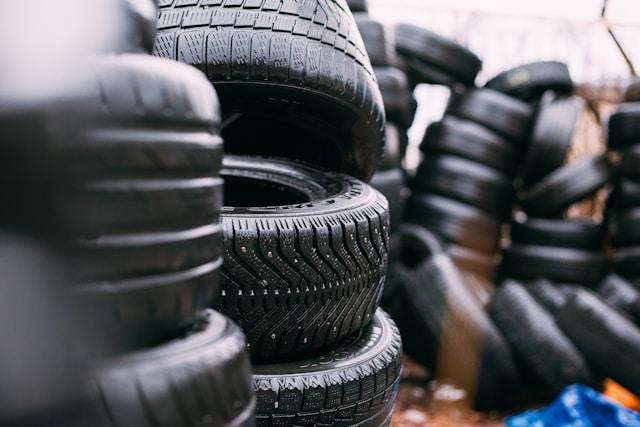
The first time most people notice the tiny hairs on a new tire, it feels oddly personal, like the tire is trying to tell you something. You run your fingers across the tread and there they are, little rubber whiskers sticking out at the edges, catching the light and making the whole tire look unmistakably fresh. In a world where wear and tear is usually the first thing you see, these hairs look like the opposite of damage. They look like proof. Online, they’ve become a kind of visual shorthand for “brand new.” People photograph them the way they photograph the protective film on a new phone, as if untouched surfaces are a flex and a reassurance. And once something becomes a symbol, it is only a matter of time before it becomes a myth. The tiny hairs get assigned powers they do not have. More hairs must mean more grip. Cutting them off must be dangerous. Leaving them on must be safer. They must be part of the design.
The truth is more practical, and in a way, more interesting: those hairs exist because tire making is an imperfect conversation between hot rubber, steel molds, and trapped air that needs somewhere to go. The hairs are not added for performance. They appear as a by-product of the manufacturing process, specifically from the tiny vent holes in the mold that allow air and gases to escape while the tire is being cured. When rubber is pressed into the mold under heat and pressure, it can squeeze into those vents, and what squeezes out becomes the whiskers you see. So if we’re being strict about the question, the hairs themselves do not improve traction. They are not “micro grip teeth.” They do not cling to the road like a brush. They typically wear off quickly with normal driving. You could drive a few days, look again, and find most of them gone, erased by the simple friction of real life.
And yet the tiny hairs still matter, because they point to something that does affect tire performance: manufacturing precision. They are a visible trace of the invisible systems that shape a tire’s consistency, and consistency is one of the most underrated components of safety. A tire does not just need tread depth. It needs a uniform structure, predictable shape, and stable behavior under heat, load, and speed. The vents that create the whiskers are one small part of making sure the tire cures correctly without trapped air pockets that could compromise the final product. It is easy to underestimate how much a tire is a piece of engineering rather than a piece of rubber. Tires have to manage pressure, temperature changes, water, road texture, and the constant shifting of weight as you accelerate, brake, and turn. They are asked to be soft enough to grip and strong enough to hold shape, flexible enough to absorb bumps and stiff enough to stay controlled. When something is asked to do contradictory things, the details matter. Not the romantic details, but the boring ones, like whether the mold could vent properly while the rubber was curing.
That is why people intuitively want the hairs to mean something about performance. The tire is literally the boundary between you and the road. If anything looks special at that boundary, our brains want to treat it like a safety feature. We’ve been trained to interpret texture as function. We see tread blocks and grooves and understand, even without knowing the physics, that they exist for a reason. The whiskers look like part of that language, but they are really just the punctuation marks left behind by the manufacturing process.
To understand what truly drives performance, you have to look beyond what is easiest to photograph. Tire grip, especially on wet roads, is influenced heavily by the rubber compound and the tread design. The compound determines how the rubber behaves at different temperatures, how quickly it heats up, and how it interacts with microscopic road texture. The tread design determines how the tire channels water away so the rubber can maintain contact with the road surface. In wet conditions, traction is often less about raw stickiness and more about whether your tire can push water out of the way fast enough to prevent hydroplaning. That is also why some tires are designed with aggressive directional patterns, deep grooves, or specific channel layouts that act like water pumps. Those patterns exist to manage water and maintain grip under conditions where a smooth surface would skate. It’s not glamorous, but it’s the difference between braking like you expect and braking like you’re in a panic wondering why the car is still moving.
Then there are tiny details that do affect grip, and they tend to be less dramatic than whiskers. Sipes, for example, are small slits in the tread blocks that increase biting edges, particularly useful in snow, slush, and sometimes wet conditions. They help the tread blocks flex and create extra edges that can grab onto uneven surfaces. If you want to talk about “tiny features that matter,” sipes are a better answer than whiskers, because they are intentional design elements that continue to work throughout the life of the tire. This is where the conversation gets subtle. The whiskers are not designed for traction, but the presence of whiskers can remind you that tire quality begins long before the tire ever rolls. A tire’s performance depends not only on the blueprint, but on execution. Two tires can share the same design and still behave differently if manufacturing tolerances vary. A well-made tire is consistent. It balances well. It rolls smoothly. It behaves predictably when pushed. The vents that create whiskers exist to support that clean execution by helping the rubber cure properly in the mold.
There is another reason new tires sometimes feel different, and it adds to the confusion around whiskers. Many drivers have heard that new tires can be a bit slippery at first, and some manufacturers advise a short “break-in” period of gentler driving. This is not because the whiskers are doing anything special. It’s often discussed in relation to residues from manufacturing, such as mold release agents, or simply the fact that you are adjusting to the behavior of a new tread pattern and compound. New tires can brake and handle differently than worn ones, and if you jump straight into hard cornering or aggressive braking, you might be surprised by the change. That surprise gets blamed on whatever is most visible, which is usually the whiskers. But the real adjustment is about the tire surface meeting the road, the tread blocks beginning to flex the way they’re designed to flex, and you recalibrating your expectations. Grip is not just a property of rubber. It’s also a relationship between the tire, the road, and the driver’s inputs. When you change tires, you change that relationship.
In everyday life, this matters because people often use visual cues to make decisions about safety. If the whiskers are gone, the tire must be old. If the whiskers are present, the tire must be good. But freshness is not the same as fitness. A tire can be “new” and still be the wrong tire for your climate, your driving habits, or your vehicle. A tire can have whiskers and still be underinflated, which reduces handling precision, increases heat buildup, and accelerates wear. A tire can have whiskers and still be mounted on a wheel that is out of alignment, causing uneven wear that quietly eats away at performance long before you feel anything dramatic. This is one reason the tiny hairs have become a strange cultural obsession. They’re a simple signal in a complex system. You can’t look at a tire and instantly understand compound chemistry. You can’t see how well it will manage heat on a long highway drive. You can’t visually confirm how its tread blocks will behave under a sudden evasive maneuver in the rain. But you can see whiskers, and you can tell a story: the tire is fresh, therefore the tire is safe, therefore the problem is solved.
The more realistic story is less neat, but more empowering. Whiskers tell you the tire is unused, or at least very lightly used. That’s it. They are a clue about age in the sense of wear, not about performance in the sense of grip. If you want to evaluate performance, you’re better off paying attention to the factors that shape the tire’s behavior across conditions: whether the tire is appropriate for your environment, whether its tread pattern is designed for wet roads, whether it’s an all-season, summer, or winter compound, and whether it is inflated correctly for the load it carries. There’s also the quiet truth that tires are one of the few parts of modern life where “tiny” and “serious” collide. A millimeter of tread depth can change braking distance on wet pavement. Small differences in pressure can change how the tire deforms and how much of the tread actually touches the road. The thin film of water you barely notice can become a layer that separates rubber from asphalt if your tread cannot clear it quickly enough. Performance is not always about dramatic upgrades. Sometimes it’s about the margins you don’t feel until they’re gone.
In that sense, whiskers matter as a reminder of what tire performance really is: not a gimmick, not a symbol, not a hack, but the sum of many small decisions and processes that have to work together. The vents that create whiskers exist because tire making has to be controlled and consistent. The tire has to come out of the mold with the right details formed correctly, without bubbles and voids that could compromise integrity. That isn’t something you can see directly, but it’s something you can appreciate when you understand what the whiskers represent. It’s also worth saying plainly: you do not need to cut the whiskers off. They are not dangerous, and removing them does not unlock better grip. If anything, obsessing over them can distract from the habits that actually improve safety, like checking tire pressure regularly, rotating tires to promote even wear, and paying attention to how your vehicle feels when braking and turning. Tires are not just about looking new. They’re about behaving well when you need them most.
And maybe that is the real reason the tiny hairs hold our attention. They look like a secret, and we want the world to have secrets that make it simpler. We want to believe there is a visible sign that tells us everything is fine. But tire performance is not a single sign. It’s a system, and the system rewards attention to fundamentals more than attention to symbols. So yes, those tiny hairs matter for tire performance, but not because they create grip. They matter because they reveal the manufacturing reality beneath the surface, and they invite you to look beyond what’s obvious. They are a small, accidental detail that points toward a bigger truth: safety is built through process and design, not through superstition. When you see the whiskers, you’re not seeing a traction feature. You’re seeing a receipt for how the tire was made, and a gentle nudge to care about what actually keeps you connected to the road.
 WhatsApp
 Instagram
 Threads