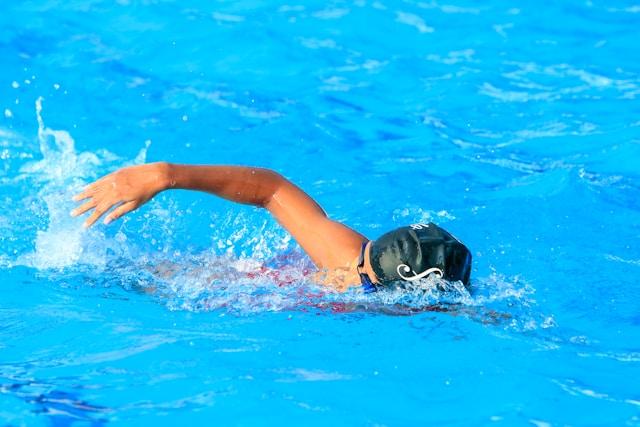
Swimming looks like the kind of exercise that should calm the body down. You are supported by water, your joints feel lighter, and the pace can be meditative. Yet for some people, a swim can end with a sudden spin, a rocking sensation, or that unsettling “floaty” feeling that makes you want to grab the wall. When swimming triggers vertigo or lightheadedness, it is rarely random. It is usually the result of how the pool environment rearranges the signals your brain uses to stay oriented. To understand why this happens, it helps to start with a simple idea. Your sense of balance is not housed in one place. It is built from three streams of information that your brain constantly compares and blends. The inner ear tracks motion and rotation. Your eyes provide a visual map of where you are in space. Your muscles and joints supply feedback about position and pressure, which is often called proprioception. Most of the time these signals agree, or at least they do not disagree enough to matter. Swimming changes all three at once, and for some swimmers, the mismatch crosses a threshold that feels like dizziness.
The first reason swimming can trigger vertigo is that water changes the way the inner ear behaves. The vestibular system in your inner ear is extremely sensitive to temperature differences. In everyday life, both ears are usually exposed to similar temperatures and similar airflow. In the pool, cold water can rush into one ear more than the other. Even a small imbalance can confuse the vestibular system into “thinking” you are rotating when you are not. The result can feel like the world is turning or like your body is being pulled to one side. This is why some swimmers notice that symptoms flare during cold-water entry, after a flip turn, or when they keep rolling to breathe on the same side and repeatedly flood one ear. What makes this particularly unsettling is how suddenly it can happen. One moment you feel fine, the next your orientation feels hijacked. The brain responds quickly, often with reflexive eye movements as it tries to stabilize your gaze. You may not notice the eye movements directly, but you feel the consequence: a sense of spin, tilt, or rocking that does not match what your muscles are doing. When swimmers describe vertigo as “instant” and strongly linked to cold water, uneven ear exposure is often a major piece of the puzzle.
Pressure is another reason swimming can disturb balance. Your ears are designed to handle small pressure shifts, but they rely on a pathway that equalizes pressure between the middle ear and the back of the throat. When that pathway is irritated or blocked, pressure equalization can become uneven. A swimmer with congestion from allergies, a recent cold, or sinus irritation can find that one ear clears differently than the other. This does not always cause pain. Sometimes it simply makes you feel off, as if your head is slightly tilted even when it is not. The sensation can show up as mild vertigo, vague dizziness, or a feeling that your equilibrium is lagging behind your movement.
If you have ever noticed that swimming feels fine until you start doing flip turns, deeper push-offs, or quick directional changes, pressure dynamics may be playing a role. Even in a pool, those rapid shifts in depth and movement can create subtle changes in how pressure is experienced in the ear. For people who are sensitive, those small changes can amplify the imbalance that already exists. Head movement adds a third layer. Swimming is full of repeated head rotation, especially in freestyle and backstroke. That rotation is usually smooth and well tolerated, but for some people it can trigger a specific type of vertigo that is linked to head position changes. This condition often produces brief, intense spins when you roll your head, look up, or turn quickly. In daily life, people often notice it when they roll over in bed or look up at a high shelf. In the pool, the same mechanism can be provoked by repeated breathing turns or by the combination of head tilt and body roll. The water environment can also make the sensation feel more dramatic, because you have fewer stable reference points to reassure your brain that you are still.
It is important to separate vertigo from lightheadedness because swimmers often use the word “dizzy” for both. Vertigo is the illusion of motion. The room spins, you tilt, or you feel as if you are rotating when you are not. Lightheadedness is closer to the feeling that you might faint. It can feel airy, washed out, or slightly detached. The mechanisms overlap sometimes, but they often come from different triggers.
Breathing is one of the most common reasons swimmers feel lightheaded. Swimming forces a breathing pattern that is easy to get wrong under stress. Many swimmers, especially when they are trying to swim faster or keep up with a set, fall into a pattern of shallow exhale into the water followed by a rushed inhale. Some people hold tension in the chest and neck while they swim, which makes the inhale feel like a gulp rather than a calm breath. Others try to “save air” by exhaling too little, which can leave them feeling uncomfortable and then provoke frantic breathing at the wall. When breathing becomes irregular, it can change carbon dioxide levels and reduce the sense of stable oxygen delivery to the brain. The result is lightheadedness that often peaks when you stop moving and finally notice what your body has been doing for the past few minutes.
There is also a more serious version of breathing-related dizziness that deserves respect. Some swimmers intentionally hyperventilate before underwater swims or breath-hold challenges. This can create a false sense of security, because it delays the urge to breathe. It does not meaningfully increase the oxygen stored in your body, and it can increase the risk of losing consciousness underwater. Even if someone does not lose consciousness, the combination of aggressive breathing and underwater effort can create abrupt lightheadedness that feels like the world is fading at the edges. In any aquatic environment, the safest approach is to avoid intentional hyperventilation and treat breath-hold practice as something that requires proper supervision and safety rules.
Another reason swimming can make you feel lightheaded has to do with posture and circulation. In the water, you are horizontal. Blood distributes differently when you are lying flat compared with standing. When you finish a swim and stand up quickly, your body has to adjust to gravity again. If you are dehydrated, overheated, or you have been swimming hard, your blood pressure can temporarily drop as your circulation rebalances. This can feel like a brief wave of dizziness, a wobble, or the sense that you need to sit down for a moment. It is especially common after intense intervals, long swims in warm pools, or open-water sessions in the sun where you underestimate how much fluid you have lost.
Many swimmers notice that the worst sensations happen at the end of the swim, not during it. That pattern makes sense when you consider how the brain processes motion. While you are moving, your nervous system can smooth over small conflicts between signals. Movement also provides a rhythm that your brain can predict. The moment you stop, the prediction stops too, and the mismatch becomes more noticeable. At the same time, you often change several things at once. You lift your head. You stand up. You stop kicking. You start talking. You might take a big breath. Temperature changes around your ears and face. In a few seconds, you have shifted multiple inputs simultaneously, which is exactly when the balance system is most vulnerable to feeling unstable.
Ear irritation can also contribute, even when there is no obvious infection. Water trapped in the ear canal can create a sense of fullness and change how sound and pressure feel. Repeated exposure to chlorinated water can irritate the ear canal for some swimmers, leading to discomfort and sensitivity. If the ear is inflamed, pressure equalization can feel different, and the vestibular system may be more reactive than usual. Some swimmers notice that they feel dizzy only during phases when their ears feel blocked or muffled. That clue matters. It suggests that addressing ear health, not just swim technique, may reduce symptoms.
When you put these pieces together, swimming becomes a perfect storm for anyone with a sensitive balance system. The pool removes stable visual cues because the environment is uniform and often visually repetitive. The water reduces proprioceptive feedback because buoyancy changes how your muscles and joints load. The ears are exposed to temperature shifts, water flow, and pressure variation. Meanwhile, the head and neck rotate repeatedly in a way that can provoke positional sensitivity. Even if any one factor alone would not be enough to cause symptoms, the combination can.
The most useful approach is to think like an engineer rather than a worrier. Instead of asking why your body is “doing this to you,” ask what input is most likely being distorted. If symptoms show up in cold water and feel like true spinning, uneven ear cooling is a strong suspect. If symptoms show up when you are congested or after deeper push-offs and turns, pressure mismatch deserves attention. If symptoms are brief and linked to specific head positions, positional vertigo becomes a possibility. If symptoms feel like fading or a head rush during hard sets or immediately after stopping, breathing and circulation are likely the drivers.
For many swimmers, small adjustments make a big difference. Keeping water out of the ears can reduce asymmetric cooling. Warming into a session, rather than jumping straight into speed work, gives the nervous system time to adapt. Breathing with a steady, complete exhale into the water and a calm inhale reduces the respiratory roller coaster that can lead to lightheadedness. Taking a gentle cool-down at the end of the session helps your circulation transition smoothly. Standing up slowly and hydrating after the swim can prevent the postural dip that feels like a sudden wobble.
At the same time, it is worth being clear about when dizziness should not be dismissed. If vertigo is severe, recurrent, or new, especially if it persists long after swimming ends, it deserves evaluation. If you notice hearing loss, persistent ear pain, drainage, or a sense of one-sided ear fullness that does not resolve, ear health should be checked. If you ever feel close to fainting in the water, treat that as a safety issue first and a fitness issue second. The water environment does not forgive momentary lapses in consciousness. Swimming is supposed to be restorative, but it is also uniquely demanding on the balance system. When it triggers vertigo or lightheadedness, it is often because the brain is being fed conflicting information from the ears, eyes, and body at the same time. The reassuring part is that this explanation is not mystical. It is mechanical. Once you identify which input is being disrupted, you can often reduce or eliminate the trigger with technique changes, better transitions, and attention to ear and breathing habits. The goal is not to become tough enough to ignore dizziness. The goal is to make the signals stable enough that dizziness stops showing up in the first place.
 WhatsApp
 Instagram
 Threads