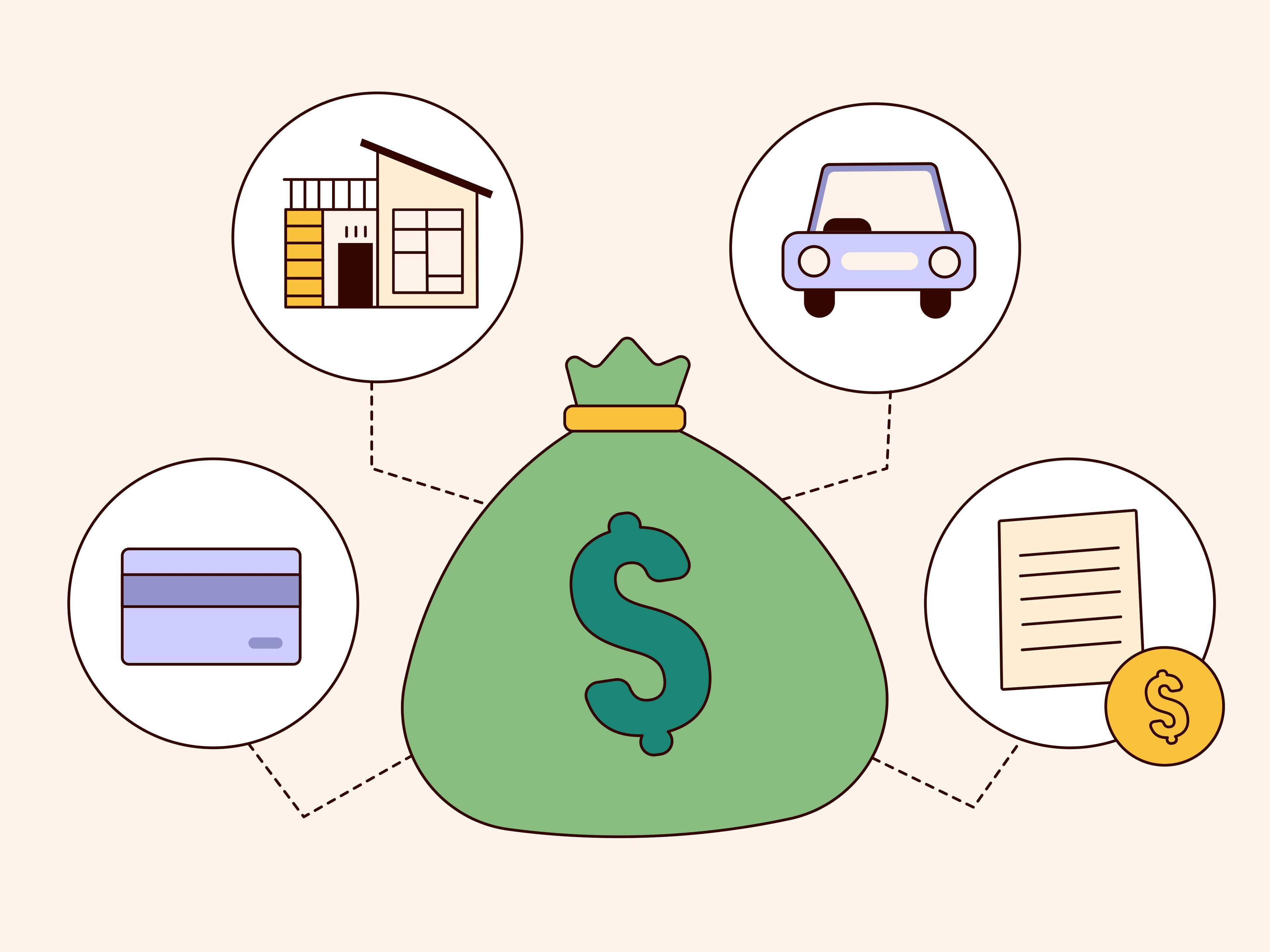
Singapore’s Certificate of Entitlement, better known as COE, is often discussed as if it were simply an expensive ticket to car ownership. When prices rise, the conversation naturally turns to affordability, fairness, and whether the system has become too punishing for ordinary households. Yet focusing only on the price misses the purpose. COE exists because Singapore is managing a real constraint that does not disappear just because demand is strong. In a dense city with limited land, the problem is not whether people want cars. The problem is how many cars the road network and parking supply can realistically carry before congestion, pollution, and economic inefficiency become a permanent feature of daily life. COE is Singapore’s way of turning that constraint into a controlled, enforceable system rather than leaving it to chance.
To understand why Singapore needs COE, it helps to separate two ideas that people often combine: the cost of owning a car and the impact of too many cars. High ownership costs can feel like a policy that targets drivers, but congestion is a policy problem that affects everyone, including people who do not drive. When too many vehicles compete for the same limited road space, travel speeds drop, deliveries slow down, buses get trapped in traffic, and the economy loses time in ways that are hard to recover. Congestion also comes with environmental and health costs because idling engines waste fuel and contribute to air pollution. If congestion is allowed to become the default method of rationing, the city ends up collecting a silent tax in the form of wasted hours and deteriorating urban livability. COE aims to prevent that by controlling the overall number of vehicles entering the system.
Singapore’s basic challenge is that demand for private mobility tends to rise alongside prosperity. As incomes grow, more households can afford cars, more families want the convenience of private travel, and credit makes large purchases easier to finance. In many countries, this cycle continues until roads become chronically congested, after which governments try to catch up through expansion projects that are costly, disruptive, and often politically difficult. Singapore cannot simply build its way out of the problem. Land is scarce and highly contested. Every additional road lane, flyover, or parking structure competes with housing, parks, commercial space, and infrastructure that supports other priorities. In that environment, the cost of expanding road capacity is not just the construction budget. It is the opportunity cost of what that land could have been used for. COE reflects this reality by ensuring that vehicle ownership grows in a managed way instead of letting it expand until the city is forced into reactive, land hungry solutions.
This is where COE becomes more than a financial burden. It is a quota mechanism. Rather than letting the number of vehicles grow freely, Singapore uses a controlled issuance process that limits how many new vehicles can be added. If you want to register and use a vehicle, you need a certificate. Because certificates are limited, they are allocated through competitive bidding, and the premium is the price that emerges when demand meets a fixed supply. The public often sees the premium as the policy itself, but the premium is actually a consequence. The policy is the cap. The price is how the cap is enforced without discretionary allocation.
There is a practical advantage to using a quota system instead of relying on general ownership taxes alone. Taxes can discourage demand, but they do not guarantee that vehicle numbers will stay within a specific threshold. People may still buy cars if they can afford the taxes, and the total fleet can keep creeping up. A quota, by contrast, directly controls the quantity. It sets a boundary around growth and makes the system predictable for planners. It also avoids the messy politics of deciding who deserves a car and who does not. Instead of administrative permission or opaque approvals, the allocation is rule based and transparent through the bidding process. That does not make the outcome painless, but it makes the mechanism clear. People may dislike the result, yet they can see how the result was produced.
Another reason Singapore needs COE is that managing car ownership is not the same as managing road usage. Even if the total number of cars were stable, congestion could still be severe if everyone drives at the same peak hours on the same corridors. That is why Singapore pairs COE with usage based pricing through the Electronic Road Pricing system, or ERP. The two tools perform different roles. COE manages the stock of vehicles. ERP influences when and where those vehicles are used by charging for road space at congested times and locations. This dual approach recognises that congestion is not just about how many cars exist, but also about how those cars move through the network. Ownership controls without usage controls can still leave rush hour choking the roads. Usage controls without ownership controls can still allow the vehicle population to drift upward over time, raising baseline pressure on roads and parking. In Singapore’s design, COE and ERP reinforce each other so that the city is not relying on a single lever to solve a multi dimensional problem.
The existence of COE also shapes the way Singapore communicates its policy intent. A conventional tax can be interpreted as revenue raising, even when it is designed for demand management. A quota system is harder to reduce to a revenue story because it is fundamentally about controlling numbers. The state can plausibly argue that it is not trying to sell cars at a higher price, but trying to prevent unmanaged growth in a land scarce environment. That framing matters when premiums spike, because public trust becomes part of policy sustainability. People may still feel frustrated, particularly when they need a vehicle for family or work reasons, but the system’s logic is anchored in a tangible constraint rather than a perceived desire to extract money.
It is also important to recognise that COE is designed to be administratively credible. The bidding exercises occur on a regular schedule, and the quota for each exercise is announced ahead of time. This structure reduces the scope for behind the scenes bargaining, lobbying, or arbitrary allocation. In societies where access to licenses can be negotiated, scarcity can turn into favoritism. Singapore’s system tries to keep allocation impersonal. The open bidding format turns the decision into a market clearing process under rules that everyone can observe. It is not a perfect guarantee of fairness in the broader social sense, but it does protect procedural fairness by limiting discretion.
The question that often follows is how quotas are determined, because this is where the policy becomes real. COE supply is not simply a number chosen at random. It is linked to deregistrations, targeted growth or adjustments, and periodic recalibration. The details change over time as Singapore tunes the system, but the underlying goal stays consistent: keep vehicle stock growth aligned with what the city can absorb. In practice, this requires smoothing mechanisms because the auto market is cyclical. If supply were set using short windows of data, COE availability could swing sharply, which would cause price volatility and amplify public anger. Volatility is not only a consumer issue. It affects vehicle dealers, financing arrangements, insurance pricing, and the used car market. When premiums fluctuate wildly, households can be pushed into poor financial decisions, and businesses can struggle to plan inventory and pricing. That is why adjustments to the quota calculation method often aim to stabilise supply over time, reducing unnecessary swings while maintaining the cap.
Beyond congestion and planning, COE also protects broader urban productivity. In a city that depends on efficiency, a traffic jam is not just an inconvenience. It is a drag on labour mobility, commercial delivery schedules, and service responsiveness. Logistics costs can rise when deliveries take longer and fleets need more vehicles to achieve the same throughput. Service businesses lose time between appointments. Workers spend more hours commuting, which affects wellbeing and reduces time available for family or rest. When these losses become systemic, they quietly erode competitiveness. Singapore’s economic model relies on smooth movement of people and goods, which makes congestion management a national economic priority rather than a niche transport issue. COE contributes by keeping the vehicle population from expanding beyond what the road network can handle.
At the same time, COE inevitably raises distributional concerns. Because certificates are allocated through competitive bidding, the outcome tends to favour those with greater ability to pay. This creates a sense that car ownership becomes a status marker rather than a practical option. That criticism is understandable, but it can also obscure a deeper point. Any rationing system produces unequal outcomes, just in different forms. If Singapore removed COE while keeping the same physical constraints, rationing would not vanish. It would reappear as longer travel times, more parking stress, higher accident risk from congestion patterns, and an uneven burden of delays. In that scenario, people with flexible schedules, those living closer to work, or those able to pay for alternative arrangements would still fare better. The inequality would shift from explicit prices to implicit time costs, which often hit working families and time constrained workers hard. COE makes the cost visible, which invites criticism, but visibility also allows the state to measure, adjust, and mitigate through investment in public transport and other policies.
COE also has a unique feature that helps Singapore maintain policy flexibility: the entitlement is time limited. A certificate typically lasts for a fixed tenure rather than granting permanent rights. This design prevents the vehicle population from becoming locked in. Because certificates expire, the fleet cycles through renewal and deregistration decisions, giving policymakers recurring opportunities to adjust supply and shape long term outcomes. A permanent license system would be harder to manage once the vehicle population exceeded desired levels. Time limited entitlements make the system dynamic, allowing the city to respond to demographic shifts, infrastructure changes, or evolving transport objectives without redesigning the entire framework.
In practical terms, COE creates a signal that ripples through the wider economy. The premium is not just a number drivers complain about. It affects the total cost of vehicle ownership, the depreciation profile of cars, and the risks that lenders and insurers assess. When COE premiums rise, the share of policy created cost within the overall vehicle price increases, which can alter borrowing behaviour and household balance sheets. It can also change the used car market, since the relationship between remaining COE validity and vehicle value becomes a major driver of pricing. In this way, COE becomes intertwined with financial decisions, not merely transport decisions. This is another reason why the state prefers stable and predictable quota management rather than abrupt shifts that could destabilise markets.
Ultimately, the reason Singapore needs COE is that it provides a structured way to manage scarcity. Scarcity exists whether or not it is acknowledged. If a city pretends that road space is unlimited, congestion becomes the blunt instrument that enforces scarcity through frustration and lost time. COE is a different choice. It is a deliberate decision to cap ownership growth and let a transparent process allocate limited entitlements, while complementing that cap with usage based tools like ERP and heavy investment in public transport. The system is not without tradeoffs, and it can feel harsh during periods of high demand. Yet it reflects a consistent policy philosophy: protect urban efficiency, avoid unmanaged sprawl of vehicle numbers, and ensure that Singapore’s transport network supports rather than undermines its broader economic and social goals.
Seen in that light, COE is not simply about making cars expensive. It is about preventing a land scarce city from paying an even higher hidden price through chronic congestion, compromised livability, and reduced productivity. The COE premium may be the most visible part of the system, but the real function is less visible and more structural. It is the governance tool that helps Singapore keep mobility workable in a place where space is limited and the cost of getting transport policy wrong can be felt by everyone, driver or not.
 WhatsApp
 Instagram
 Threads





.jpg&w=3840&q=75)