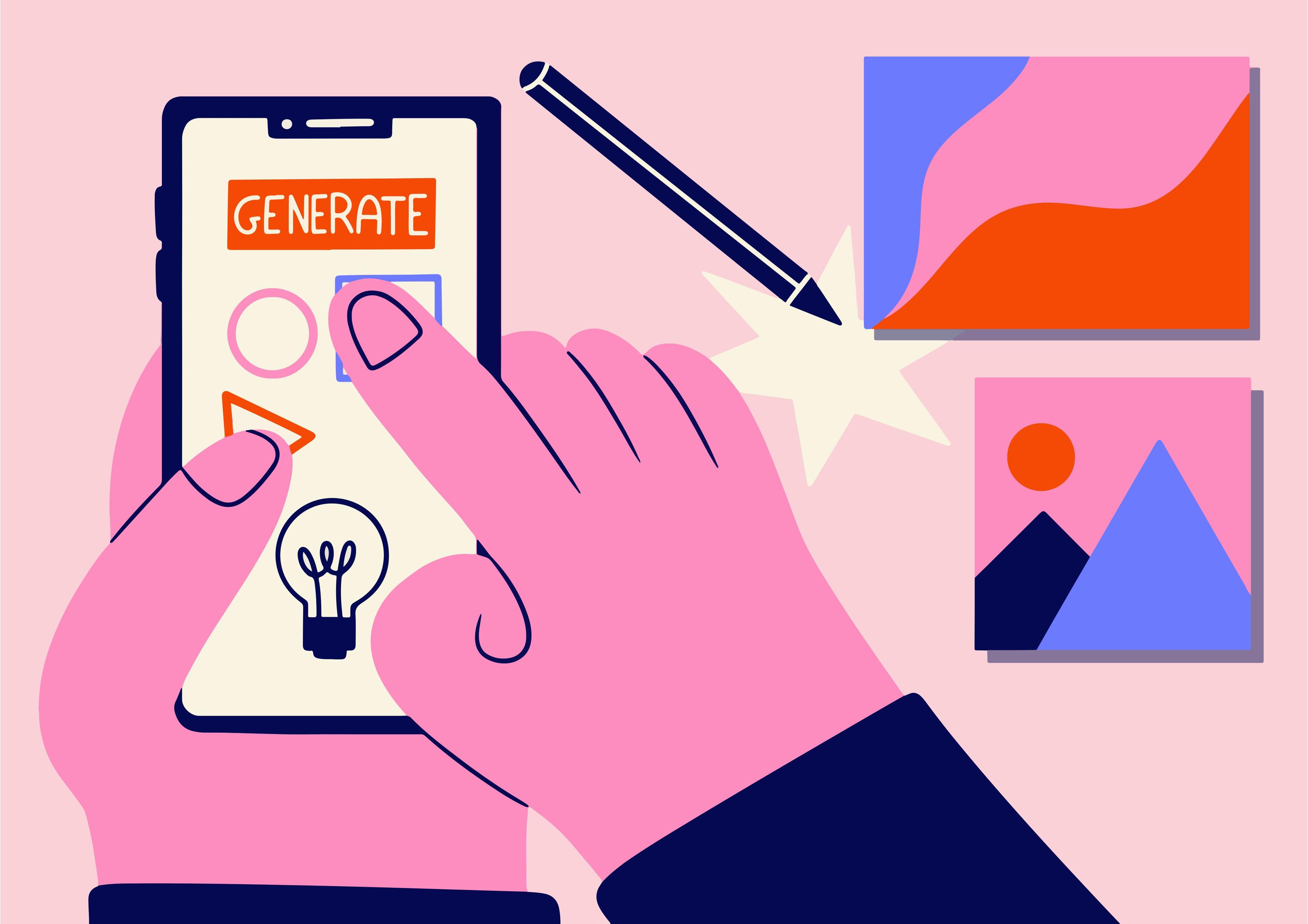
AI marketing is best understood as the practical use of artificial intelligence to make marketing work faster, smarter, and more responsive to how real people behave. Instead of treating marketing as a series of manual tasks done one by one, AI marketing uses machine learning systems to support decisions and production across the entire customer journey. It can help a business plan campaigns, write and refine messages, personalize what different audiences see, improve how ads are targeted, and interpret performance data with greater speed than a small team could manage on its own. For modern businesses, especially lean startups, this matters because marketing is often limited by time, budget, and the ability to test ideas quickly.
At its core, AI marketing is not one tool or one tactic. It is a layer of technology that can be applied to multiple parts of marketing. Some forms of AI marketing are generative, meaning they create things such as ad copy, social captions, email drafts, product descriptions, blog outlines, images, or video scripts. Other forms are analytical or predictive, meaning they identify patterns in data and make recommendations such as which leads are more likely to convert, which customers might churn, what message might perform best for a segment, or when a campaign should be adjusted. Most companies that adopt AI marketing end up using a mix of both, even if they do not label it formally. The result is that marketing becomes less dependent on guesswork and repetitive work, and more focused on iteration, optimization, and personalization.
The appeal of AI marketing is easy to understand. Marketing today is crowded, and audiences have learned to ignore generic messaging. AI tools promise a way to produce more variations, test more ideas, and respond faster to what works. A brand can experiment with multiple headlines, angles, and calls to action without starting from scratch every time. An e-commerce business can personalize product recommendations based on browsing behavior. A SaaS company can score leads based on intent signals and prioritize outreach. A service business can use AI to summarize calls, track objections, and refine messaging based on what prospects repeatedly ask. In each case, AI is being used to shorten the distance between insight and action.
Yet the real value of AI marketing is not simply speed. It is the ability to make marketing more relevant. Traditional marketing often relies on broad segments and assumptions, which leads to the same message being pushed to people with very different needs. AI systems can process large amounts of behavioral data and help marketers build smaller, more accurate segments. That makes it easier to deliver content that feels timely and personal, such as an onboarding email triggered by a user’s actions or a recommendation that matches a customer’s past purchases. When done well, AI marketing improves the customer experience because it reduces noise and increases usefulness.
However, AI marketing also comes with risks that businesses need to treat seriously. One common mistake is assuming AI can replace strategy. AI can generate content quickly, but it cannot decide what a brand should stand for, what a business should promise, or what claims are responsible to make. If a company’s positioning is unclear, AI will often produce polished versions of that same uncertainty. If the offer is weak, AI will not fix it. It may simply make the marketing louder, which attracts attention but not trust. This is why AI marketing should be seen as a support system, not a substitute for thinking.
Another risk is brand inconsistency. When teams use AI tools without guidelines, tone and messaging can drift. Different prompts produce different voices, and over time the brand can start to sound generic or unfamiliar. This matters because customers do not build trust with a company that feels inconsistent. They trust what feels human, stable, and specific. For that reason, companies that adopt AI marketing responsibly tend to create clear messaging principles and a voice guide, then use AI within those boundaries. The goal is to accelerate production while protecting identity.
There is also the issue of accuracy and credibility. AI can produce convincing content even when it is wrong, vague, or overstated. In sensitive areas such as finance, healthcare, education, and legal services, the cost of misinformation can be high. Even outside regulated industries, exaggerated claims can damage long-term reputation. Businesses need review processes and accountability, especially when AI is used to produce customer-facing messages. The time saved through automation should not come at the expense of honesty.
Privacy and data handling matter as well. AI marketing often becomes more powerful when it has access to customer data, but that creates responsibilities. Companies must be careful about what data is shared with third-party tools and how customer information is stored or processed. Using AI for segmentation or personalization can improve marketing performance, but it must be done in a way that respects consent and protects trust. A short-term lift in conversions is not worth a long-term breach of confidence.
When businesses approach AI marketing with clarity, it can become a meaningful advantage. The best mindset is to treat AI like a fast assistant rather than a decision-maker. It can help draft, summarize, reformat, generate variations, and highlight patterns, but humans need to own strategy, ethics, and final judgment. AI can help a team learn faster by compressing the cycle of testing and refinement. Instead of waiting weeks to see what resonates, marketers can iterate more often and make decisions based on evidence. In that sense, AI marketing is most effective when it strengthens feedback loops and helps a business understand its audience more deeply.
Ultimately, AI marketing is the use of artificial intelligence to improve how marketing is created, targeted, personalized, and measured. It can reduce repetitive workload, help businesses move faster, and make communication more relevant. But it works best when it is guided by strong fundamentals, a clear value proposition, and genuine customer understanding. AI can amplify what is already there. If a brand is grounded in truth and clarity, AI can help it scale that clarity. If a brand is uncertain or chasing attention, AI can scale the confusion just as quickly. That is why the real goal is not to automate marketing blindly, but to use AI thoughtfully as a tool that supports better decisions and stronger trust.
 WhatsApp
 Instagram
 Threads