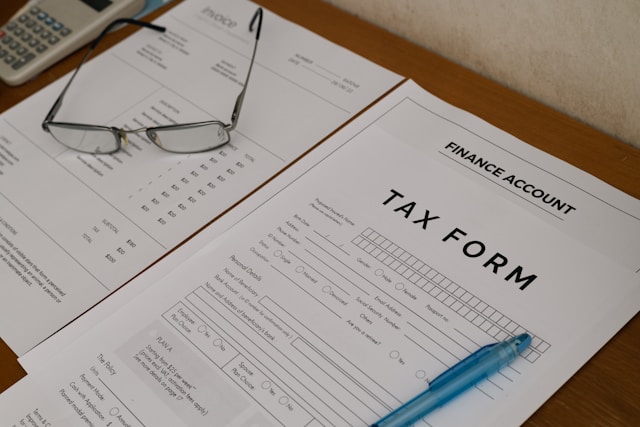
When most people hear the phrase “tax credit,” they think of a simple perk: a smaller tax bill, a bigger refund, a nice little bonus for filing. That reaction makes sense because a credit really can reduce what you owe dollar for dollar, and in some cases it can even turn into money back. But the bigger story is that the US government does not offer tax credits merely to be generous. It offers them because the tax system is one of the largest, most powerful tools it has to shape behavior, deliver targeted support, and move money through the economy without building an entirely separate program from scratch.
The IRS already sits at the center of a massive information network. Each year, tens of millions of households and businesses submit income details, filing status, and a range of financial information. That makes the tax system a ready made delivery channel. If policymakers want to help certain households, encourage certain purchases, or push businesses toward certain kinds of investment, the fastest way is often to attach a benefit to a tax return. A tax credit can be designed, passed, and implemented using systems that already exist, rather than creating a new agency process with new applications, new eligibility checks, and new distribution infrastructure. In plain terms, the government uses tax credits because they are an efficient pipeline for policy.
That efficiency also explains why tax credits show up in so many areas of American life. Families see credits aimed at the cost of raising children. Workers see credits tied to earned income. Students and parents see credits linked to education expenses. Homeowners see credits tied to energy upgrades. Businesses see credits designed to reward research, hiring, manufacturing, and investment. All of these credits serve the same underlying function: they translate government priorities into financial incentives that show up in the tax system people already interact with.
Another major reason tax credits exist is that they allow the government to adjust outcomes without constantly changing tax rates. The US tax system is designed to be progressive, meaning higher earners generally pay higher rates, but progressivity is not only about brackets. It is also about acknowledging that households face different realities. A family with children has expenses a single filer does not. A low wage worker may owe little federal income tax but still pays payroll taxes and faces a higher burden from everyday costs. A household living close to the edge can be thrown into crisis by one surprise bill. Tax credits offer policymakers a way to deliver relief and shift burdens within the system without reopening a full scale debate about headline rates every time they want to respond to social or economic pressures.
This is where the difference between refundable and nonrefundable credits becomes more than a technical detail. A nonrefundable credit can reduce your tax bill to zero, but it cannot go beyond that. If you do not owe much federal income tax, you might not fully benefit. A refundable credit can go further and become a payment, which means it can reach households that need support even if they have low income tax liability. That is not a side feature. It is the point for many household focused credits. If the government wants to reduce poverty, support working families, or stabilize household finances, it cannot rely only on benefits that matter to people who already owe a lot in taxes. Refundable credits are one of the clearest ways to make the tax system deliver real cash support.
Tax credits are also used to influence behavior because markets do not always reward choices that lawmakers consider socially beneficial. In theory, people make decisions based on personal costs and benefits. In practice, some decisions have spillover effects that impact everyone. When policymakers want to encourage actions they believe create broader social value, they often use credits to lower the effective cost. If the goal is to expand health insurance coverage, a credit can make premiums more affordable. If the goal is to raise educational attainment, a credit can offset tuition costs. If the goal is to speed the shift toward cleaner energy, a credit can reduce the cost of equipment and upgrades. If the goal is to drive innovation, a credit can reward research and development spending. The tax credit becomes a nudge, a way to close the gap between what is privately attractive and what is politically desirable. This is also why credits come with conditions. They are not simply gifts. They are agreements. The government is effectively saying that if you meet certain criteria or engage in certain behaviors, you qualify for a defined benefit. The conditions are there to target the credit and control its cost, but they are also there because a credit is a policy instrument. It is designed to achieve an outcome, and the rules are how lawmakers try to keep the benefit aligned with the intended goal.
Speed is another reason the government leans on tax credits, especially in times of economic stress. When policymakers want to deliver relief quickly, the tax system can be used as a distribution rail. The IRS has mechanisms for issuing refunds, and for many households, that refund is the largest lump sum they receive all year. Credits can therefore function as an emergency valve. If income falls, eligibility for some credits can rise, increasing refunds and cushioning households. When enough households have more cash, consumer spending can be steadier, which supports the broader economy. This is not perfect, and it is not instantaneous, but it is one of the reasons credits are often part of economic stabilization strategies. They can act as automatic supports that expand when people are struggling, without requiring policymakers to design a brand new response from the ground up.
Politics also plays a role, whether we like it or not. In the US, tax credits are often easier to sell than direct spending programs. A program that sends checks can be described as government spending, and that label carries baggage. A tax credit can be framed as letting people keep more of their own money, even when the fiscal impact is very similar. This framing can change public perception, which in turn affects whether a policy survives. Once a credit is embedded in the tax code, removing it can look like a tax increase to the people who benefit from it, even if the change is technically just the end of a subsidy. That political dynamic makes credits durable, and durability is valuable to lawmakers who want policies that last beyond a single news cycle.
There is also an important design reason tax credits exist instead of other tax breaks like deductions. A deduction reduces taxable income, and the value of that deduction depends on your tax bracket. Higher earners tend to get a larger benefit per dollar deducted because each dollar deducted shields income taxed at a higher marginal rate. A credit, by contrast, reduces tax liability directly. That makes its value more predictable and often more even across income levels, at least until phaseouts kick in. When lawmakers want a benefit to be more consistent, a credit is a cleaner tool. When they want to limit a benefit to certain income ranges or household types, they can still do that through eligibility rules and income thresholds. The credit becomes a more precise instrument for targeting.
Targeting, though, comes with tradeoffs. Many credits include phase ins and phase outs, meaning the benefit grows as income rises to a point and then shrinks as income crosses another threshold. This design helps direct support toward certain income bands and keeps the total cost of the credit under control. But it also creates confusing outcomes for taxpayers. A small raise can reduce eligibility for a credit. A shift in filing status can change the benefit dramatically. A year with irregular income can create a tax surprise even if the household’s overall financial situation does not feel that different. These effects are not mistakes. They are the predictable result of using credits as targeted policy levers rather than universal benefits.
Some tax credits also exist because they allow the government to harness private markets as delivery partners. In certain areas, the government does not directly build or provide what it wants more of. Instead, it creates incentives that pull private capital into the space. A credit can be structured so that investors, developers, and businesses have a financial reason to participate, and the government’s role becomes setting the rules and funding the incentive through the tax system. This approach is especially common in areas like housing, energy, and business investment. Whether it works efficiently can be debated, but the purpose is clear: credits can mobilize private activity toward public goals without the government acting as the primary builder or operator.
All of this explains why tax credits are everywhere, but it also explains why people find them frustrating. The same features that make credits politically attractive and economically targeted also make them complicated. Every eligibility rule is another hurdle. Every hurdle increases the odds that some people who qualify will not claim the credit, or that others will claim it incorrectly. Complexity can hit hardest for households with less access to tax prep support, less time to deal with forms, and less confidence navigating tax rules. That is one reason some credits have high error rates and why audits often focus heavily on certain refundable credits. The government offers the benefit, but it also expects compliance, and the more complicated the rules, the more friction gets built into the process.
Tax credits can also blur the line between taxation and spending. On paper, they reduce taxes. In practice, many credits function like spending programs delivered through the tax code. Economists often describe these as tax expenditures, essentially public spending carried out through tax rules rather than through a direct budget line item. That framing can be controversial, but it highlights a real issue: a credit can be large, costly to the federal budget, and deeply influential, while still feeling like a simple tax break to the public. This can make it harder for voters to see the full scope of policy choices being made through the tax system.
Another downside is uneven access. Some credits require upfront spending. If a credit is tied to buying equipment, installing upgrades, or making a major purchase, the people who benefit most are often those who can afford the upfront cost. Getting a credit months later at tax time is not the same as having a discount at checkout. If cash flow is tight, a future tax benefit may not be enough to make the action possible. That is one reason refundable credits matter in household support, and it is also why some policy designs have tried to shift certain benefits closer to the point of purchase. When the timing is wrong, the credit may exist on paper but remain out of reach in real life.
If you want a simple way to understand what the government is doing with tax credits, think of them as falling into two broad purposes, even if the details vary. Some credits are designed to support households, especially working families and people with lower incomes. These are meant to raise after tax income and reduce financial strain. Other credits are designed to steer behavior and investment, nudging households and businesses toward actions lawmakers want to promote. Both types reflect the same logic: the government wants outcomes, and it uses the tax code to push those outcomes at scale. For taxpayers, the practical takeaway is that credits are not random line items. They are signals about what the government is trying to reward, what it is trying to make more affordable, and which groups it is trying to support. They are also reminders that your taxes are not just a bill. They are the interface between your personal finances and national policy.
It is worth paying attention to timing, because credits can change cash flow in ways people do not expect. If a credit boosts your refund, you may feel like you got a windfall, but you might also be overpaying through withholding during the year. Some people prefer that because it feels like forced savings. Others would rather keep more money in each paycheck. Understanding which credits you qualify for can help you make smarter withholding choices and avoid the habit of relying on a refund as your annual financial reset button. It is also worth watching how life changes affect credits. Marriage, divorce, having a child, changing jobs, or moving into gig work can all shift eligibility. Credits with income thresholds can change quickly if your income is volatile. That can be a shock when you file, especially if you expected last year’s refund to repeat. Credits are designed to respond to income and household structure, so when those change, your tax result changes too.
In the end, the reason the US government offers tax credits is not complicated, even if the rules are. Tax credits are a flexible, scalable way to deliver benefits and shape behavior using a system that already reaches nearly everyone. They allow policymakers to target support, encourage certain choices, stabilize households during downturns, and mobilize private investment toward public goals. They also carry tradeoffs, including complexity, uneven access, and the way they can hide the true size of policy decisions inside the tax code. My view is straightforward. The government uses tax credits because they are the path of least resistance that still delivers real impact. They are faster than building new programs, easier to defend politically than direct spending, and powerful enough to shift household decisions and business incentives. Sometimes that makes them smart. Sometimes it makes them messy. But either way, when lawmakers want to move money or influence behavior at scale, tax credits are one of the first tools they reach for, because the tax system is already built to do the job.
 WhatsApp
 Instagram
 Threads