Singapore’s tourism development has never been a simple story of attracting more visitors. In a small, high-density city where land is scarce, manpower is limited, and crowding can quickly become a quality-of-life issue, growth has to be designed with constraints in mind. That is why Singapore’s approach increasingly centers on value, not volume. The goal is to raise tourism receipts, deepen visitor spending, create better jobs, and strengthen experiences that remain attractive even when other destinations compete aggressively on price and scale.
At the heart of Singapore’s tourism development is a clear national strategy that treats tourism as an economic pillar rather than a seasonal business cycle. This long-range planning matters because tourism touches almost every part of city life, from transport capacity to public spaces to the cost of doing business. When tourism is managed as a national priority, policies and investments can align across agencies, ensuring that the visitor experience is supported by reliable infrastructure, consistent rules, and a city that still functions for residents. In practice, this means Singapore is less dependent on chasing headline arrival numbers and more focused on strengthening what visitors do once they arrive, how long they stay, and why they choose to return.
Connectivity is another decisive factor, and Singapore’s aviation ecosystem operates as a tourism asset in its own right. Changi’s role as a major hub supports short leisure breaks, premium transit travelers, and business visitors who use Singapore as a base. In tourism terms, a hub is not only about moving people. It is about converting flow into spending. Efficient immigration, dependable transport, strong safety norms, and a compact urban layout reduce friction at every step. When the basics work smoothly, visitors are more willing to commit their time and budget to experiences rather than logistics. That confidence is one reason Singapore can compete beyond its size.
Business travel and MICE tourism, meaning meetings, incentives, conventions and exhibitions, also play an outsized role in Singapore’s development model. These visitors typically spend more per day, follow structured itineraries, and return for repeat events tied to professional networks. A city that can host high-stakes conferences reliably can attract global decision makers, stimulate hospitality demand across weekdays, and build a reputation that feeds both corporate and leisure travel. Singapore’s advantage here is operational credibility. Event organizers choose destinations where execution risk is low, venues are dependable, and the wider city ecosystem supports large flows without chaos. MICE tourism also integrates naturally with Singapore’s ambitions in innovation, finance, technology, and regional headquarters activity, turning tourism into a platform for business positioning rather than a standalone industry.
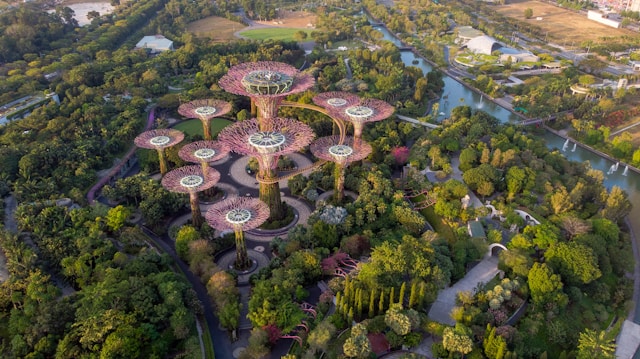
Singapore also maintains momentum through continuous precinct reinvention. Mature destinations often face a slow decline when hotels, retail zones, and attractions stop upgrading, and when the city runs out of fresh reasons for visitors to return. Singapore’s strategy counters this through recurring precinct refreshes and new experience concepts that strengthen its identity as a modern, high-quality destination. Rather than relying on a single blockbuster attraction, Singapore builds districts that bundle dining, retail, events, and public spaces into coherent visitor arcs. Marina Bay, Orchard Road, and Sentosa have all been treated as living precincts, where upgrades, programming, and brand repositioning are used to sustain pricing power and relevance. In a city with limited land, the most valuable tourism assets are the ones that keep generating new value from the same footprint.
Another factor that often goes underappreciated is governance and operational reliability. Singapore’s tourism proposition is strengthened by the city’s reputation for safety, cleanliness, rule clarity, and consistent public services. For many travelers, especially high-value leisure visitors and corporate decision makers, these qualities are not background details. They are reasons to choose a destination. Reliability reduces perceived risk, supports premium pricing, and encourages investment. Hotels and attractions require long-term confidence that policies will remain stable and that the city will continue to deliver a predictable experience. When that confidence exists, private capital is more willing to co-invest in upgrades, new concepts, and quality improvements, reinforcing the cycle of destination development.
Sustainability has become increasingly central to tourism development, and not only because it looks good in marketing. In Singapore, sustainability works as both a competitiveness tool and a discipline for managing costs and externalities. A high-cost environment makes energy efficiency, waste reduction, and better resource management economically meaningful. At the same time, global travel buyers are tightening procurement standards, and many organizations now prefer destinations that can support credible sustainability reporting for events and corporate travel. Sustainability also matters politically and socially. As tourism returns to scale, residents notice pressures on public space, congestion, and neighborhood character. A sustainability-oriented approach helps Singapore protect its social compact by showing that tourism growth will not simply be extracted from the city at residents’ expense.
Manpower constraints make productivity and capability building especially important. Tourism is labor-intensive, and Singapore cannot rely on unlimited low-cost labor to expand the sector. If the industry tries to grow without improving productivity, service quality will suffer, costs will rise, and burnout will increase. Singapore’s tourism development therefore depends on workforce upgrading, leadership development, and the adoption of technology that allows teams to deliver more consistent service with fewer people. This is not about replacing hospitality with machines. It is about using digital tools, automation, and smarter operations to protect service quality while improving job design and wage potential. In a premium destination, service reliability is part of the product. The sector’s long-term health depends on whether tourism jobs remain attractive, skilled, and sustainable for workers.
Incentives and co-investment also shape how tourism supply evolves. In many mature markets, older hotels postpone refurbishment, attractions become dated, and operators hesitate to invest because the short-term returns feel uncertain. Targeted incentives help counter this by encouraging faster rejuvenation cycles and nudging the industry toward higher-quality offerings. When incentives are designed well, they do not merely subsidize activity. They steer development toward outcomes the market might otherwise underdeliver, such as upgrading mid-tier inventory, improving accessibility and sustainability features, and supporting experience innovation. In a compact city, the quality of the supply base matters as much as marketing, because there is limited room for low-performing assets.
Measurement discipline is another pillar that supports Singapore’s tourism strategy. Tourism development is easy to discuss in slogans, but difficult to manage without a strong data infrastructure. A destination needs to know not only how many visitors arrive, but how they spend, what experiences convert, and which segments are growing or fading. With better measurement, Singapore can segment visitors more precisely, tailor products and marketing to high-intent audiences, and avoid spreading resources too thin across generic campaigns. This approach supports the broader shift from volume to yield, because it allows planners and operators to focus on what actually generates value, rather than what produces the loudest headlines.
Still, the most important factor may be the least glamorous: resident experience and social license. Tourism development can undermine itself if locals begin to feel that the city is being optimized for outsiders. When that happens, backlash grows, regulations tighten abruptly, and the destination’s reputation can shift from welcoming to weary. Singapore’s emphasis on quality tourism reflects an implicit recognition that resident support is a constraint that cannot be ignored. Managing crowding, concentrating visitor activity in well-designed precincts, and pushing for higher-value demand are all ways to keep tourism compatible with everyday life. In a dense city, success is not just measured by visitor satisfaction. It is measured by whether residents still feel ownership of the city they live in.
Taken together, these factors explain why Singapore’s tourism development model tends to look engineered rather than organic. Connectivity turns transit into opportunity. MICE builds high-multiplier demand. Precinct upgrades sustain repeatability and pricing power. Governance, safety, and operational reliability create a moat that supports premium positioning. Sustainability protects competitiveness and social trust. Capability building and productivity keep service quality intact under labor constraints. Incentives shape the supply side so it does not stagnate. Data discipline improves decision-making and keeps strategy anchored in reality.
Singapore will not outcompete larger destinations by offering endless sprawl or the cheapest holiday. Its advantage lies in being the destination that works. It is the place where visitors can arrive easily, move through the city confidently, and access premium experiences without friction. That is what quality tourism means in the Singapore context. It is not an abstract branding idea. It is a practical development strategy designed for a small, global city that must grow without breaking the very conditions that make it attractive in the first place.
 WhatsApp
 Instagram
 Threads