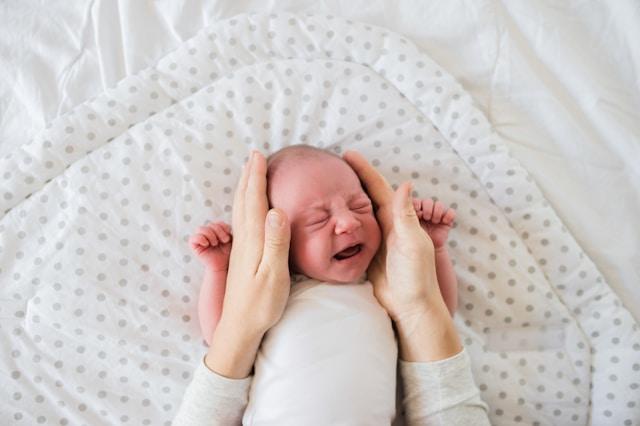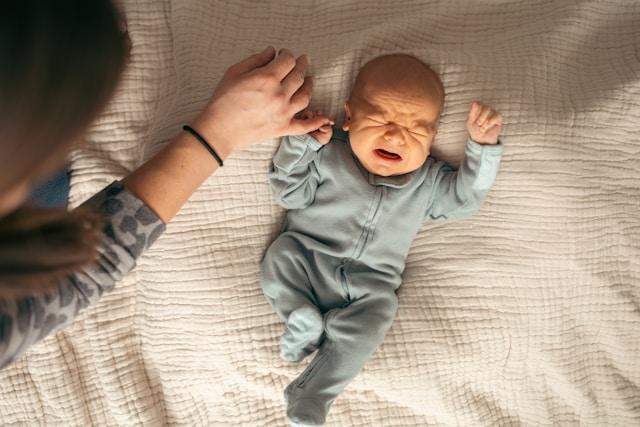
Why can genes affect a baby’s temperament? The simplest answer is that temperament begins as biology long before it becomes behavior. From the very first days of life, babies differ in how strongly they react to the world, how quickly they settle after distress, how easily they shift attention, and how sensitive they are to noise, light, touch, hunger, or change. Parents often notice it early. One baby cries fast and loudly, another fusses quietly, another seems calm until suddenly overwhelmed. These differences can feel mysterious, especially when two babies are raised with similar care. Genetics helps explain why those early patterns show up so quickly, and why they sometimes resemble traits seen in parents or close relatives.
Temperament is not the same as personality. Personality includes values, habits, self concept, and the layers of experience that accumulate over years. Temperament is closer to a starting rhythm. It is the baseline pattern of emotional and behavioral responses that a baby tends to show across situations. Think of it as the nervous system’s default settings for sensitivity and recovery. Some babies have a lower threshold for distress and a bigger reaction to stimulation. Others have a higher threshold and show slower, smaller responses. These differences are not a moral judgment. They are not evidence of a “good baby” or “bad baby.” They are differences in how the infant nervous system processes input and produces output.
Genes can influence these default settings because genes help build the biological systems that sit underneath temperament. There is no single gene that determines whether a baby will be “easy” or “difficult.” Temperament is shaped by many genes, each contributing a small effect, and by how those genes interact with the environment. What genetics provides is a set of tendencies and ranges. Those tendencies are expressed through systems such as stress reactivity, neurotransmitter activity, sleep regulation, sensory processing, and attention. When those systems are wired with slightly different sensitivities, babies can look and feel very different, even before parenting has had much time to shape behavior.
One major piece of temperament is reactivity. Reactivity describes how strongly and how quickly a baby responds to a trigger. A trigger can be hunger, discomfort, noise, separation, a new face, a bright room, or simply fatigue. Some babies move from calm to intense crying with little warning, while others signal earlier and more gently, or stay steady longer before they protest. The biology behind reactivity is closely related to the body’s stress response systems. These systems include pathways that control arousal in the brain and hormones in the body, such as cortisol. The stress response exists for a reason. It helps a baby mobilize energy, seek safety, and communicate need. But babies differ in where the dial is set. If a baby’s system is tuned toward higher reactivity, they may show stronger distress signals under the same conditions as another baby.
Another major piece is regulation. Regulation is how easily a baby returns to calm after being upset, and how well they can maintain a stable state during everyday changes. A baby with strong regulation may fuss, accept soothing, and settle fairly quickly. A baby with slower regulation may take longer to calm, cycle through crying bouts, or appear to get “stuck” in a high arousal state. Regulation also depends on biology, including how the nervous system balances activation and relaxation. Genetics influences the architecture of that balance. It does not decide exactly how the baby will behave in every moment, but it can shift the probability of longer or shorter recovery.
Attention and sensory processing add another layer. Some babies can tolerate a lot of stimulation, such as lively voices, bright lights, or multiple caregivers passing them around. Others become overloaded more easily and respond with fussiness, turning away, stiffening, or crying. Sensory sensitivity is not a preference or a choice. It is a feature of how the brain filters and prioritizes incoming information. If the filtering system is more porous, the baby may absorb more input, which can be exhausting. If the filtering system is more selective, the baby may handle stimulation with less strain. Genes play a role in building these sensory and attention networks, which is why differences can appear early and persist across settings.
Sleep and arousal rhythms are also part of the picture. Some babies have more predictable sleep patterns and smoother transitions between wakefulness and sleep. Others have irregular rhythms, shorter sleep stretches, and difficulty winding down. Sleep is not just a habit; it is a biological process governed by circadian timing, arousal thresholds, and sensitivity to cues such as light and feeding. Genetics contributes to these systems, which means two babies can have very different sleep experiences even in the same home. Parents often feel this difference as “my baby is wired.” They are not wrong, but the word wired should not imply permanent or hopeless. It simply means there is a starting design that needs the right support.
If genes shape these systems, why does temperament not look identical in all babies with similar genetics, or in all children within a family? Because genes are not a script. They are more like a set of ingredients. The final result depends on how those ingredients combine with one another and with the environment. Gene expression is not fixed at a single level forever. The body can turn certain genes up or down depending on signals from the environment. This is where the science of development becomes especially important for parents. A baby’s temperament is influenced by biological predispositions, but it is also tuned by daily experiences, especially the quality and consistency of caregiving.
This is sometimes described as gene environment interaction. A baby may inherit a tendency toward high sensitivity, but the way that sensitivity appears can differ depending on how predictable, responsive, and calm the environment is. In a chaotic environment, high sensitivity may show up as frequent crying, feeding difficulties, sleep disruption, or prolonged distress. In a stable environment, the same sensitivity may show up as strong responsiveness to routines, quick learning of cues, and deep attunement to caregivers. The baby is not “changed into a different baby,” but the environment helps determine whether the trait becomes a constant struggle or a manageable, even valuable, characteristic.
Some researchers also describe a related idea called differential susceptibility. The basic point is that some children are more affected by their environments in both directions. In this view, a highly sensitive baby is not only more vulnerable to stress but also more likely to benefit from supportive care. That means the same biological sensitivity can lead to worse outcomes in harsh conditions and better outcomes in nurturing conditions. Parents often find this concept freeing because it reframes a reactive baby. High reactivity can feel like a problem that needs fixing. But it can also be a sign that the baby is highly responsive to the world and to you. The task becomes building an environment that matches the baby’s nervous system rather than forcing the baby to match an environment that overwhelms them.
The caregiving relationship matters because babies are not designed to self regulate in the adult sense. They regulate through other people. When a caregiver responds consistently, the baby experiences a repeating pattern: distress rises, support arrives, the body settles, and safety returns. Over time, that pattern trains the nervous system. It becomes easier for the baby to move from high arousal back to calm, and the stress response system becomes better calibrated. This is one reason why early soothing does not “spoil” infants. In the first months, soothing is not about teaching dependence. It is about building the foundation for future independence by helping the nervous system learn stability.
This also helps explain why temperament can feel hereditary while still being flexible. A parent who was once a reactive child may have a sensitive stress system as an adult. If that parent becomes anxious when the baby cries, the baby may receive faster intervention but with a tense emotional tone. Another parent may respond more slowly but with steady calm. These differences in parental regulation can shape the baby’s experience of distress. Genetics may have set the baby’s sensitivity, but the caregiving pattern influences how that sensitivity is expressed day to day, and how it develops over time.
Understanding genetics in temperament is useful because it shifts what parents aim for. Instead of trying to change the baby’s nature, parents can focus on designing the best support for the baby’s temperament. A baby who escalates quickly benefits from earlier responses, before distress becomes overwhelming. A baby who is easily overstimulated benefits from lower stimulation environments and clearer transitions. A baby who struggles to wind down benefits from predictable routines and calming cues. This is not about controlling the baby. It is about working with the baby’s biology and reducing unnecessary strain.
It is also important to understand what genetics cannot do. Genes cannot tell you exactly who your child will become. They cannot predict character, intelligence, kindness, or resilience on their own. Temperament is not a prophecy. An intense baby does not automatically become an anxious adult. A cautious baby does not automatically become socially withdrawn. Traits interact with experiences, opportunities, relationships, and development. Many children who start life highly reactive grow into thoughtful, perceptive, emotionally attuned adults, especially when they learn skills for regulation and when their environment supports their sensitivity. Likewise, a baby who seems calm and unbothered can still face challenges later, especially if their needs are missed because they signal less loudly.
Parents can also misread temperament if they treat behavior as a label rather than a signal. A baby who cries quickly may not be “difficult.” They may simply have a lower threshold for discomfort and a stronger communication style. A baby who stays quiet may not be “easy.” They may be less expressive, more internal, or slower to show distress. When parents attach fixed labels, they risk overlooking the baby’s cues. When parents focus on patterns and triggers, they are more likely to respond effectively.
This is why the best use of the genetics concept is not to assign blame or accept defeat. It is to build a realistic, compassionate view of your baby. If temperament differences are partly biological, then parents can stop seeing every rough day as proof that they are failing. A baby can be loved well and still be intense. A baby can be nurtured consistently and still struggle with transitions. This does not mean caregiving does not matter. It means caregiving is not the only factor, and it should not carry all the emotional weight of outcomes that are influenced by biology.
In practice, supporting a baby’s temperament often comes down to reducing friction and strengthening co regulation. That means recognizing early signs of distress rather than waiting for a full meltdown, because a highly reactive nervous system can take longer to settle once it has escalated. It means creating predictable rhythms around feeding, sleep, and transitions so the baby’s body learns what to expect. It means paying attention to sensory load, especially in the first months, because too much noise, light, movement, or social handling can push a sensitive baby past their capacity. It also means caring for the caregiver, because parental stress can increase household arousal and make regulation harder for everyone.
In the end, genes can affect a baby’s temperament because genes help build the brain and body systems that govern sensitivity, reactivity, attention, and recovery. Those systems create a starting pattern that parents can feel early. But that starting pattern is not a verdict on the child’s future, and it is not a measure of parenting success. Temperament is information, and information is useful. When parents treat temperament as a guide, not a label, they can respond with more confidence and less self blame. They can stop fighting the baby’s wiring and start supporting it, helping the baby learn regulation, trust, and steadiness over time.
 WhatsApp
 Instagram
 Threads