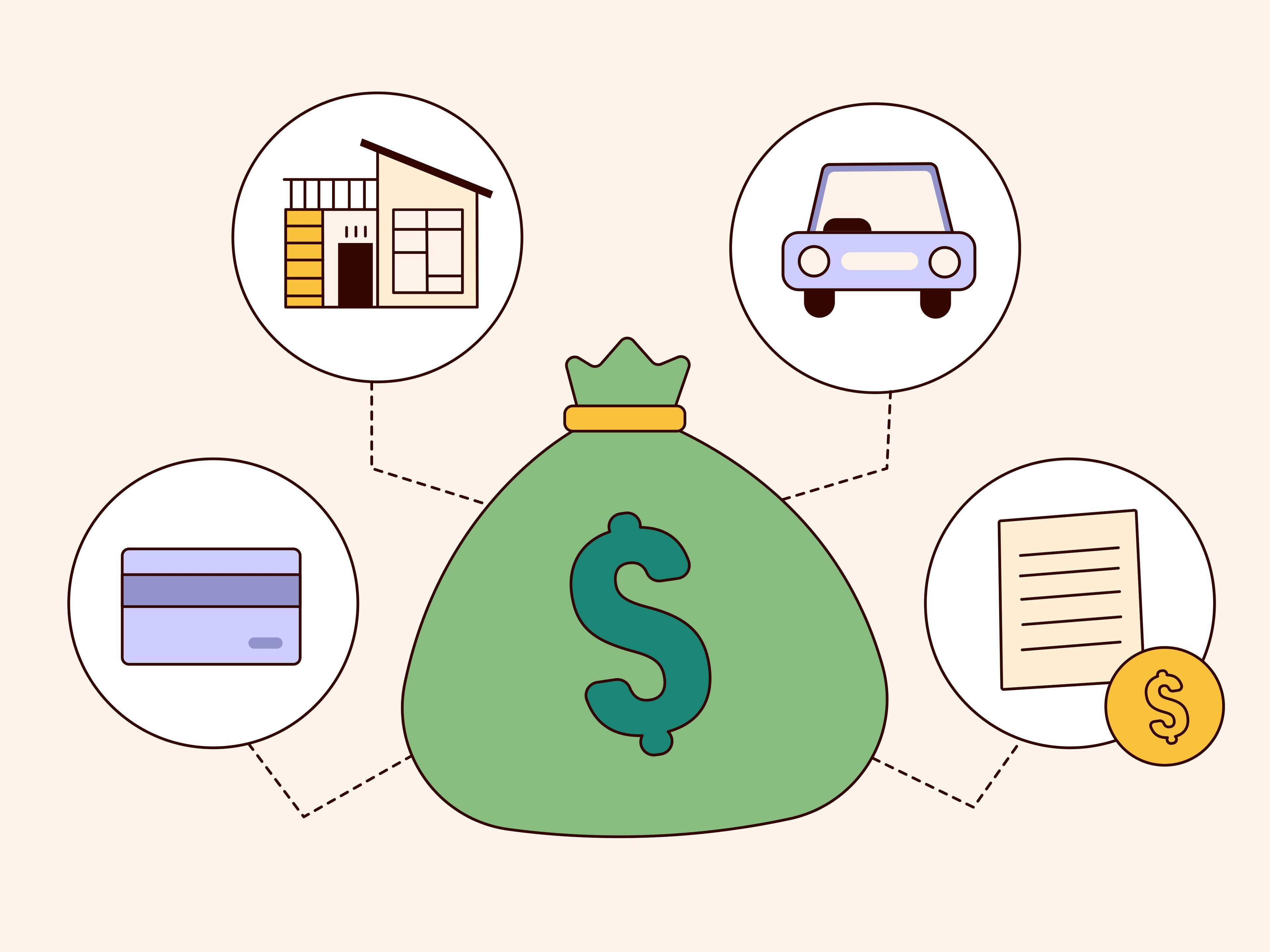
Government support is often misunderstood as a bonus that small businesses can pursue when they have spare time. In reality, it is closer to economic infrastructure. In Malaysia, where most small firms operate with thin margins, limited buffers, and intense competition, the environment around a business can matter as much as the effort inside it. This is why government support becomes crucial to growth. It does not simply inject money into a company. When it is designed well, it reduces the structural barriers that keep capable businesses stuck at the survival stage and helps them build the conditions needed to scale.
To understand the importance of government support, it helps to look at the moment when many small businesses hit a ceiling. A founder may have steady customers and a working product, yet expansion feels impossible. The business is constantly reacting to daily pressures, and any disruption, such as a late payment from a client, a sudden repair, or an unexpected compliance cost, can throw everything off. Growth requires consistency, and consistency requires room for error. Many small firms do not have that room. Government programs matter because they can reduce fragility and give businesses the breathing space to invest in the next stage of development.
Financing is usually the first issue people mention, but the deeper challenge is not just a shortage of capital. It is a mismatch between what small businesses need and what the market is willing to provide at early stages. Many SMEs lack collateral, a long credit history, or clean financial records that meet conventional banking expectations. Even when a business is viable, the founder may be seen as high risk simply because the business has not been operating long enough or does not have the documentation that lenders want. This creates a cycle where firms stay small because they cannot access growth financing, and they cannot access growth financing because they stay small.
Government support breaks that cycle by changing how risk is shared. Concessional financing can lower the cost of borrowing, but affordability alone does not solve access if approval remains the main hurdle. That is why guarantee mechanisms are so important. When a portion of the risk is backed by an institution, lenders have more confidence to extend credit to borrowers who would otherwise be excluded. In practical terms, this can be the difference between a business continuing to rely on informal funding and personal savings, versus building a real credit profile that supports expansion.
Yet financing alone does not produce sustainable growth. Capability is the constraint that quietly stalls many businesses long before they become “too small to matter.” A small enterprise can have strong demand, but still struggle to deliver consistently because operations are not systemized. Inventory may be tracked in fragments across messages and spreadsheets. Pricing may not reflect true costs. Hiring may rely on ad hoc decisions rather than repeatable processes. Compliance tasks may fall directly on the founder because there is no structure to delegate them. In these conditions, the business might generate revenue, but it cannot compound because every step forward depends on the founder’s constant presence.
This is where government support that subsidizes training, advisory, and structured upgrading becomes crucial. Capability programs are often dismissed as soft support, but they can produce the hardest outcomes: better financial documentation, improved operational controls, higher productivity, and readiness for larger customers. When such programs reduce cost barriers, they make it easier for SMEs to invest in skills and systems that would otherwise feel unaffordable. For micro enterprises, especially, paying for professional support can be difficult to justify when every ringgit has a clear alternative use. Subsidy changes the calculation by lowering the immediate tradeoff and encouraging founders to build long term competence rather than chasing short term survival.
Market access is another growth barrier that government support can help resolve. Many SMEs reach a point where local demand is not enough to sustain meaningful expansion. Their customer base may be limited to a small area, a narrow network, or a single dominant client. Breaking into larger markets requires more than a good product. It requires reliability, documentation, standards, and often the ability to finance bigger orders. Supply chains are selective, and procurement systems can be demanding. A small firm may be capable of fulfilling a large contract in theory, but unable to do so in practice because it cannot fund inventory upfront, cannot meet certification needs, or cannot demonstrate consistent processes.
Government support becomes valuable here because it can create bridges between SMEs and larger markets. Initiatives that strengthen export readiness, improve access to procurement platforms, or provide trade financing can turn growth from a vague ambition into a workable pathway. The point is not to push every small business into exporting or large scale contracting. The point is to reduce the friction that prevents qualified firms from entering new demand channels. When SMEs can access broader markets, growth becomes less dependent on personal networks and more tied to real competitiveness.
Resilience is the fourth reason government support matters, and it has become more important in an era of frequent shocks and rapid transitions. Small businesses are more exposed to volatility because they carry less cash, have fewer fallback options, and often depend on a small number of customers. A disruption that a large company can absorb may be existential for a micro enterprise. Beyond shocks, there is also the pressure to adapt to change. Digitalization, automation, and sustainability expectations can all feel like additional costs placed on businesses that are already stretched thin. The transition itself has a price, and without support, many SMEs postpone upgrading until they are forced to act under pressure, which is usually the most expensive moment to change.
Support that targets transformation and modernization is crucial because it reduces the “transition tax” on SMEs. It encourages businesses to adopt better tools, improve productivity, and become less vulnerable to recurring disruptions. Importantly, it also frames resilience as more than temporary relief. It becomes a long term investment in the strength of the SME sector, so that businesses do not simply survive the next challenge, but become structurally better prepared for it.
There is also a final dimension that is often overlooked: navigation. Malaysia’s SME support ecosystem spans multiple agencies, programs, and institutions. When support is fragmented, it creates a founder tax. Time spent searching for the right program, interpreting eligibility rules, and understanding documentation requirements is time taken away from building the business. Coordination matters because it makes support easier to find and easier to use. When systems are better aligned, the founder spends less time guessing and more time making decisions that improve operations, finance readiness, and market positioning.
Seen together, these factors explain why government support is not merely helpful but crucial. Small business growth depends on clearing constraints in sequence. Financing without capability can lead to waste, because money does not automatically create execution. Capability without market access can lead to frustration, because improvements do not translate into new revenue opportunities. Market access without resilience can create churn, because expansion increases exposure to risks that the business cannot withstand. Effective government support helps SMEs move through these stages with fewer dead ends and fewer costly mistakes.
For founders, the most useful way to approach government support is not to treat it as a collection of random opportunities. It should be treated as leverage applied to the business’s most limiting constraint. If approval is the barrier, guarantee mechanisms and structured financing pathways may matter most. If repeatability is the barrier, training and capability programs may be the real growth accelerator. If demand is the barrier, market access initiatives and export readiness support can unlock the next tier. If transition is the barrier, transformation and digitalization-linked support can reduce the cost of upgrading. The goal is not to chase everything, but to match support to what actually prevents growth right now.
Ultimately, the strongest reason government support is crucial is that small businesses are not only building products and services. They are building systems. Growth is less about increasing effort and more about increasing the reliability of the machine that produces revenue. When government support helps SMEs improve that machine, by strengthening access, capability, markets, and resilience, it stops being paperwork and becomes a strategic tool. In Malaysia’s business landscape, that strategic tool can be the difference between staying small forever and becoming a company that can scale with confidence.
 WhatsApp
 Instagram
 Threads


.jpg&w=3840&q=75)