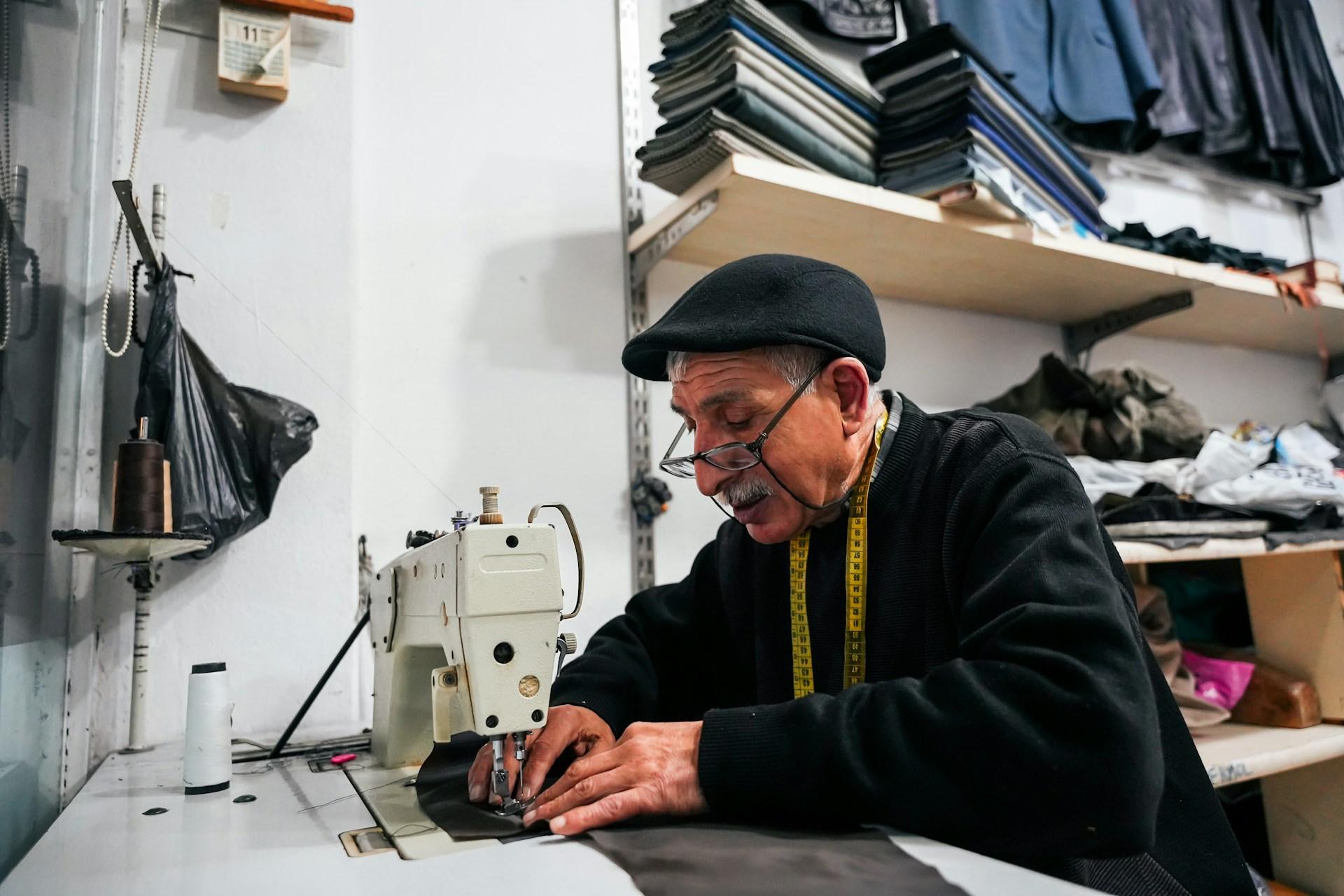
When people talk about Malaysia’s economy, the conversation often drifts toward the biggest names and the biggest numbers. We think about multinational corporations, large factories, government mega projects, and headline grabbing investments. These are visible and important, but they do not explain how the economy truly functions on an everyday level. The more accurate story is quieter and far more widespread. Malaysia’s economic strength is built through small businesses that operate in neighbourhoods, town centres, industrial areas, and online marketplaces. They may not dominate the news cycle, but they shape how money moves, how jobs are created, and how communities grow. In practice, small businesses are not a minor supporting sector. They are one of the main engines of Malaysia’s economy.
Their importance becomes clearer when you look at their economic contribution. Malaysia’s micro, small and medium enterprises, commonly grouped as MSMEs, generated RM652.4 billion in value added in 2024, accounting for 39.5 percent of national GDP. They also expanded by 5.8 percent that year, outpacing overall GDP growth of 5.1 percent. These figures matter because they show that MSMEs do not merely exist alongside the wider economy. They actively drive it. A segment that contributes close to two fifths of GDP and grows faster than the national average is not a peripheral group. It is central to how Malaysia generates wealth and sustains economic momentum.
The strongest reason small businesses matter is their role in creating livelihoods. In 2024, MSMEs employed 8.10 million people, which represented 48.7 percent of total employment in Malaysia. That means nearly half the workforce depends on smaller firms for income. Employment on this scale has broad effects. It shapes household spending, supports education expenses, determines the ability of families to manage debt, and affects local business activity through everyday consumption. It also creates opportunities for people who may not have easy access to formal corporate pathways. Many small firms train workers on the job and provide a first step into the labour market. They often hire incrementally, which makes them a steady and widespread source of employment across different income levels and skill backgrounds.
Small businesses also matter because of their reach and presence across the country. Malaysia’s Economic Census 2023 profile reported that MSME establishments increased to 1,069,831, with the services sector forming the largest share of establishments. That scale shows how embedded MSMEs are in daily life. They operate in retail, food and beverage, logistics, education, professional services, healthcare, repairs, and countless other segments that people rely on constantly. Their footprint ensures that economic activity is not restricted to a few large corporate hubs. Instead, it spreads into communities where people live and work, helping towns and smaller cities remain economically active rather than becoming dependent on external migration or a limited number of large employers.
This broad spread makes small businesses vital to regional development. Malaysia is not a single market with identical conditions. Different states and districts have different advantages, whether in tourism, manufacturing, agriculture, or services. Small businesses respond to these local strengths. Where tourism grows, small operators build services around it through accommodation, transport, food, and local experiences. Where industrial activity expands, MSMEs fill the supporting roles through maintenance, supplies, subcontracting, and technical work. Where population increases, small firms grow to meet rising demand for childcare, tuition, clinics, repairs, and household services. Because MSMEs can start and scale with relatively smaller capital, they tend to appear faster than large investments and can help local economies deepen over time.
Beyond their domestic impact, small businesses also contribute to Malaysia’s role in international trade. In 2024, MSME exports were valued at RM196.8 billion, representing 14.3 percent of total exports. This figure challenges the assumption that small firms only serve local markets. Some MSMEs export directly, while others support exporting industries by supplying parts, services, and processes that feed into bigger export activities. Either way, their involvement strengthens Malaysia’s competitiveness, because global trade depends not only on large exporters but also on a capable network of smaller suppliers that keeps production flexible and efficient.
Small businesses also form the connective tissue that links large corporations to operational reality. A big company might employ thousands, but it still relies on external vendors and partners for daily functions. MSMEs supply packaging, transport, catering, repairs, digital services, equipment support, specialist manufacturing, and professional services. This ecosystem reduces bottlenecks and increases economic efficiency. When MSMEs are healthy, larger firms can operate more smoothly and scale faster because they are not forced to build every capability internally. This supplier network is often overlooked, but it is one of the reasons a modern economy can function at scale.
Another reason small businesses are essential is that they strengthen resilience. Malaysia’s economy is shaped by external forces such as global demand, supply chain shifts, currency movements, and commodity price changes. When large industries face pressure, the shock can ripple quickly through jobs and investment. A diverse MSME base helps cushion that impact by spreading economic activity across many firms and sectors. Small businesses can adjust more quickly because they have less organisational inertia. They can revise product offerings, change distribution channels, renegotiate supply arrangements, and refine pricing strategies in response to shifting conditions. While they are still vulnerable, their ability to adapt can reduce the risk of an economy becoming overly dependent on a few large employers or industries.
Productivity and capability building are also part of the MSME contribution. Long term economic progress requires more than growth in headcount or working hours. It requires better output per worker through improved processes, skills, and technology. DOSM reported MSME labour productivity rising to RM80,507 per person in 2024. This matters because productivity improvements support wage growth, business reinvestment, and competitiveness. When productivity rises across the MSME sector, it improves national performance because the sector is so large in both output and employment.
Finally, small businesses matter because they create a pathway to ownership and social mobility. Not everyone has access to high paying corporate jobs, inherited assets, or large capital. For many Malaysians, entrepreneurship provides a practical route to build income and independence over time. A small business may begin as a modest operation, but it can develop into a stable source of livelihood, a family asset, and a platform that creates jobs for others. Even when firms stay small, their presence increases the number of people participating in the economy as creators of value rather than only as employees.
Taken together, these points explain why small businesses are fundamental to Malaysia’s economy. They contribute a large share of GDP, provide employment for nearly half the workforce, and participate in export activity at a meaningful scale. They exist in huge numbers across the country, shaping local communities and supporting regional development. They strengthen supply chains, improve resilience, drive practical innovation, and build productivity over time. Most importantly, they make economic growth tangible. They turn policy and macroeconomic trends into real jobs, real income, and real progress felt in households and communities. In Malaysia, small businesses are not simply important. They are indispensable to how the economy grows, stabilises, and evolves.
 WhatsApp
 Instagram
 Threads


.jpg&w=3840&q=75)