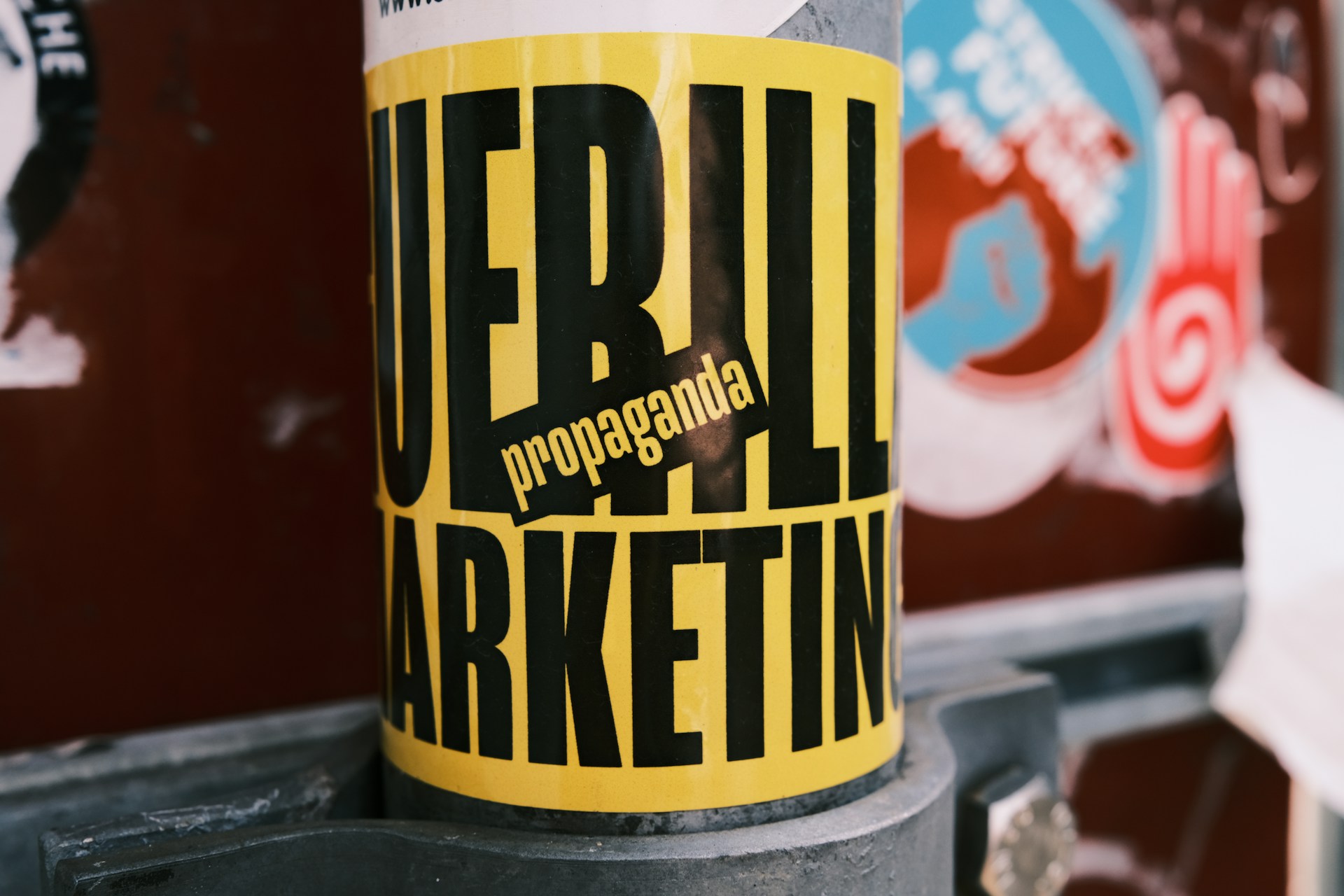
Guerrilla marketing is a way for small brands to compete for attention without relying on big advertising budgets. Instead of paying for large-scale exposure, it uses creativity, surprise, and timing to create a moment people naturally want to talk about. The goal is not simply to be seen, but to be remembered. When done well, it turns an ordinary day into a small story worth sharing, and that story becomes the marketing. At its core, guerrilla marketing works because it is designed for an uneven playing field. New businesses are often unknown, underfunded, and competing against established names that can afford constant visibility. Traditional marketing rewards size because it depends on reach and repetition. Guerrilla marketing takes the opposite approach. It aims for impact first, creating a strong emotional reaction in a short time, then relying on word of mouth and social sharing to spread the message further than the original effort could reach on its own.
Many people associate guerrilla marketing with street stunts, pop-up displays, or dramatic public activations. Those can be part of it, but the real defining feature is not the setting. The defining feature is the strategy. Guerrilla marketing interrupts routine in a clever way, creating a pattern break that makes people pause. That pause is valuable because attention is scarce. People scroll past ads, ignore promotions, and tune out messages that feel predictable. Guerrilla marketing tries to earn a second look by offering something unexpected, funny, useful, or emotionally resonant.
However, the surprise is not meant to be random. The best guerrilla marketing is tied closely to what the brand stands for and what the product actually delivers. A campaign that creates buzz but has no connection to the business can generate temporary noise without real results. The audience may remember the stunt but forget what was being promoted. In some cases, the attention can even harm the brand by making it look confused or unserious. For guerrilla marketing to work, the moment must be a clear demonstration of the brand’s promise, not a disconnected attempt to chase virality. This is why successful guerrilla campaigns often feel simple. They communicate one clear idea quickly, in a way that people can understand within seconds. If the message requires long explanations, the campaign will not travel far because people do not share what they cannot describe. The most shareable moments are the ones that can be captured in a photo, summarized in a sentence, and understood immediately by someone who was not there. In that sense, guerrilla marketing is not only about the live experience. It is also about designing a moment that survives beyond the moment, especially online.
At the same time, guerrilla marketing is often misunderstood as rule-breaking marketing. That is a mistake. Being bold does not require being reckless. Effective guerrilla marketing can be permission-based, legally compliant, and culturally respectful while still feeling spontaneous. In fact, relying on illegal tactics like vandalism or trespassing is usually a sign of weak strategy, not strong creativity. The goal is to break expectations, not to break laws. In many environments, especially in close-knit communities where reputations travel quickly, a campaign that crosses ethical lines can backfire and damage trust far more than it helps.
Ethics matter for another reason too. Guerrilla marketing plays with surprise, and surprise can easily become discomfort if the audience feels tricked or exploited. The most effective campaigns create a sense of delight, not embarrassment. They make people feel smart for noticing the idea, not foolish for missing it. They also avoid using sensitive social issues as mere decoration. A generous campaign builds goodwill because it respects the audience’s intelligence and boundaries, and that goodwill becomes part of the brand’s identity.
For founders, guerrilla marketing can be attractive because it looks inexpensive. In reality, it replaces money with effort. It may cost less in advertising spend, but it costs more in planning, logistics, coordination, and risk management. A campaign that appears effortless to the public is often carefully built behind the scenes. Teams need to think through practical details such as timing, crowd management, equipment, staff roles, permission requirements, backup plans, and customer support capacity. If the campaign succeeds and attention spikes, the business must be ready to handle the demand. A surge of interest can become a problem if the onboarding experience is messy or the product is not prepared for increased traffic. This is also why measurement still matters. Guerrilla marketing has a reputation for being difficult to track, but founders can still learn from it with simple tools. Unique QR codes, dedicated landing pages, campaign-specific promo codes, or brief customer surveys can provide signals about whether the campaign generated action rather than just attention. Perfect attribution is not the point. The point is to understand whether the moment created meaningful movement toward a business goal such as sign-ups, purchases, referrals, or partnerships.
In the end, guerrilla marketing is best understood as a multiplier, not a substitute. It does not replace a strong product, and it cannot fix weak retention or unclear positioning. But when the product delivers real value and the business needs visibility, guerrilla marketing can create the kind of attention that feels earned rather than purchased. It can help a small brand punch above its weight by creating a moment that makes people stop, smile, talk, and remember. For founders, that is the real promise. Guerrilla marketing is proof that you do not need to sound like a giant to grow. You need to be memorable for the right reason, in the right place, at the right time.
 WhatsApp
 Instagram
 Threads

-3.jpg&w=3840&q=75)