-3.jpg)
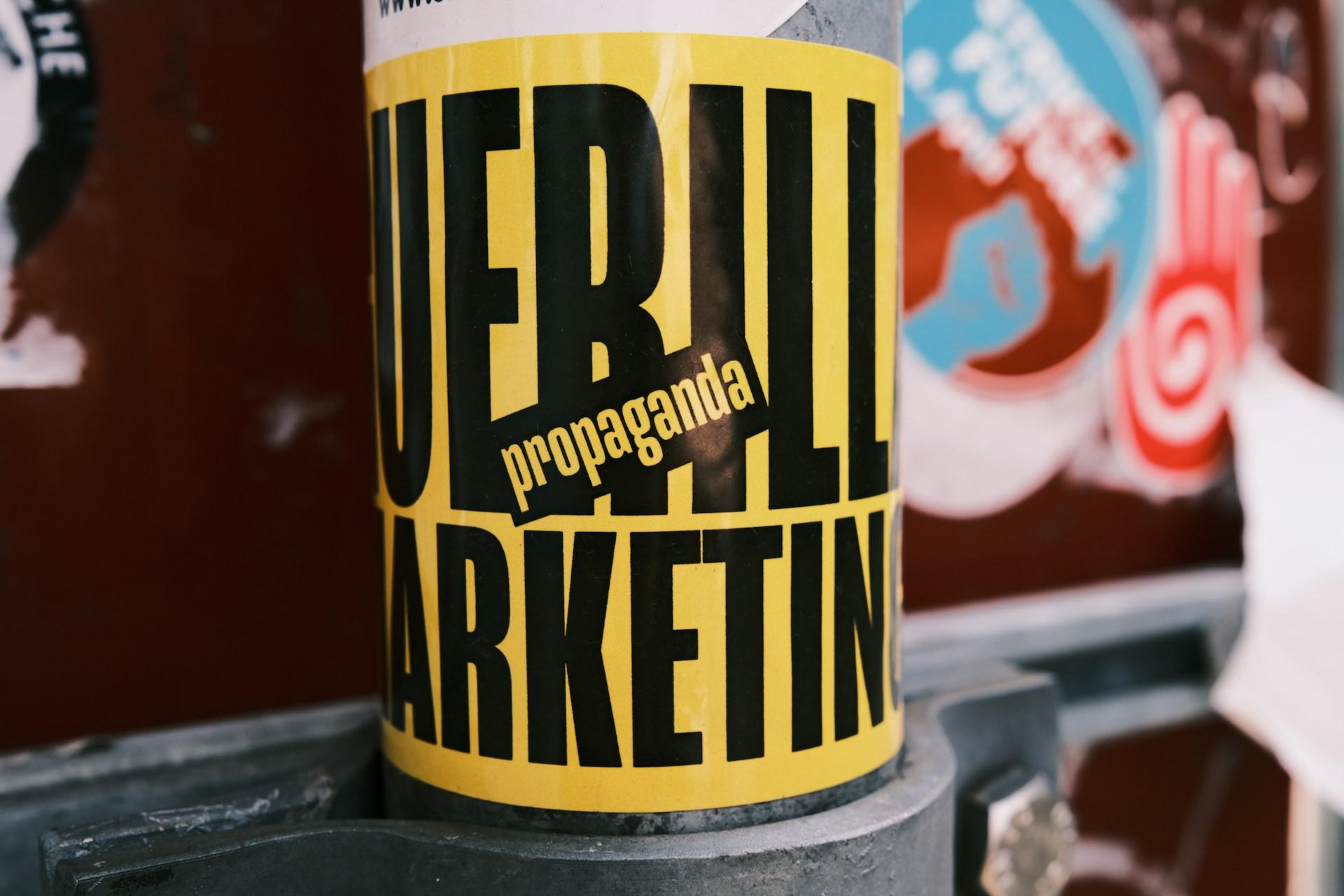
Guerilla marketing can be highly effective, but only when it is designed to create business outcomes, not just attention. Many campaigns look successful because they generate views, shares, and brief buzz, yet those signals do not automatically translate into customer growth. The real effectiveness of guerilla marketing depends on whether the attention it creates leads to sustained demand, stronger distribution, or lower future acquisition costs. When it does, it can outperform more traditional approaches, especially for small brands that do not have large advertising budgets. When it does not, it becomes a short-lived spectacle that drains time and credibility.
At its core, guerilla marketing works by using surprise and social transmission rather than paid reach. It relies on people talking about what they saw, filming it, sharing it, and retelling it in a way that spreads organically. This is why guerilla marketing can appear powerful. It can cut through noise in a crowded market and give an unknown brand the visibility it could not afford to buy. A strong guerilla campaign can generate earned media, spark conversations within communities, and create a sense of discovery that makes the brand feel more interesting than a standard ad.
However, visibility alone is not a meaningful measure of effectiveness. A campaign is only effective when it creates a clear lift in business activity. That lift might show up as more sign-ups, demo requests, purchases, or inbound partnership inquiries. It may also show up as a stronger narrative position, where future marketing becomes easier because the market already recognizes the brand. Guerilla marketing is most effective when it produces one of these durable outcomes, because durable outcomes can compound. A brand that gains credibility or builds community recognition from a campaign can benefit long after the initial moment fades.
One reason guerilla marketing often gets overvalued is that it produces fast, exciting feedback. It can generate immediate engagement and the team feels a sense of momentum. But the conversion path is often ignored. If the campaign reaches the wrong audience, the excitement becomes irrelevant. If it reaches the right audience but there is no clear next step, the interest disappears. If it frames the brand in a way that does not match the product, it can even create confusion or attract customers who were never a good fit. In those cases, the campaign may feel successful in the moment, but it does not build the business.
For guerilla marketing to be effective, it must include a built-in sharing engine and a conversion bridge. The idea needs to be easy to explain in one sentence and easy to capture visually, because that is how people share. It also needs to give the audience a reason to spread it, whether that reason is humor, curiosity, relevance, or the desire to look smart by sharing something new. At the same time, it must quietly guide interested people toward action without breaking the experience. A campaign that delivers surprise without direction often produces noise rather than results.
Effectiveness also depends on readiness. Guerilla marketing works better as a multiplier than as a rescue plan. If the product is unclear, onboarding is weak, or the brand message is inconsistent, a stunt will simply push more people into a broken system. The attention becomes wasted because the business is not prepared to convert it. On the other hand, when a brand already has a solid offer and a working conversion path, a guerilla campaign can function like a spotlight. It brings a surge of attention at the right moment and helps the brand break out of invisibility.
There is also a risk factor that affects how effective the tactic can be. Guerilla marketing often involves public spaces, cultural norms, and unpredictable reactions. A campaign can backfire if it creates safety concerns, violates permissions, triggers negative interpretations, or is perceived as disruptive. This risk is higher in categories where trust is critical, such as health or finance, because unexpected stunts can read as irresponsible rather than clever. In lower-stakes categories where personality and playfulness are expected, guerilla campaigns have more room to succeed without damaging reputation.
Ultimately, guerilla marketing is effective when it is treated as strategic distribution design. The most successful campaigns start with a business goal, build a story that spreads among the right people, create a simple path to conversion, and measure results honestly. When those elements align, guerilla marketing can deliver a strong return on a small budget and create brand momentum that paid ads cannot replicate. But when it is pursued only for virality, it becomes performance without payoff. The tactic can create attention quickly, yet attention is only valuable when it is connected to a system that turns interest into lasting growth.
 WhatsApp
 Instagram
 Threads