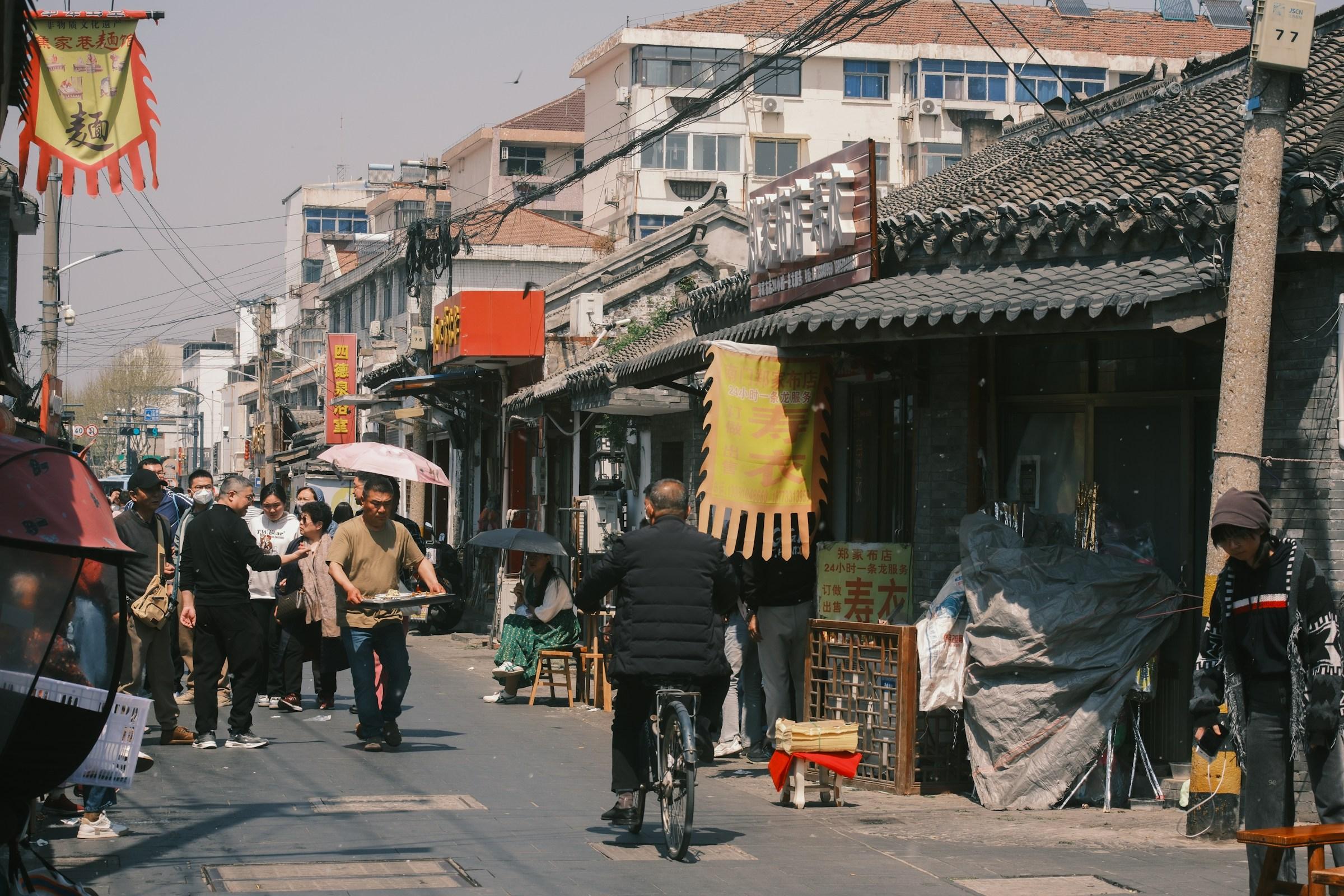
China’s retirees are often described as a looming burden on the economy, a sign that the country is growing old before it becomes rich enough to afford it. That narrative captures only part of the story. As the population ages and the traditional engines of growth come under pressure, retirees are becoming far more than a fiscal line item. They are emerging as a central force shaping consumption, labour markets, policy priorities, and the long term stability of China’s growth model.
Over the past decade, the demographic shift has accelerated. The share of people aged 60 and above has continued to rise, while the overall population has begun to shrink. For years, this was framed mainly as a headwind. Fewer workers, more pensioners, heavier healthcare costs, and a shrinking base of contributors to social security made the future look like a slow squeeze on public finances. Yet as policymakers and businesses confront this reality, the conversation is moving from fear to adaptation. The question is no longer how to avoid aging, but how to turn an older society into an economic asset rather than a liability.
One of the clearest signs of this pivot is the growing emphasis on the silver economy. Instead of viewing retirees solely as recipients of welfare, Beijing has started to treat them as a distinct and powerful consumer segment. National plans for the development of the silver economy stress the need for better eldercare services, more age friendly infrastructure, and new financial and digital products designed with older users in mind. This is not only social policy. It is an explicit attempt to unlock a new source of domestic demand at a time when exports and property are more volatile than before.
Retirees sit at the centre of several consumption trends. Many older households carry less mortgage debt than younger ones and are more willing to spend on services that directly improve their quality of life, such as healthcare, wellness, travel, and home adaptations that allow them to age in place. If they feel secure about their pensions and access to medical care, they are more likely to spend discretionary income instead of hoarding it in bank deposits. That spending, spread across hundreds of millions of retirees, has the potential to offset some of the drag from weak property investment and cautious consumption among younger families.
The ageing of the population is also reshaping China’s labour market. For decades, the country operated with relatively low retirement ages compared with many developed economies. As the number of working age people shrinks, policymakers have started to extend the statutory retirement age step by step. The logic is straightforward. Raising the retirement age eases pressure on pension funds, keeps experienced workers in the labour force longer, and buys time for the system to adjust.
Retirees and near retirees matter in another way too. In many industries, especially advanced manufacturing, healthcare, and technical services, institutional memory and hands on expertise are difficult to replace quickly. Older workers often carry knowledge that is not easily captured in manuals or software. Companies are experimenting with phased retirement arrangements, part time advisory roles, and mentorship structures that allow them to tap this experience while opening room for younger workers to move into core roles. The most successful models treat retirement as a gradual transition rather than a sharp cliff.
At the same time, the presence of retirees in the labour market creates tensions with the aspirations of younger people. Youth unemployment has been a concern, especially for recent graduates entering a slowing economy. It is easy to frame the issue as a zero sum trade off between older workers and younger job seekers. The policy challenge is to avoid that framing. If firms rely on older staff but fail to create pathways for new entrants, they risk damaging social cohesion and undercutting innovation. If, on the other hand, they use older workers strategically as mentors and flexible capacity while investing in the career progression of youth, retirees can become a bridge between generations rather than a barrier.
Beyond formal employment, retirees already support the economy in ways that standard statistics tend to undercount. Grandparents are often the invisible backbone of urban family life. They provide childcare that allows parents to accept long working hours and demanding commutes. This unpaid labour has a direct impact on female labour force participation. Without retiree childcare, many mothers would have to drop out of the workforce or reduce their hours, with knock on effects on household income and aggregate demand.
Retirees also contribute to community life. In cities and villages, older residents run local associations, organise activities in neighbourhood centres, supervise shared spaces, and act as informal guardians for children and vulnerable neighbours. As policymakers talk more about community based eldercare and social governance, this unpaid work becomes a structural part of how cities function. When given modest support, training, or digital tools, retirees can help extend state capacity by filling gaps in social services that government agencies alone cannot cover efficiently.
Recognising these realities, China’s policy framework is shifting. Documents on elderly services and the silver economy signal a desire to build a comprehensive system that integrates pensions, healthcare, housing, and community support. Financial regulators are encouraging the development of long term care insurance and age appropriate wealth management products. Urban planners are under pressure to make public transport, buildings, and digital interfaces easier for older people to use. All of this forms the foundation for a different kind of growth, in which consumption and services anchored around retirees play a larger role.
The stakes are not only economic but psychological. In an aging society, expectations matter. If current workers believe the pension system is unsustainable and healthcare will be unaffordable in their old age, they will respond by saving more aggressively and consuming less today. That behaviour depresses demand and exacerbates the very slowdown that policymakers are trying to avoid. Conversely, if retirees and future retirees have confidence that basic security will hold, they are more willing to spend and invest in ways that support growth. Designing credible rules, transparent funding mechanisms, and predictable benefits is therefore a macroeconomic priority, not just a welfare concern.
China does not enter this phase in isolation. Other economies have walked similar paths. Japan offers a cautionary but also instructive example. It has grappled with stagnation and deflation, yet it has also developed sophisticated long term care systems, senior friendly infrastructure, and labour practices that allow many older adults to keep working in less demanding roles. European countries have used a mix of pension reforms, immigration, and active labor market policies to soften the blow of aging. China’s circumstances are unique, with a much larger population, wide regional disparities, and a lower average income level. Still, the lesson is clear: aging societies can be productive and innovative if they redesign institutions early enough.
China has one advantage that previous aging economies did not. It is entering this stage with highly developed digital infrastructure. Mobile payments, online healthcare platforms, and social commerce are already part of everyday life for many older urban residents. If these tools are adapted thoughtfully to the needs and capabilities of retirees, they can reduce friction, cut costs, and improve access to services. If, however, digitalisation leaves large groups behind, it will deepen inequality between tech savvy urban retirees and more vulnerable seniors in smaller cities and rural areas.
For companies and investors, the implications of these shifts are profound. The aging of China is not a short term theme that can be captured with a few marketing campaigns aimed at seniors. It is a structural change that will determine which sectors grow, which business models succeed, and which risks matter most. Healthcare, medical devices, pharmaceuticals, rehabilitation services, and assisted living are obvious beneficiaries, but they are not the only ones. Property developers who can deliver age friendly housing, financial institutions that design simple and transparent products for retirees, and technology firms that create reliable digital tools for caregiving and remote monitoring all stand to benefit.
At the same time, the demographic transition will expose weak points. Business strategies that depend on ever expanding cohorts of young urban buyers may be less resilient. Models that rely on retirees taking on excessive leverage or buying speculative assets to try to secure their future are unlikely to enjoy policy support. Investors will need to distinguish carefully between genuine, policy aligned opportunities in the silver economy and projects that merely use demographic buzzwords without sustainable economics behind them.
Retirees, in short, are moving from the margins of China’s economic story to its centre. They shape how families allocate time and money, how labour markets evolve, and how policymakers prioritise reforms. They are consumers, informal workers, caregivers, community anchors, and voters. Ignoring their role leads to an incomplete and pessimistic view of China’s future. A more realistic assessment recognises that aging is inevitable, but decline is not.
China cannot rewind its demographic clock. What it can do is decide how to integrate retirees into the architecture of its next growth model. If pension and healthcare reforms build trust, if urban planning makes it easier for older citizens to move, work and participate, and if businesses treat retirees as long term partners rather than short term targets, then the silver economy can become a stabilising pillar of development. In that scenario, retirees will matter to China’s economic future not because they are a burden to be carried, but because they are an active force in shaping a more mature, resilient, and balanced economy.
 WhatsApp
 Instagram
 Threads