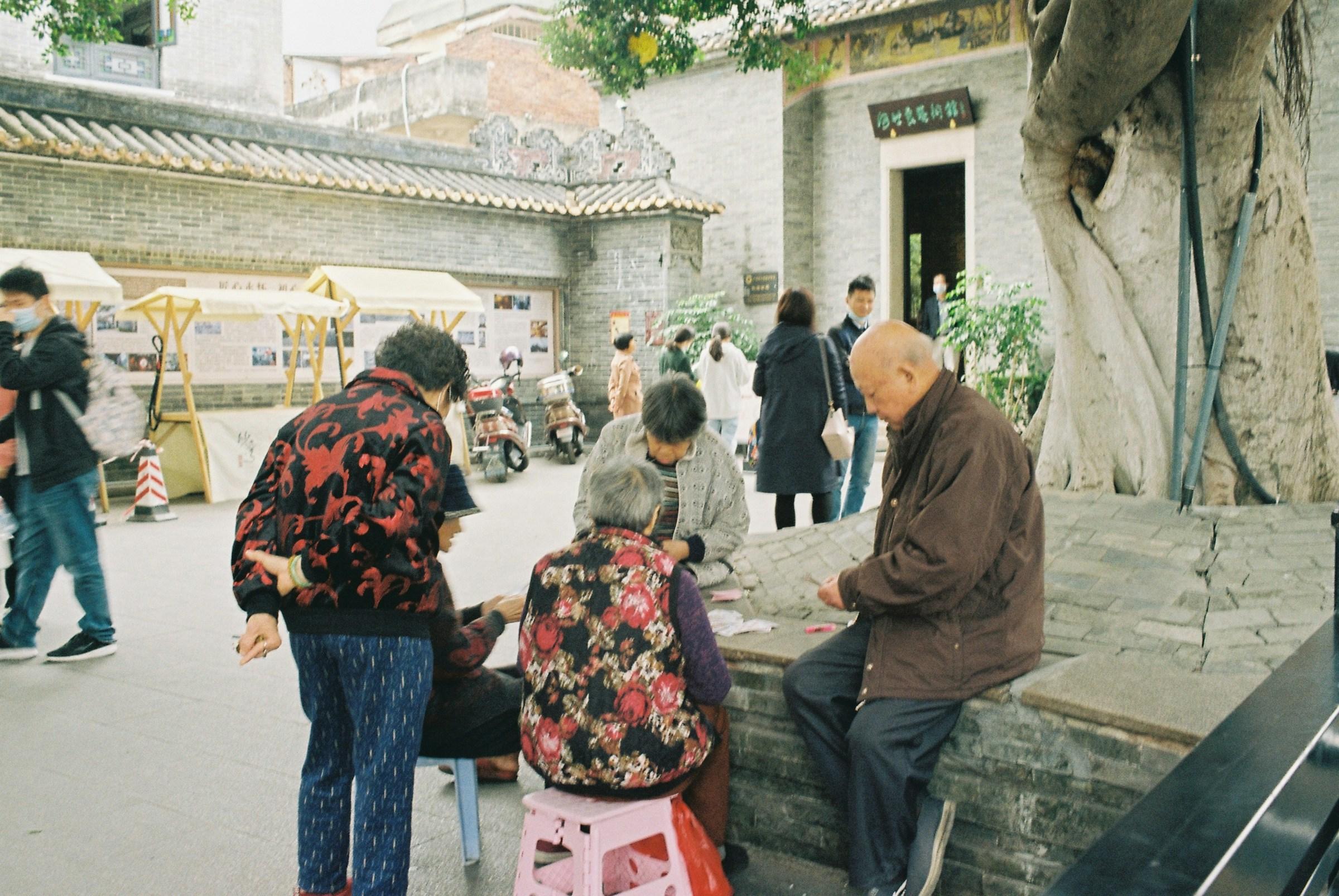
China is no longer moving toward an aging society, it is already living inside one. The country has hundreds of millions of citizens above 60, and that share will keep rising in the coming decades. The old pattern in which people worked through middle age, exited the labor market, and became largely invisible in economic analysis is no longer workable. Retirees today shape demand, labor supply, savings, and even the design of public policy. The realistic question is not whether they can rescue growth, but how their presence will reweight China’s economic structure and what policymakers and firms can sensibly expect from them.
For decades, demographic discussion in China revolved around the idea of the aging population as a fiscal burden on pensions and health care. That narrative is slowly being rewritten. Beijing now speaks in terms of the silver economy, a broad label for the consumption, services, and financial products connected to older citizens. The intention is clear. If retirees are treated only as cost centers, the political and fiscal implications of aging look grim. If they are treated as an economic constituency, their consumption, savings, and unpaid labor can be integrated into a more realistic growth and welfare model.
At the same time, the retirement system is being reshaped to slow the speed at which people exit the workforce. The planned delay of the statutory retirement age, implemented gradually, signals that the government no longer views 60 as a sharp boundary between worker and non worker. Instead, older Chinese are being asked to stay economically active for longer, whether through full time work, part time roles, or consulting style arrangements. This is not just a labor story. It is also a pension sustainability strategy, because continued contributions and shorter periods in formal retirement reduce pressure on strained provincial pension funds.
Against this backdrop, retirees can realistically play three main roles in China’s economic system. They can act as a large and relatively stable base of consumption. They can serve as a reservoir of human capital that delays the impact of demographic decline in specific sectors. They can function as the backbone of informal care and community support, which raises the effective labor participation of younger workers. Beyond these, they also matter as holders of housing and financial assets that must be managed and converted into income over time.
The first role, as consumers, is the easiest to see. Retirees spend in ways that differ from younger households. Medical care and pharmaceuticals rise in importance, but so do travel, leisure, wellness, and services that simplify daily life. Today’s older Chinese are more urban, healthier in early retirement, and much more digitally connected than their parents. Many use smartphones, pay with mobile apps, and consume online content, which means they can be reached by platforms, brands, and service providers like any other consumer segment.
This does not mean retirees will lift headline growth back to earlier levels. What it does mean is that they will change the composition of demand. An economy with a large elderly share tilts toward health services, assisted living, community facilities, age friendly housing renovations, and spending on comfort and convenience. When firms and investors talk about the silver economy, they are really talking about this reweighting of GDP toward services that follow older customers. Financial institutions see the same trend and are lining up pension products, annuities, and long term care insurance for a cohort that is rich in housing and savings, but often unsure how to turn that into secure income over a retirement that can last decades.
Their second role, as workers and bearers of human capital, is more nuanced. In some sectors, pushing the retirement age back by a few years preserves valuable skills and knowledge. Experienced engineers, teachers, doctors, and managers often remain productive well beyond the traditional threshold, especially in roles where judgment and relationships matter more than physical strength. Allowing these workers to stay longer, or to return in flexible arrangements, can soften the blow of a shrinking working age population and help firms that are already struggling to fill mid level or specialist roles.
However, this extension has clear limits. Not every retiree has the health or desire to keep working. Many who spent their lives in physically demanding jobs simply cannot add another five or ten years of labor without serious health costs. There is also an institutional barrier. Age discrimination in hiring is real, especially in private firms that prioritize youth, long hours, and perceived flexibility. In practice, the retirees who benefit from delayed retirement and flexible work will skew toward better educated, urban, white collar groups. This helps preserve productivity, but it deepens inequality between those with portable skills and those without.
There is an intergenerational dimension as well. If older professionals stay in senior roles for longer, younger workers may face slower promotion paths and more intense competition for stable, well paid jobs. In a labor market where many graduates already feel stuck, extended tenure at the top can fuel frustration. A policy that stabilizes pension finances and preserves human capital may therefore coexist with youth unemployment and underemployment. Retirees can realistically slow the decline of the labor force, but they cannot reverse it, and the distribution of gains and losses will not be even.
The third role lies in an area that macro models typically overlook: unpaid or underpaid care and community work. Across China, retirees play a quiet but decisive role in looking after grandchildren, caring for frail spouses or siblings, and performing the routine tasks that keep extended families functioning. They also volunteer in neighborhood committees, help run local activities, and provide informal security and supervision in residential areas. This work rarely shows up in GDP, but it has real economic value. When grandparents handle childcare, younger parents can take formal jobs, work longer hours, or accept promotions that demand more time away from home. This indirectly boosts female labor force participation and reduces pressure on public childcare and eldercare systems.
For policymakers, the question is how to support this care infrastructure without abusing it. If the state under invests in formal care because retirees can be relied upon, the system will become increasingly fragile as these caregivers age. It also risks reinforcing traditional gender roles, because grandmothers often bear a disproportionate share of care responsibilities. As the share of very old people rises, many individuals will find themselves caring for others while simultaneously needing more care themselves. In that world, policy must treat retiree care work as a transitional support, not a permanent substitute for professional, regulated services.
Retirees also matter as asset holders. A large share of China’s urban housing stock is owned by older households, who bought homes when prices were lower and incomes were rising. Many also hold savings products, wealth management products, and shares in listed firms, either directly or through funds. The challenge for both families and policymakers is how to transform these assets into dependable cash flow in retirement. Proposals range from reverse mortgage style products and equity release schemes to more sophisticated pension wealth offerings. If structured well, these instruments can help retirees maintain consumption, reduce their reliance on children, and distribute risks across the financial system. If structured poorly, they can create pockets of vulnerability, concentrate risk in specific banks or trust products, and encourage speculative investment in eldercare related real estate.
All of these roles sit inside hard constraints. The fiscal cost of public pensions is rising, and regional funds in some provinces are already under strain. Health care spending will climb as chronic illnesses become more common among older cohorts. Rural retirees, who often have lower benefits and weaker access to quality services, risk being left out of the emerging silver economy almost entirely. Policies that look favorable when averaged across the national population may mask severe stress in specific regions or demographics.
Looking ahead, the realistic contribution of retirees to China’s economy will be stabilizing rather than transformative. They will anchor an expanding layer of consumption in health, wellness, and services. They will delay the loss of critical skills in key sectors, though only for a subset of the population. They will continue to provide the care and community work that keeps families functioning and frees younger adults to participate in the formal economy. They will act as stewards of accumulated assets that must be carefully managed and, where appropriate, mobilized.
What they will not do is fully offset the growth drag from a shrinking working age population or eliminate the fiscal pressures of aging. Productivity gains from technology, institutional reform, and more efficient capital allocation will still be necessary if China hopes to sustain even moderate growth. The silver economy is better understood as a long term shift in who spends, what they spend on, and how services are organized, not as a new miracle engine.
For business leaders, investors, and officials, treating retirees as a serious economic actor is now unavoidable. Planning for the next decade of China’s economy means pricing aging into every decision, from product design and service delivery to labor policy and fiscal strategy. Retirees will not rescue the old model of growth based on abundant young labor and heavy investment. Instead, they will force the construction of a different model, one that values resilience, care, and long term security alongside output. In that quieter, more constrained growth story, the realistic role of retirees is to rebalance and support, not to magically restore the past.
 WhatsApp
 Instagram
 Threads