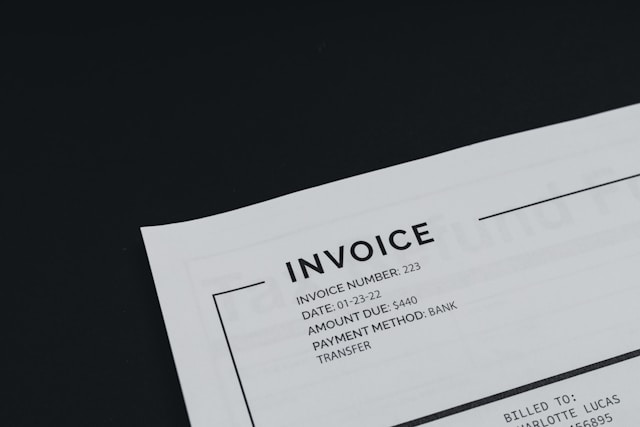
In Malaysia, e-invoicing works less like emailing a PDF to a customer and more like getting an invoice formally validated before it becomes “official.” The central idea is simple: an invoice is prepared in a structured digital format, sent to the Inland Revenue Board’s MyInvois system for validation, and then returned to the issuer with a unique identifier that confirms the document exists in the national e-invoice system. Only after that validation step do businesses share the validated invoice with the buyer. Once you view e-invoicing through this lens, the operational changes become clearer, from how you collect customer details to how you correct mistakes and manage month end routines.
The process begins when a sale happens and your business generates an e-invoice based on the transaction. This is not just a pretty document for human reading. It is invoice data organised in a format the system can understand, typically produced by your accounting software, POS system, ERP, or an intermediary service provider. When the invoice is ready, you submit it to MyInvois either manually through the MyInvois Portal or automatically through an API integration. MyInvois then performs validation checks. If the invoice passes, the system returns a confirmation along with a unique identifier. From that point onward, the invoice is considered validated, and your customer can verify it through the information embedded in the invoice output, commonly via a QR code or a validation link.
That validation step is what changes day to day invoicing behaviour. In a traditional workflow, an invoice can be edited, reissued, or swapped out with minimal process. Under e-invoicing, the validated invoice becomes a record that both parties can point to, and corrections are handled through defined actions rather than casual replacements. If something is wrong, there are formal ways to reject or cancel. In practice, there is a limited window, commonly described as 72 hours from validation, for the buyer to request a rejection and for the supplier to cancel if the rejection is accepted. After that, changes are typically handled by issuing adjustment documents such as credit notes or refund notes, rather than trying to “fix” the original invoice.
For many SMEs, the biggest practical adjustment is not the technology itself, but the discipline of capturing the right information at the right time. E-invoicing relies heavily on correct identification of the seller and the buyer, especially through taxpayer identifiers such as the Tax Identification Number. In business to business transactions, this is usually straightforward because customers expect to provide company details. In business to consumer settings, it can be more delicate because walk in customers may not want to share personal identifiers. This is where Malaysia’s approach tries to balance compliance with operational reality by allowing consolidated e-invoices for certain retail type transactions, while still preserving the option for individual customers to request an individual e-invoice when they need it.
Understanding the difference between individual and consolidated e-invoices helps businesses design workable front line processes. In many consumer scenarios, a business can issue a normal receipt at the point of sale, and later submit a consolidated e-invoice for the total of transactions where individual e-invoices were not requested. Consolidated submissions are often done on a monthly cycle, with a deadline shortly after the month ends. Meanwhile, when a customer requests an e-invoice, the business produces and validates an individual e-invoice tied to that specific transaction. However, there are cases where consolidation is not allowed. A key example is the rule that from 1 January 2026, any transaction above RM10,000 must be issued as an individual e-invoice and cannot be bundled into a consolidated submission. This is why high value sales, even in otherwise walk in environments, require a reliable method for capturing buyer details immediately.
Malaysia’s implementation also recognises that not every business transitions at the same speed. The rollout is phased, and policy updates have expanded the relief for smaller businesses, including a higher exemption threshold starting in 2026. For businesses that do need to comply from 1 January 2026, there is also an interim relaxation period for certain taxpayers, which gives additional flexibility on matters such as consolidation and the level of detail in descriptions, provided the conditions for the relaxation are met. In operational terms, this reduces pressure during the transition, but it does not remove the need to build a stable workflow. The smartest businesses use the breathing room to train staff, test systems, and refine the steps for data capture, validation, and exception handling.
The way a business submits e-invoices also shapes the experience. The MyInvois Portal can work for lower volume issuers because it allows manual entry and uploads without deep technical integration. For higher volume businesses, manual handling becomes a bottleneck quickly, and API integration is usually the more realistic path. When submission happens through an API, e-invoicing becomes part of the background process, much like payment processing, where invoices are generated and validated with minimal staff intervention. Many companies also rely on service providers to bridge their systems to MyInvois, especially when they have multiple branches, complex billing, or the need to integrate e-invoicing into existing ERPs.
Another part of implementation that often surprises business owners is how identity and integrity are handled behind the scenes. E-invoicing is not only about sending data, but also about ensuring the submission is authorised. This is why digital certificates and signatures come up in conversations around MyInvois integration. Even if a business does not personally manage every technical detail, it still needs to decide who controls access, how credentials are governed, and what happens if certificates expire or authorised users change. These governance questions matter because e-invoicing is tied to compliance and auditability, not just billing convenience.
There are also scenarios where your business becomes the issuer even though you are the buyer. Malaysia’s framework includes self billed e-invoices, used when the buyer issues an invoice on behalf of the supplier. This can appear in situations like commission payments, certain agency arrangements, or cross border purchases where a foreign supplier is not issuing a Malaysian e-invoice. For businesses that regularly pay commissions, buy from overseas vendors, or operate platform style models, mapping self billed flows early prevents confusion later, especially in accounts payable processes and expense substantiation.
When you put it all together, e-invoicing in Malaysia is best understood as a controlled lifecycle. A sale happens, an invoice is generated in a structured format, the invoice is submitted to MyInvois, and only after validation does it become an official invoice that can be shared and verified. Corrections are time bound and procedural. Retail and consumer environments can rely on consolidation where permitted, but high value transactions require individual treatment. Portal submission suits low volume issuers, while API integration suits scale. The businesses that adapt fastest are the ones that treat e-invoicing as a process upgrade across sales, finance, and systems, rather than a last minute compliance task.
 WhatsApp
 Instagram
 Threads