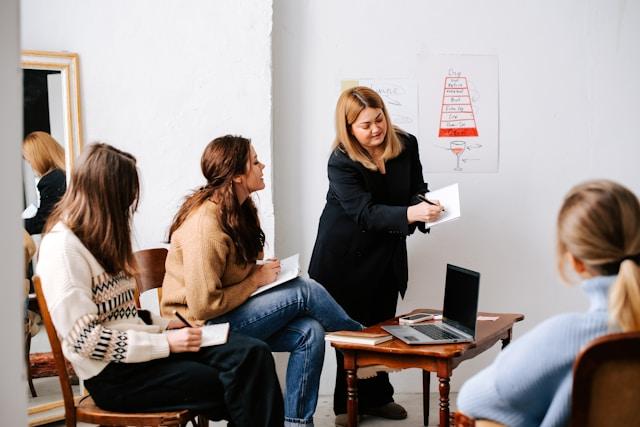
Before 2020, many founders believed that their organisations already had strong cultures. Offices were loud and active, people shared jokes across desks, and there were late night food runs after intense work sprints. Colleagues could crowd around a whiteboard, debate ideas, and walk away feeling like they were part of something bigger than themselves. It was easy to assume that this sense of closeness came from values, leadership, or strategy. In reality, a large part of it came from something more basic: physical proximity. When teams shifted to remote work, much of that easy connection disappeared. The work still got done and, in some cases, productivity even improved. Revenue did not collapse. On paper, the company looked the same. But over months, small signals began to emerge. People who used to chat casually now responded with short, polite messages. Cameras stayed off more often. Jokes landed less. Colleagues stopped asking each other spontaneous questions. The team still functioned, but the feeling of being a real team began to thin out.
This is one of the core tensions of remote work. The model itself does not automatically destroy culture. Instead, it strips away many of the accidental supports that used to create connection without effort. It exposes which parts of your culture were deliberately built and which parts were simply a side effect of sharing the same space. When everything happens online, natural connection is no longer the default outcome of being in the same building. It has to compete, constantly, with convenience. In an office, connection happens incidentally. You run into someone while making coffee, share a quick complaint about the weather, or notice that a teammate looks stressed. You overhear pieces of conversations that help you understand context. You can read body language in meetings and react in real time. None of this has to be scheduled. It is woven into the environment.
Remote work removes that automatic layer of contact. Every interaction requires an intentional action: sending a message, scheduling a call, turning on a camera, or joining yet another link. Each of these choices carries a small friction cost. When people are tired, overwhelmed, or under pressure, they naturally gravitate toward the most convenient behavior, which is silence. They focus on their own tasks, minimise optional interactions, and reduce communication to what seems strictly necessary.
Founders often underestimate how quickly this pattern compounds. In a team of three, everyone still has a rough sense of how each person is doing, because they communicate frequently by default. In a team of ten, you start to rely more on group calls and Slack channels. In a team of twenty or thirty, many interactions are filtered through tickets, comments, and asynchronous updates. It becomes easier to treat every exchange as a transaction and harder to maintain the kind of relaxed curiosity that makes people feel seen. Over time, convenience quietly wins over relationship, and connection weakens.
The way remote communication tools are designed also plays a role. Early stage teams build trust through messy, unpolished moments. Someone admits that they are confused. Two colleagues argue, resolve the disagreement, and walk out with deeper respect. A founder shares a real fear about runway, and the team rallies around it. These experiences are emotionally rich and sometimes uncomfortable, but they build confidence that people can handle conflict and vulnerability together.
Most digital tools do not make it easy to live out these moments. Messaging apps reward short, efficient responses. Video calls compress human expression into a small rectangle and often encourage people to mute themselves unless they have something formally useful to add. Voice notes feel personal but can also feel risky, so many prefer not to use them. The safe path is to keep things neutral, polished, and non controversial. After a while, this shapes habits. Team members stop saying, "I do not fully understand this. Can we slow down and walk through it again." Instead, they type, "Understood," and then struggle in private. They stop challenging a decision in the main meeting and take their doubts to a one to one chat with a colleague. They still care about the work, but they try to express that care through quiet overwork rather than honest dialogue. On the surface, everything looks calm and professional. Underneath, trust is slowly eroding, because people no longer see each other’s genuine reactions. Natural connection needs those reactions. It relies on tone, pauses, and unguarded comments. Remote work makes it very easy to hide all of that.
Another subtle effect of remote work is that people begin to relate more to roles than to human beings. In a remote setting, you might mostly encounter the product manager through tickets on a board, the designer through Figma files, and the engineer through pull requests and estimates. Without small windows into their lives outside those tasks, they become easy to flatten into functions. In a shared physical space, those same colleagues are also the person who brings homemade food, the parent who leaves early once a week to pick up a child, or the friend who organises informal lunches. These details might seem trivial, but they are the raw material your mind uses to form a sense of personhood. When teams stop sharing anything outside the frame of deliverables, relationship begins to feel like an indulgence rather than a natural part of work.
At that point, many founders make a predictable move. They try to solve the growing emotional distance by increasing structured visibility. They schedule more all hands sessions, tighten routines around daily standups, and add regular town halls with question segments. On a calendar, the team appears more connected than ever. Everyone is in the same virtual room multiple times a week, listening and watching. However, visibility is not the same as connection. If most meetings are one way broadcasts from the top, people learn to observe rather than participate. If every agenda is tightly packed, there is no spare moment for real conversation or spontaneous questions. If every question feels as though it will be recorded, archived, and analysed, people default to asking what feels safe rather than what feels honest. Natural connection needs a certain amount of slack in the system. It needs unstructured moments that are not optimised for efficiency, where people feel free to make side comments, share doubts, or follow up after the call.
Remote work often encourages teams to remove that slack. In the name of productivity, meetings are shortened, agendas are sharpened, and anything that looks like "unnecessary" talk is carefully trimmed. Recordings are stored for those who cannot attend, which makes it easier for people to opt out of real time interaction altogether. Gradually, the organisation designs itself into a shape where connection is always the first thing sacrificed when time feels scarce. By the time the impact becomes undeniable, it does not usually appear as a dramatic breakdown. It appears as quiet loss. A strong performer resigns with a polite message and a vague reference to "a better fit." You feel surprised, then remember that you have not had a real, unhurried one to one conversation with her in months. A conflict between two senior leaders comes to the surface only after it has hardened into resentment, because earlier signals were buried in private conversations. Group calls feel increasingly flat. Cameras are off. People volunteer less, ask fewer questions, and seldom raise ideas outside their formal responsibilities.
In that moment, it is tempting to blame remote work as a whole. It can feel easy to say, "Culture is impossible to build online," or "Everyone is burnt out from video calls." The uncomfortable truth is that remote work did not create the distance. It simply made it easier to ignore early warning signs and to maintain the appearance of alignment while people quietly drifted apart.
If natural connection is to survive in a remote setting, it has to become something founders design for deliberately. It has to be treated as infrastructure rather than decoration. That begins with a simple but demanding question: what does your team actually need in order to feel like a real team, beyond tasks and targets. For some companies, the answer involves bringing people together in person a few times a year, even if it feels costly or logistically complex. Short, intentional offsites can restore a sense of shared reality that no tool can fully replace. For others, the answer lies in making one to one conversations non negotiable and expanding them beyond performance updates. A regular question like, "How are you really, outside of work," can reveal more about the health of connection than a detailed engagement survey. Some teams benefit from small budgets for local co working meetups, so that colleagues in the same city can occasionally share physical space and bring that renewed familiarity back into online interactions.
Equally important are the small social norms that guide how people reach for each other. Who can someone message if they need a quick reality check on a decision. How do you ask for help without feeling like you are slowing the team down. Is it acceptable for a person to say, "I am not at my best today, can someone else facilitate this call." These norms can sound like minor details, but together they determine whether your remote environment feels emotionally safe or quietly isolating.
For a founder who recognises their own team in this description, the instinct might be to reverse the model and bring everyone back to a central office. That decision might make sense in some contexts, but it is not the only path. The more fundamental issue is not whether your team is remote or in person. It is whether your people feel they can reach for each other when things are messy, or whether they only reach for tools.
If the honest answer is that tools have replaced relationships, then the real work lies in rebuilding connection on purpose. That may involve fewer meetings overall, but with more courageous conversations in the ones that remain. It may require less emphasis on status updates and more space for genuine check ins. It might mean letting go of forced virtual fun and instead designing real shared work where people can see one another’s strengths closely and collaborate in ways that feel meaningful.
Remote work practices will continue to evolve. Hybrid models will keep shifting shape. New platforms will appear with promises of instant culture, seamless collaboration, and frictionless communication. Through all these changes, the fundamentals of natural connection remain the same. People need to be able to show up as themselves, to be seen and heard, to notice and be noticed, and to feel that caring about each other is not a distraction from performance but part of how performance is sustained.
When founders commit to those fundamentals, remote work becomes less of a threat to natural connection and more of a test of its foundations. It reveals whether your culture was built on genuine trust and deliberate design, or mostly on the convenience of sharing the same room. That awareness can feel uncomfortable, but it also opens a path forward: one where connection is not left to chance, but cultivated with the same focus and seriousness as any other critical asset in the business.
 WhatsApp
 Instagram
 Threads