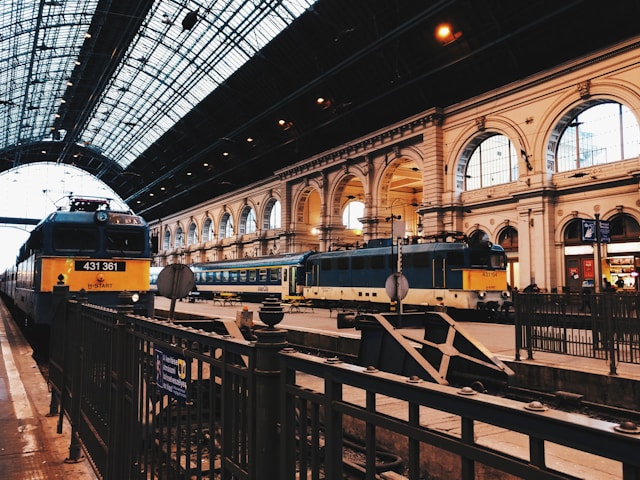
Traveling through Europe by train has a way of making you feel both unhurried and deeply connected to place. You arrive in the center of a city instead of the outskirts. You step onto a platform and immediately sense the rhythm of local life, the commuters, the announcements, the quiet bustle of people who know exactly where they are going. It is also, unfortunately, a kind of travel that can become expensive faster than you expect. The price rarely explodes because trains are inherently unaffordable. It rises because of a handful of predictable patterns: rushing across too many countries, booking too late, leaning too heavily on high speed routes with mandatory reservation fees, and underestimating how much the small daily costs compound when you are tired and moving constantly.
The cheapest train trip across Europe is not the one where you deny yourself every comfort. It is the one designed like a system. When your route has logic, your days have margin, and your decisions are made before you are hungry, stressed, or forced into the most expensive option. Budget travel, in the end, is often less about hunting for deals and more about preventing predictable leaks.
One of the simplest ways to save money is to stop thinking in dramatic leaps. Many first-time itineraries are drawn like lightning bolts, bouncing from one famous city to another across long distances. Those long jumps push you toward the fastest trains because your schedule becomes tight by default. Fast trains can be wonderful, but they are also where the hidden costs start to appear. High speed services often require seat reservations, and those fees add up quickly when your trip includes a lot of premium corridors. If you want to keep costs steady, it helps to build in clusters rather than zigzags. Pick a region and let it hold you. A loop through Central Europe, a stretch through the Benelux and into western Germany, a northern Italy base with short side trips, or a slower drift through Austria and the Czech Republic can all give you variety without constant long-distance pressure.
When you travel in clusters, you naturally open up more options for regional and intercity trains. These tend to be cheaper, more frequent, and more forgiving if you change plans. They also reduce the number of times you are forced into reservation-heavy routes simply because you have no time to take anything else. The goal is not to travel less. The goal is to travel in a way where you are not repeatedly paying for urgency.
It also helps to understand what you are actually paying for. Many travelers assume the pass is the expensive part of train travel, and then feel blindsided by costs that appear after the pass has been purchased. The reality is that passes and tickets are only part of the story. A major budget variable is the seat reservation system. Some trains allow you to board freely with a valid ticket or pass. Others require you to pay extra for a reserved seat, and in some countries these reservation requirements are more common, especially on high speed and long-distance services. If you build an itinerary that relies heavily on trains with mandatory reservations, you should treat those fees as part of the baseline cost, not a surprise add-on. That single shift in mindset changes everything, because it lets you design with honesty rather than optimism.
From there, an affordable approach becomes clearer. Speed is a luxury you should buy intentionally, not continuously. A good budget itinerary often includes a few moments where you pay for speed because it truly protects your energy or your time. Maybe there is one long crossing where a fast train turns an exhausting day into a manageable one. But between those anchor moments, you let the slower services do their quiet work. You trade a bit of time for a lower price, fewer add-on fees, and more flexibility. On the ground, that trade is not always a sacrifice. A longer ride can be a scenic afternoon, a chance to read, a nap that prevents you from spending money later because you are too tired to navigate public transport and end up in a taxi. Budget travel is full of these invisible exchanges, where time and money trade places constantly. The cheapest trips are often the ones that understand this and plan around it.
If you decide to skip a rail pass and use point-to-point tickets instead, timing becomes your strongest friend. Many European rail systems use dynamic pricing, which means tickets are often cheaper when booked early and more expensive closer to departure. That is why last-minute travel can feel punishing, even if the route itself is not particularly glamorous. The practical approach is to identify a few non-negotiable segments, the days you know you need to be in a particular city, the days tied to a reservation, an event, or a meeting with friends. Those are the segments worth booking in advance. When you lock in those anchor legs early, you reduce stress and often pay a significantly lower fare. Around those anchor legs, you can keep the rest of the itinerary more flexible, using shorter hops, regional trains, or travel days that can shift by a day without harming anything.
This balance between commitment and flexibility is one of the most important skills for affordable rail travel. Complete rigidity can make a trip feel fragile, where one delay ruins everything. Total spontaneity can become expensive because you are constantly paying whatever the price is on the day. Intentional flexibility sits in the middle. It decides where you want freedom and where you want certainty, and it spends money only where it buys something meaningful.
Another cost that sneaks up on people is not the train itself but what happens around it. A cheap ticket can still lead to an expensive day if you arrive late, far from where you are sleeping, and too tired to make thoughtful choices. Stations are budget triggers. They influence how much you spend on transport, food, and even sleep. Staying near a major station is not always the most romantic choice, but it can be one of the most financially calming ones. It reduces taxi dependence, makes early departures painless, and lets you walk your luggage instead of paying to solve a problem. If you choose to stay farther out because you want a quieter neighborhood or a more charming area, do it in cities where public transport is reliable and straightforward, especially late at night.
Arrival time matters, too. It is tempting to take a later train if it looks cheaper, but late arrivals often come with hidden costs. You may pay more for transport because certain lines stop running. You may spend more on food because your affordable options are closed. You may wake up the next day feeling behind, which leads to more spending in the name of speed and convenience. Budget travel is not only about the sticker price of a ticket. It is about managing energy so you do not keep buying shortcuts.
Food is one of the easiest places to quietly overspend, especially on travel days. Stations and onboard services are designed for convenience, and convenience is rarely priced kindly. The solution is not to pack like you are preparing for a long expedition. It is to build a simple ritual. Refill your water bottle. Pick up snacks before you arrive at the platform. Buy something basic at a grocery store near the station, where prices are more ordinary. A sandwich, fruit, and something small you actually enjoy can carry you through a travel block without forcing you into emergency purchases. It is a small habit, but it has a big effect, because hunger turns good intentions into expensive decisions.
Night trains deserve their own moment, because they can either save you money or quietly drain it depending on how you use them. The fantasy is beautiful: you fall asleep in one country and wake up in another, as if the distance disappears. The practical question is whether the cost of the reservation or sleeper supplement, plus the quality of your sleep, truly replaces a hotel night and a long daytime travel block. If a night train lets you skip a hotel and arrive rested enough to enjoy a full day, it can be a genuine budget win. If you are a light sleeper and arrive exhausted, you might spend the next day on recovery, and recovery often costs money in ways people do not track: extra coffees, more paid transport, or a more expensive meal because you cannot handle the mental effort of finding something cheaper. A night train is not only a pricing decision. It is a body decision.
Timing your trip within the year can make the whole system easier, too. If you have the freedom to choose dates, traveling outside peak season often reduces both costs and stress. When stations are calmer and trains are less likely to be completely booked, you have more options. You are less likely to pay panic prices. You are less likely to make rushed choices. Shoulder seasons often deliver the best balance, with enough daylight and good weather, but fewer crowds that push everything toward scarcity. Scarcity is what turns a manageable trip into an expensive one, because scarcity removes your ability to choose.
None of this means you must avoid every premium experience. There is a particular kind of joy in choosing one thing you genuinely care about and letting the rest of the trip support it. Maybe you want a famous scenic route. Maybe you want to ride a celebrated high speed line once, just to feel it. That can still fit within a budget approach if you plan around it. One intentional splurge often costs less than a series of small, unplanned conveniences. When you decide in advance what you are willing to spend on, you stop leaking money in a hundred small moments.
This is where traveling by train becomes a lifestyle mindset rather than a checklist. You are not trying to maximize destinations. You are trying to build rhythm. You choose a route that makes sense geographically. You limit the number of long jumps that force you into the most expensive trains. You commit early to the segments that matter. You stay near stations when it protects your energy. You carry simple food so hunger does not drive your spending. You use night trains only when they truly replace both time and accommodation. You travel in seasons where you have room to breathe. You spend on speed when it genuinely buys you something, and you choose slower trains when they let you keep your trip steady and calm.
In the end, the magic of Europe by train is not just the scenery outside the window. It is the feeling that travel can be part of daily life rather than a strain you endure. When you design the trip as a system, you stop fighting it. You stop paying for desperation. You start moving with the kind of confidence that keeps both your wallet and your nervous system intact. And that is when the train becomes what it should be: a gentle way to cross borders, arrive in the heart of cities, and discover that the most affordable trips are often the ones that feel the most livable.
 WhatsApp
 Instagram
 Threads