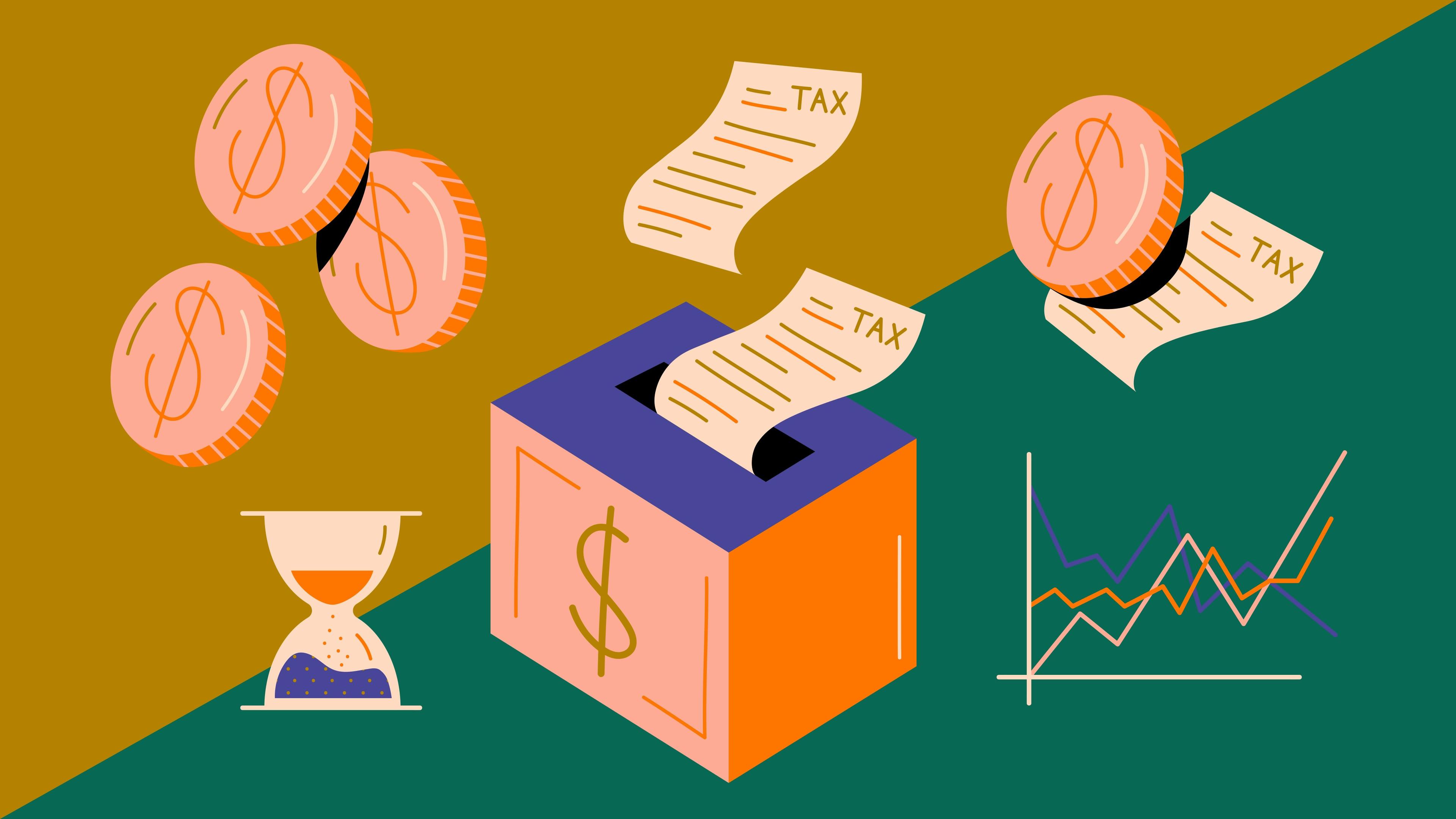
The US stock market is often described as a place where investors buy and sell shares, track indexes, and react to headlines. That description is accurate, but it is incomplete. In the American economy, the stock market is not merely a venue for trading. It is a financial system that helps businesses raise long-term funding, allows households to build wealth for retirement, shapes confidence in spending and hiring, and draws global capital into US companies. Even people who never purchase a single share are influenced by how the stock market functions because its effects spread through jobs, wages, retirement accounts, business investment, and overall financial stability.
At its core, the stock market is a mechanism for connecting savings to productive activity. When investors buy shares, they are purchasing an ownership stake in a company and a claim on its future earnings. The price of that stake rises or falls based on what investors believe about the company’s prospects, the broader economy, and financial conditions like interest rates. Those prices do not just reflect opinions. They influence real decisions that companies and households make. That is why the stock market matters to the economy, not as a scoreboard, but as part of the plumbing that helps capital flow to where it can be used.
One of the most direct ways the stock market supports the economy is by helping businesses raise money for growth. When a company goes public through an initial public offering, it sells shares to investors and receives equity capital in return. That money can be used to expand operations, invest in new technology, build facilities, enter new markets, or fund research and development that might take years to pay off. Equity funding is especially important for ambitious or innovative projects because it does not require fixed interest payments the way loans do. For businesses, this flexibility can make the difference between cautiously maintaining the status quo and pursuing long-term expansion.
The influence of public markets continues long after a company lists its shares. Public companies can raise additional money through follow-on offerings, and they can use their stock in ways that support growth without draining cash. Stock-based compensation, for example, can help attract and retain skilled employees by allowing workers to participate in the company’s upside. Publicly traded shares can also be used to finance acquisitions, enabling companies to combine resources, expand capabilities, or enter new industries. All of these activities can contribute to productivity, job creation, and innovation across the economy.
The stock market also affects how expensive it is for companies to raise capital. When market valuations are strong, companies can raise funds more efficiently because they may need to issue fewer shares to obtain a given amount of money. In practical terms, a higher valuation lowers the cost of equity financing. When valuations fall, raising money can become more difficult or more costly in ownership terms, which can cause companies to delay investment, freeze hiring, or shift their focus toward cutting expenses. This is one reason why stock market cycles can influence business behavior even before economic data confirms a slowdown or recovery.
Beyond corporate funding, the stock market is deeply tied to consumer confidence and household spending. The United States relies heavily on consumer spending as a driver of economic activity. When the market rises broadly, many households see gains in retirement accounts, brokerage portfolios, and other investments. Even if those gains are not immediately spent, they can change how secure people feel. Financial security influences behavior. People who feel stable are more likely to make major purchases, invest in home improvements, plan vacations, or spend on discretionary services. When people feel uncertain, they tend to pull back. That shift in sentiment can affect businesses quickly, which then affects hiring decisions, wage growth, and investment plans.
This relationship is sometimes called the wealth effect, and while it does not operate in a perfectly predictable way, it is an important channel through which financial markets interact with the real economy. The stock market can rise while parts of the economy struggle, and it can fall while economic fundamentals remain strong. Still, over time, broad market movements often influence how Americans think about their economic prospects. That perception matters because it can influence spending and saving decisions at scale.
Retirement security is another major reason the stock market is important to the American economy. Many Americans build retirement wealth through defined contribution plans such as 401(k) accounts and individual retirement accounts. These plans typically invest in diversified portfolios that include stocks, either directly or through mutual funds and index funds. Pension funds and institutional investors also hold large equity positions to meet long-term obligations. As a result, the stock market is not separate from everyday life. It is embedded in how millions of households attempt to fund retirement.
When stock markets perform well over long periods, retirement balances tend to grow, which can improve financial resilience for older adults and reduce reliance on family support or public resources. A population that feels more secure in retirement can also spend more steadily, which supports local economies and service industries. When markets experience prolonged downturns, the impact can be broader than many people realize. Some individuals may delay retirement, return to work, or reduce spending. Those shifts affect labor markets, consumption patterns, and even the pace at which younger workers move into higher-paying roles.
The market’s importance here is not primarily about short-term fluctuations. It is about compounding over decades. Stocks are volatile, but historically they have offered higher long-term return potential than safer assets like cash. That return potential is one reason equities play such a central role in retirement planning. Since the US system places significant responsibility on individuals to save and invest for their own futures, the health and accessibility of the stock market becomes a national economic issue, not a niche concern for professional investors.
The stock market also matters because it supports entrepreneurship and innovation, including industries that require substantial upfront investment. Many startups and high-growth firms depend on the expectation that one day they may access public markets, either through an IPO or through acquisition by a public company. That expectation helps venture capital and private investors justify early risk-taking. The possibility of a public exit can encourage funding for innovative ideas that may not generate profits for years.
In addition, many mature companies use public equity markets to support heavy investment in research, development, and infrastructure. Areas such as pharmaceuticals, clean energy, advanced manufacturing, and software often require sustained spending before results become commercially viable. Equity financing can support these longer time horizons in a way that pure debt financing often cannot, because equity investors share both risk and potential reward. When capital can be raised for long-term innovation, the economy can benefit through productivity gains, new industries, and higher-quality jobs.
Another crucial role of the stock market is that it provides a system of pricing and evaluation that helps allocate capital. Investors continuously assess the prospects of companies and sectors, using financial statements, market data, and expectations about the future. In theory, companies that use resources effectively are rewarded with higher valuations, while companies that perform poorly face lower valuations and greater pressure to improve. This discipline can promote efficiency and competition, pushing businesses to innovate, manage costs, and invest in areas with real demand.
Of course, markets do not always allocate capital perfectly. Investor behavior can become trend-driven, and bubbles can form when enthusiasm outruns fundamentals. Yet even with imperfections, the market remains a large-scale information system that influences where money flows. Those flows affect which businesses expand, which technologies attract funding, and how quickly industries evolve. Over time, this process can shape productivity growth, which is one of the most important drivers of rising living standards.
The US stock market also plays a global role that feeds back into the American economy. International investors buy US equities because US markets are large, liquid, and relatively accessible. When global capital flows into US companies, it can support business expansion and reduce the cost of financing. This helps American firms compete internationally, invest in innovation, and pursue growth strategies that might be harder to fund without a deep and trusted capital market.
Global participation also strengthens the position of the United States as a financial hub. That status is not only symbolic. It can influence the stability of financing conditions, the attractiveness of the US as a place to build major companies, and the overall resilience of the financial system. While global investment does not eliminate risk, it does mean the stock market is part of how the US interacts with the world economy, drawing in savings from abroad and turning them into domestic investment.
At the same time, the stock market’s importance includes its ability to transmit stress. Because markets react quickly, sharp declines can tighten financial conditions and reduce risk appetite. Households may feel poorer and cut spending. Companies may face higher costs of capital and become more cautious, leading to layoffs or reduced hiring. In severe cases, market stress can spill into credit markets, especially if leverage is high or liquidity becomes scarce. This is why regulators and policymakers watch the stock market closely. Not because they want to protect investors from ordinary volatility, but because disorderly market conditions can amplify economic downturns and threaten broader stability.
This does not mean every market drop signals a recession. Markets frequently overshoot, and they often move ahead of economic data. But when a decline is paired with fragility, such as excessive debt, weak balance sheets, or a sudden loss of trust in financial institutions, the market can accelerate the transmission of fear into real economic activity. In that sense, the stock market is important not only for its role in supporting growth, but also for its role in revealing and sometimes amplifying stress in the system.
Perhaps the most overlooked point is that the stock market matters even to people who believe they have no exposure. Many households are connected through retirement plans. Workers are connected through employment at public companies or through supply chains that serve them. Communities are connected through local spending that depends on jobs and business investment. Government finances can also be influenced indirectly because corporate profitability, capital gains realizations, and household wealth can affect tax revenues. When markets boom, revenues in certain categories may rise. When markets fall, those revenue streams may weaken, complicating budget planning. The stock market, therefore, is intertwined with both private and public financial realities.
Understanding the stock market’s importance to the economy can also help individuals approach financial news with more perspective. It is reasonable to pay attention to markets because they influence business decisions and household confidence. But it is also important not to treat daily market movements as a personal verdict. The market’s economic role is strongest over long horizons, through capital formation, long-term wealth building, and the steady funding of innovation. For personal finance, that suggests a practical takeaway. A good plan should be built to survive market cycles, not to predict them. People who have emergency savings, diversified investments, and time-appropriate risk levels are better positioned to benefit from the market’s long-term growth role without being forced into bad decisions during downturns.
In the end, the US stock market is important to the American economy because it serves as a bridge between savings and investment, a system for funding business growth, a foundation for retirement wealth, and a signal that influences confidence across households and corporations. It supports entrepreneurship by providing pathways for companies to raise capital and for investors to fund innovation. It channels global capital into US firms and strengthens the country’s financial infrastructure. Yet it also reflects and can transmit stress, which is why its stability and integrity matter beyond investor portfolios. When viewed in this wider context, the stock market is not an isolated arena for financial professionals. It is one of the central institutions that helps shape how the American economy grows, adapts, and endures.
 WhatsApp
 Instagram
 Threads