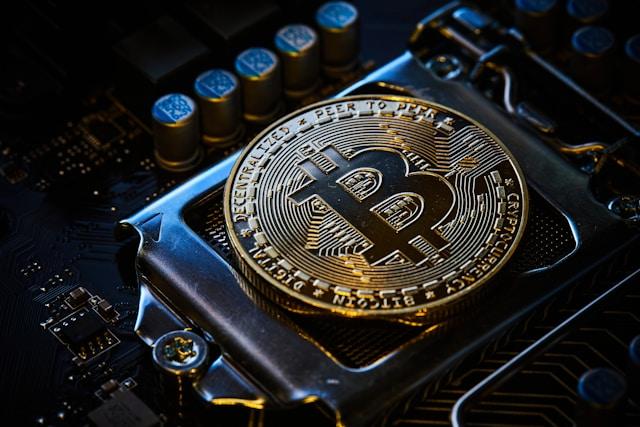
A crypto exchange matters for accessing blockchain services because it functions as the practical bridge between everyday money and onchain activity. Blockchains are designed to record transactions and enforce network rules, not to accept your paycheck, recognize your bank account, or make it easy to acquire the tokens required to use a specific chain. In reality, most blockchain services are not usable until you hold the right digital assets and can move them onto the correct network. That is where an exchange becomes important, not simply as a place to trade, but as the gateway that turns blockchain capability into something most people can actually use.
The first and most obvious role of an exchange is enabling entry into the ecosystem through fiat onramps. Most users begin with government-issued currency. Blockchains, however, typically require crypto assets to participate, whether that means paying a transaction fee, interacting with a decentralized application, or moving value to another wallet. An exchange provides the infrastructure to convert fiat into crypto in a way that feels familiar, using methods like bank transfers or card payments, depending on jurisdiction and platform policies. This conversion is foundational because without it, many users would have to rely on informal peer-to-peer methods or complicated workarounds that introduce additional cost, risk, or inconvenience.
Equally important is the reverse function, which is the ability to convert crypto back into fiat through an offramp. Accessing blockchain services is not only about entering the network, it is also about leaving it when you need to pay real-world expenses or realize gains. A blockchain transaction may settle quickly, but if you cannot turn that value into usable money in your local financial system, your access remains incomplete. Exchanges provide the most straightforward route for many users to withdraw funds into a bank account, making blockchain services more compatible with everyday financial needs.
Beyond onramps and offramps, exchanges help users navigate the reality that blockchain services are fragmented across many networks. A token name can represent versions of the same asset issued on different chains, each with different rules, fees, and compatibility constraints. Sending assets on the wrong network can lead to delays, complicated recovery processes, or even permanent loss if the destination does not support that chain. Exchanges reduce this operational complexity by offering network selection tools, clearer deposit and withdrawal instructions, and warnings that guide users toward the correct chain for their intended use. In practice, this makes exchanges valuable not only as marketplaces but as guardrails that reduce the likelihood of costly errors.
Liquidity is another reason exchanges play a central role in making blockchain services accessible. Many blockchain activities require timely conversion from one asset to another. You may need to swap a volatile token into a stablecoin to preserve value, convert one network token into another to pay fees, or quickly move between assets to participate in an opportunity. A liquid exchange makes these conversions faster and typically more price-efficient than trying to source liquidity through smaller, less active markets. Even users who never consider themselves traders benefit from deep liquidity because it lowers friction and makes routine blockchain actions more predictable.
Exchanges also provide an access layer that supports compliance and integration with the traditional financial system. The moment crypto touches banks, payment processors, and regulated rails, there are requirements around identity verification, transaction monitoring, and legal compliance. While some users view these processes as inconvenient, they are often what enable the onramp and offramp experience to exist in the first place at scale. A regulated or compliance-aware exchange may be better positioned to maintain stable banking relationships and continue offering services in regions where rules evolve over time. This matters because access is not only technical, it is also institutional. A user can understand wallets and smart contracts perfectly and still be blocked if they cannot legally move funds into and out of the ecosystem.
Another practical reason exchanges matter is that they lower the skill barrier for managing keys and operational security. Self-custody can be empowering, but it can also be unforgiving. Losing a seed phrase, falling for a phishing attempt, or signing a malicious transaction can lead to irreversible losses. Exchanges often provide custodial accounts, password recovery systems, fraud monitoring, and customer support. While custody introduces its own risks, including dependence on the platform’s security and solvency, it can make blockchain services approachable for beginners who are not ready to be their own security department. For many people, an exchange is the step that allows them to participate while they learn, rather than being forced into expert-level operational responsibility from day one.
Exchanges also bundle common blockchain-related actions into a more understandable interface. Many users want to do more than hold tokens. They want to stake assets, move funds across chains, pay for services, or explore decentralized applications. Doing these tasks directly onchain often requires multiple tools, browser extensions, and an understanding of network fees and contract interactions. Exchanges increasingly package parts of this experience into a single dashboard, which simplifies the user journey. Whether someone views this as convenience or ecosystem lock-in, the result is the same: it reduces friction and makes more blockchain services accessible to a wider audience.
At the same time, the importance of exchanges comes with a serious caution. If an exchange is a gateway, it is also a concentration point for risk. Hacks, withdrawal pauses, operational failures, or sudden regulatory changes can restrict access quickly. That is why the healthiest way to view an exchange is as infrastructure for access, not as the final destination for long-term storage. Many users choose to keep only what they need for near-term activity on the platform and move long-term holdings into self-custody, balancing convenience with control.
Ultimately, a crypto exchange is important for accessing blockchain services because it converts blockchain potential into real-world usability. It enables entry and exit through fiat integration, reduces mistakes through network guidance, supports efficient conversions through liquidity, provides a compliance and banking interface where needed, and lowers the learning curve through custodial options and simplified workflows. While blockchains may be the rails, exchanges often function as the stations that make the journey possible for everyday users.
 WhatsApp
 Instagram
 Threads