When tariffs go up in the United States, mortgage rates do not change because a lender flips a switch. They change because the market that funds mortgages reprices risk, inflation expectations, and future interest rates almost immediately. A tariff announcement can look like a trade policy story on the evening news, but in the bond market it quickly becomes a question about prices, growth, and uncertainty. Mortgage rates sit downstream from all of that. To understand what happens, it helps to remember what a mortgage rate really is. A 30-year fixed mortgage is not priced in isolation. It is tied to the yield investors can earn on long-term bonds, especially US Treasuries, because mortgages compete with other long-term assets in global capital markets. When investors can earn more on safe government bonds, they demand more return to hold mortgages too. That is why mortgage rates often move in the same direction as the 10-year Treasury yield, even if the day-to-day reasons behind those moves look unrelated to housing.
Tariffs matter because they can change how investors think inflation will behave. A tariff is essentially a tax placed on imported goods. In practice, it can raise the cost of products coming into the country and it can raise the cost of inputs used by US businesses. Sometimes companies absorb those costs through lower margins, but often some portion shows up in the prices consumers pay. Even when the real price effects take months to appear in official inflation data, markets tend to respond earlier. Investors trade on expectations. If traders believe tariffs will make inflation more stubborn or harder to bring down, they may push long-term yields higher to compensate for the risk that future dollars will buy less than expected. When yields rise, mortgage rates typically rise as well.
This is the first major pathway from higher tariffs to higher mortgage rates: inflation expectations. The sequence can be fast. A major tariff escalation can trigger a selloff in bonds as investors demand higher yields, and lenders reprice mortgage quotes quickly because mortgages are funded and hedged through markets that move by the minute. For borrowers, the experience often feels abrupt. A rate you saw earlier in the week can disappear, and the cost to lock a rate can change overnight. That speed is not about a lender being fickle. It is about lenders protecting themselves against market moves between the time they quote you and the time they can sell or hedge that loan.
The second pathway runs through Federal Reserve expectations, even though the Fed does not set mortgage rates directly. The Fed influences the overall interest-rate environment by controlling short-term policy rates and by shaping how markets anticipate future policy. If tariffs increase inflation pressure, markets may start to believe the Fed will keep interest rates higher for longer. Even if the Fed does nothing immediately, the expectation of a slower path to rate cuts can lift Treasury yields and keep borrowing costs elevated. Mortgage rates are especially sensitive to this kind of forward-looking thinking because they are long-term commitments. The question is not just where rates are today. It is where investors think inflation and policy will sit over years. However, tariffs are not a one-direction lever. They do not always send mortgage rates up, and this is where many people get confused. The same tariff shock that appears inflationary can also be growth-damaging. Higher costs can squeeze consumers and businesses. Trade conflict can reduce demand, disrupt supply chains, and make companies delay investment. If investors start to worry that tariffs will slow the economy significantly, the bond market can shift toward safety. In that scenario, investors buy Treasuries as a defensive move, pushing yields down. When yields fall, mortgage rates can fall too.
So the real-world outcome depends on which story dominates at the time. If markets focus on tariffs as a source of lasting inflation, rates tend to rise. If markets focus on tariffs as a trigger for slowing growth and weaker demand, rates can ease. It is possible for both forces to be present, which is why periods of tariff escalation often bring rate volatility rather than a clean trend line. That volatility is often what households feel first. In calm markets, lenders adjust mortgage pricing gradually. In uncertain markets, lenders reprice quickly and sometimes widen their margins because hedging becomes harder. This leads to a third channel that matters just as much as the Treasury yield: the mortgage spread.
A mortgage rate is not simply the 10-year Treasury yield plus a constant number. It includes a spread that covers risk, servicing costs, guarantee fees, and lender margins. That spread is not fixed. It can widen when investors demand extra compensation for holding mortgage-backed securities, the bonds that bundle and fund mortgages. It can also widen when prepayment risk becomes harder to predict, when market liquidity thins out, or when lenders face operational capacity issues. In a tariff-driven news cycle, uncertainty can rise quickly. Even if Treasury yields are not moving dramatically, the mortgage spread can widen, and borrowers see higher rates or higher fees. This is one reason people sometimes look at the bond market and feel confused. They see the 10-year yield steady or even slightly down, yet their mortgage quote does not improve. The missing piece is that mortgage markets have their own risk premium that can expand when conditions get messy. This also explains why mortgage rates can move more than you would expect from changes in Treasury yields alone. If tariffs drive investors to reassess inflation risk and growth risk at the same time, the bond market can swing back and forth. Meanwhile, lenders may keep pricing conservative because they do not want to be caught on the wrong side of a fast move. Borrowers experience this as pricing that feels jittery and unforgiving.
In practical terms, a tariff increase can set off a three-stage process in mortgage rates. First comes the headline reaction, where expectations shift and rates can jump or dip rapidly. Second comes the narrative phase, where markets settle into a dominant interpretation. If inflation fears become the main story, rates can grind higher over time. If recession fears take over, rates can drift lower. Third comes the spread adjustment phase, where mortgage pricing can remain elevated or volatile even after the initial shock, because uncertainty changes the premium investors demand to hold mortgage risk.
For homebuyers, this matters most during the window between offer and closing. Tariff headlines can increase the odds that rates move against you while you are under contract. That does not mean you should panic every time trade policy appears on the news, but it does mean a rate lock becomes more valuable during uncertain stretches. The cost of locking can rise in volatile markets, and lenders may offer less generous lock terms because they are absorbing more risk. If you are budgeting for a home purchase, it is wise to build in a buffer. A small rate move can change monthly payments more than people expect, especially at today’s price levels.
For homeowners considering refinancing, the tariff effect can feel like a door that slams and reopens. In calm periods, refinance opportunities emerge gradually. In headline-driven periods, a refinancing window can appear for a few weeks, then close suddenly if yields jump. Just as quickly, the window can reopen if growth fears pull yields down. The challenge is that refinancing is not instant. It requires paperwork, underwriting, appraisal timing, and coordination. When tariffs create volatility, the best refinance opportunities may require speed and readiness rather than perfect prediction.
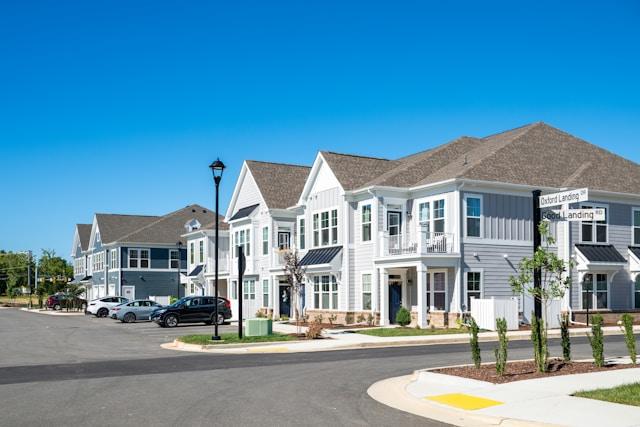
It also helps to think about tariffs and housing through a wider lens. Tariffs can raise the cost of building materials and components, depending on what goods are targeted. That can affect construction costs, builder confidence, and the pace of new supply. New supply constraints can contribute to higher home prices in some markets, which worsens affordability even if mortgage rates do not rise dramatically. In that way, tariffs can influence housing affordability through both sides of the equation: the cost of borrowing and the cost of the home itself. Mortgage rates are the visible part because they change week to week, but the longer-term impact can show up in pricing pressure, delayed projects, or reduced construction activity, depending on how broad and sustained the tariff increases are. None of this means tariffs are always bad for mortgage rates. It means tariffs are a shock that the bond market must interpret. The interpretation changes over time. Early in a tariff escalation, inflation expectations may dominate, pushing yields and mortgage rates higher. Later, if the economic drag becomes clearer, growth fears may take over, pulling yields lower. In between, the mortgage spread can widen or remain sticky because uncertainty itself has a price.
The simplest takeaway is that tariff increases tend to increase the chance of higher mortgage rates, but they do so indirectly through inflation expectations, Fed policy expectations, and risk premiums in mortgage markets. The result is not guaranteed. It is conditional. The bond market’s conclusion is what matters, and that conclusion can change with each new signal about prices, jobs, consumer spending, and global demand. If you want a practical way to watch this in real life, do not only track the mortgage rate headlines. Pay attention to what is happening to longer-term Treasury yields and what the market is saying about inflation and growth. When tariffs rise and the market talks about inflation staying hot, rates often climb. When tariffs rise and the market talks about recession risk, rates can ease. When tariffs rise and everyone seems unsure, mortgage quotes can become less friendly even if Treasury yields do not move much, because spreads widen and lenders price defensively.
In the end, tariffs are not a mortgage policy, but they can become a mortgage problem. They reshape expectations, and expectations are what move the bond market. Since the bond market is the engine behind mortgage pricing, tariff increases can show up at your loan desk surprisingly quickly. The change might be a steady climb, a sudden spike, or a confusing period where rates stay high even when bonds look calm. That uncertainty is the real signature of tariff-driven periods, and it is why borrowers often feel the impact before the data catches up.
 WhatsApp
 Instagram
 Threads