A Roth IRA is often promoted as one of the cleanest ways to build tax-free retirement income, and for many savers it truly can be a powerful tool. The promise sounds simple: contribute money you have already paid taxes on, invest it for years, and later withdraw qualified earnings without paying federal income tax. That clarity is exactly why the Roth IRA has become a favorite in personal finance conversations. Yet the same structure that makes a Roth IRA attractive also creates limitations that can feel restrictive, expensive, or surprisingly complicated depending on your income, your timeline, and the way your financial life evolves. Understanding the disadvantages is not about rejecting the Roth IRA, but about seeing the full tradeoff before you commit to it as your default retirement plan.
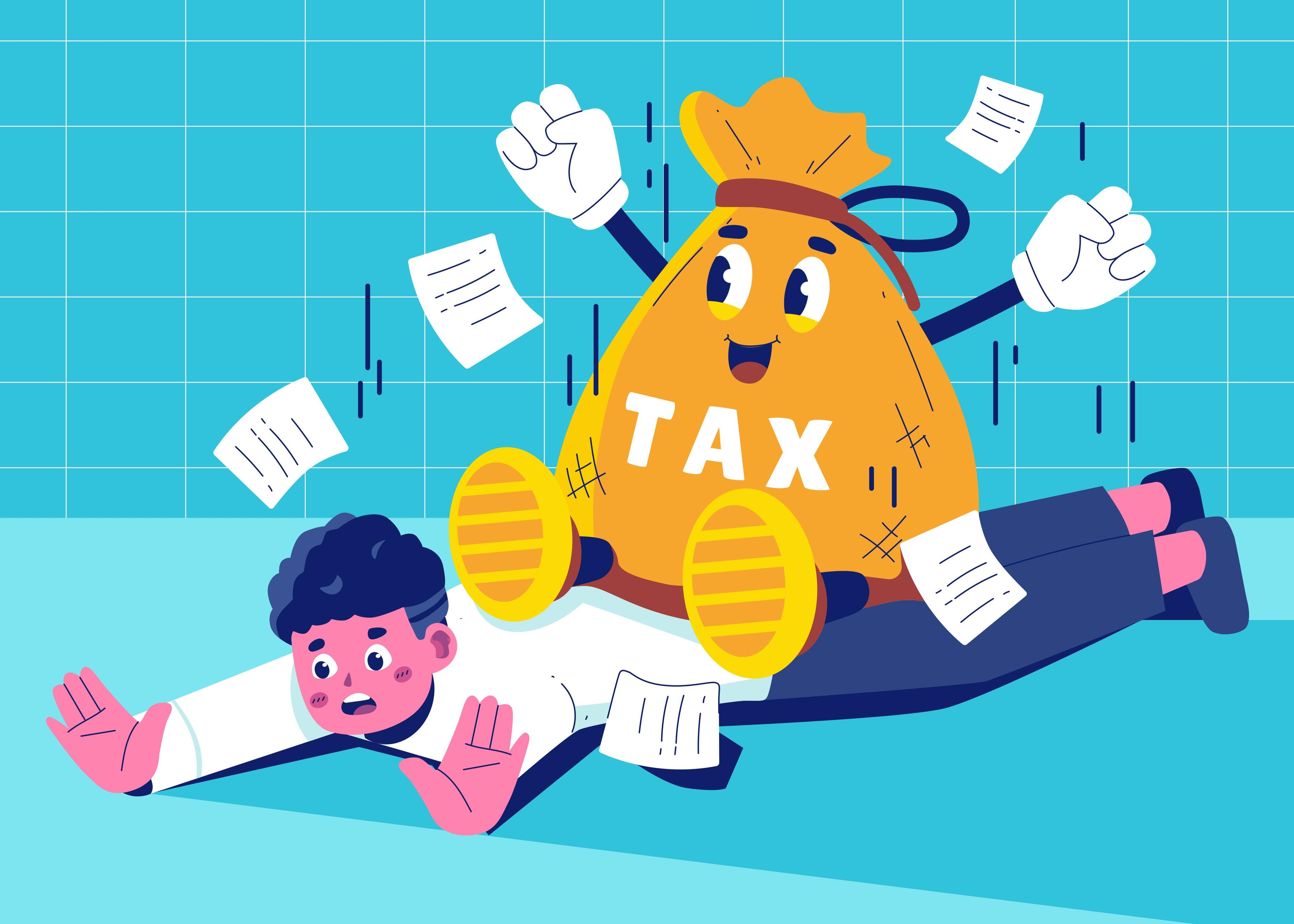
One of the most important disadvantages is also the least exciting: a Roth IRA does not give you a tax break today. Because contributions are made with after-tax dollars, you do not reduce your taxable income in the year you contribute. That means the cost of funding a Roth IRA is felt immediately, especially if you are currently in a high tax bracket. By contrast, a Traditional IRA may allow you to deduct contributions, lowering your tax bill now and leaving you with more cash flow to invest or use for other priorities. The Roth IRA asks you to pay tax upfront in exchange for the possibility that avoiding taxes later will be more valuable. That trade can be smart when you are early in your career, earning less, and expecting your income and tax rate to rise over time. It can be less appealing when you are already in your peak earning years, where the value of a deduction can be significant. The disadvantage is not just missing a perk. It is the possibility of locking in taxes at a higher rate than you would have paid in retirement.
Eligibility rules create another common frustration. Unlike some retirement accounts that are broadly available regardless of income, Roth IRA contributions are limited by income thresholds. When your modified adjusted gross income rises above certain levels, your ability to contribute begins to phase out and can disappear entirely. In real life, income is not always predictable. A job change, a bonus, a jump in commissions, or a large capital gain can push someone over the limit unexpectedly. When that happens, a contribution that felt routine can turn into an overcontribution problem that must be corrected to avoid penalties. Even for people who remain eligible, the Roth IRA’s annual contribution limit is relatively low, which means it cannot carry the weight of an entire retirement plan on its own. For serious long-term saving, it often functions as one part of a larger system rather than the main engine of retirement wealth.
Withdrawal flexibility is often presented as a major advantage, but it can become a disadvantage when the rules are misunderstood. It is generally true that you can withdraw your Roth IRA contributions at any time without taxes or penalties, because you already paid tax on that money. The complication is that Roth IRA accounts are not just made of contributions. Over time, growth matters, and the account becomes a mix of what you put in and what your investments earned. Taking earnings out early can trigger taxes and penalties unless specific conditions are met, and the ordering rules that determine what you are withdrawing first can feel confusing to anyone encountering them in a stressful moment. The appeal of “access anytime” can tempt people to treat Roth IRAs as an emergency backup, but the account is still a retirement vehicle designed for long-term use. If you need money within a short time horizon, relying on a Roth IRA as a substitute for liquid savings can backfire, especially if you are forced to sell investments during a downturn.
Even when exceptions exist, early withdrawals can carry hidden costs. Certain circumstances may allow penalty-free access to some funds, such as specific education expenses or limited first-time homebuyer provisions, but those exceptions do not necessarily make withdrawals simple or consequence-free. There may still be taxes due on earnings, paperwork requirements, and strict eligibility criteria that must be followed precisely. The disadvantage is not just financial. It is the administrative friction that appears when you want the account to behave like flexible savings. A Roth IRA is more forgiving than some retirement accounts, but it still expects you to treat it as retirement-first.
A deeper disadvantage sits beneath the surface: a Roth IRA can be the wrong tax bet if your future tax rate turns out to be lower than your current one. Many people naturally assume they will pay more tax later, but retirement does not always look like peak career income. Some retirees have lower taxable income, some relocate to lower-tax areas, and some manage withdrawals strategically to keep income within certain brackets. In those scenarios, taking a tax deduction now and paying taxes later could be more efficient. The Roth IRA’s disadvantage is that it requires you to commit to paying taxes upfront, and if life unfolds in a way that lowers your future tax burden, the value of that upfront payment may not match what you gave up.
For high earners, the Roth IRA can also be inconvenient simply because it becomes harder to access. Many people who earn above the direct contribution limits turn to the backdoor Roth strategy, where they contribute to a Traditional IRA and then convert that amount to a Roth IRA. While common, this approach introduces complexity. Tax rules such as the pro-rata calculation can make conversions partially taxable if you already have pre-tax IRA balances. Mistakes in sequencing, reporting, or misunderstanding what counts as pre-tax funds can lead to surprise tax bills. The disadvantage here is that the Roth IRA stops being a straightforward account and becomes a process that demands careful execution and ongoing awareness.
Recordkeeping is another overlooked burden. Roth IRAs are simplest when you contribute and leave the money untouched until retirement. Once you add conversions, rollovers, or early withdrawals, it becomes more important to track how much of the account represents contributions, how much represents converted funds, and what timelines apply to avoid penalties. If you switch brokers, lose statements, or forget past transactions, you can create a situation where you have the legal right to withdraw certain amounts tax-free but lack the confidence or documentation to do it cleanly. In practice, messy records can lead to conservative decisions, tax confusion, or paying more than necessary simply because it is easier than sorting it out.
It is also worth stating a disadvantage that sounds obvious but matters because of how Roth IRAs are marketed. A Roth IRA does not prevent investment losses. The account itself is a container, not an investment. If you invest in volatile assets and panic-sell during a decline, tax-free growth becomes irrelevant because growth never had time to materialize. In addition, unlike taxable accounts, retirement accounts generally do not allow you to benefit from tax-loss harvesting in the same way, so if your investments perform poorly, a Roth IRA offers fewer tax-planning tools to offset that pain. The promise of tax-free gains can even create a psychological trap, encouraging some people to take risks that do not match their actual tolerance because they overestimate how much the tax advantage protects them.
Finally, one of the most practical disadvantages is that the Roth IRA can distract from higher-impact priorities. If you have an employer retirement plan that offers a match, failing to capture that match because you are focused on maxing a Roth IRA is usually a costly mistake. If you carry high-interest debt, funding a Roth IRA while paying steep interest can undermine your net progress. If you do not have an emergency fund, contributing heavily to a retirement account can create cash stress that leads to early withdrawals, which defeats the purpose and can trigger taxes or penalties on earnings. In other words, a Roth IRA may be a strong component of a long-term plan, but it is not always the best first move.
None of these disadvantages mean the Roth IRA is a bad account. They simply show that it is not automatically the best account for every person in every phase of life. The Roth IRA is most effective when you can contribute consistently, invest sensibly, and leave the money untouched long enough for compounding to work in your favor. It works especially well when your current tax rate is relatively low and you expect a higher tax rate later, or when you value the long-term benefit of tax-free withdrawals and are comfortable living without a tax deduction today. The point is to choose it intentionally, with eyes open to the limits, the rules, and the possibility that your future tax reality may not match your current assumptions.
 WhatsApp
 Instagram
 Threads