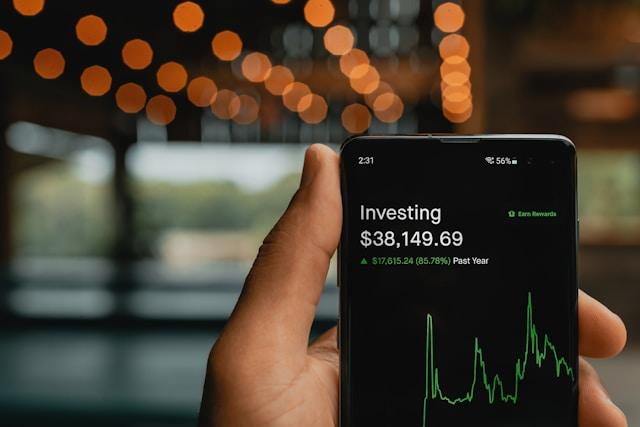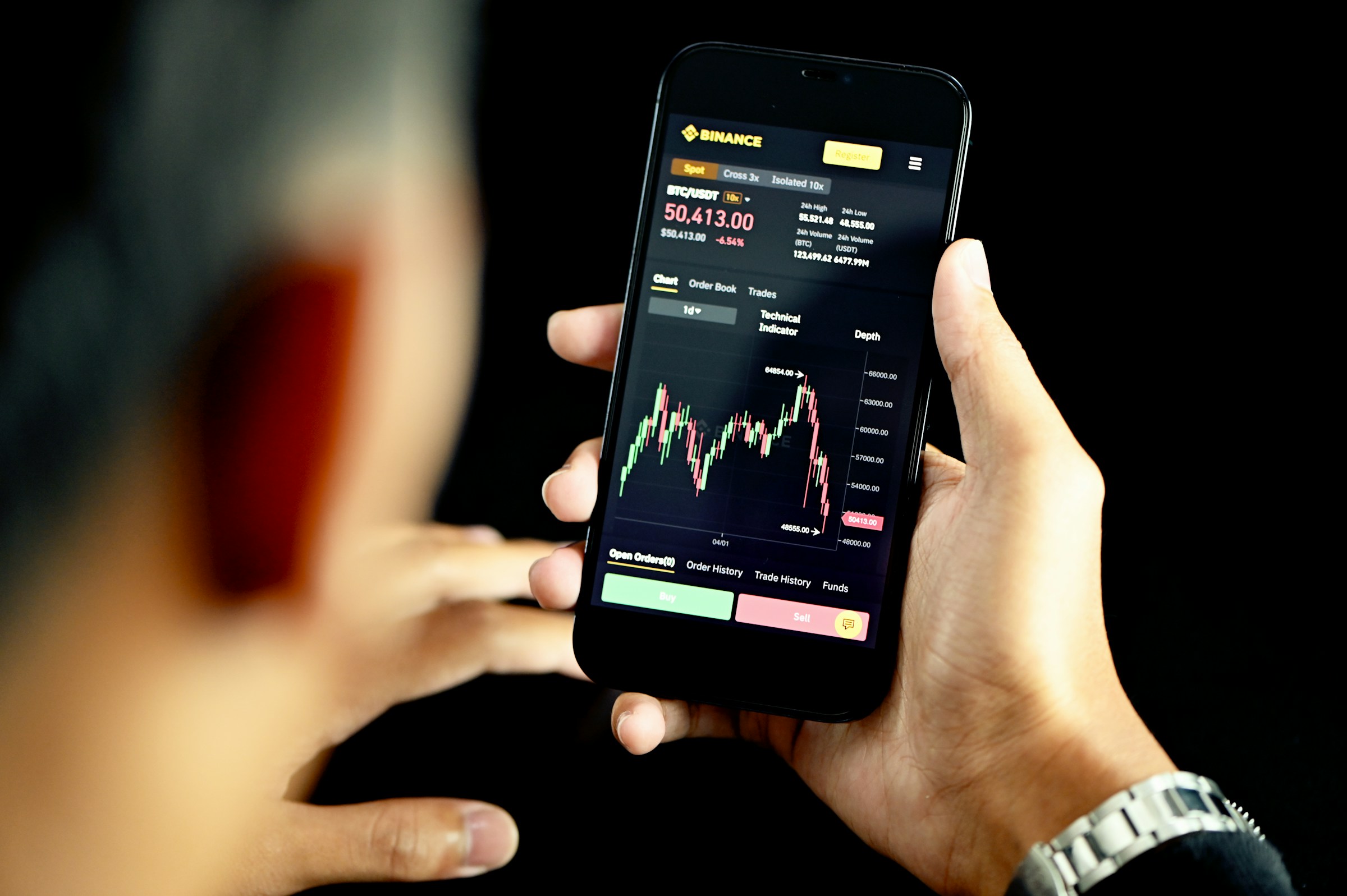
In a changing market, it is very easy to feel as if your entire investment plan needs to be torn up and rebuilt from scratch. One week your portfolio is deep in the green and you feel clever and in control. The next week, prices fall sharply, social media turns noisy, and you start questioning everything about your choices, your risk tolerance, and even your financial future. This emotional swing is normal. No one is built to watch their hard earned money move up and down without feeling something. The challenge is not to eliminate those feelings but to avoid letting them drive sudden, dramatic changes that do more harm than good. Adjusting your investment approach in a changing market should feel more like tuning a system than reacting to every headline, and that is the mindset Tyler Cruz speaks to when he writes for digital native, app first investors who want real returns without losing sleep.
A useful way to think about adjustment is to start from your life instead of from the market. Markets are noisy by design. Prices update every second, narratives shift weekly, and what feels urgent today will often be forgotten a month later. Your life, by contrast, updates much more slowly. Your job, your income stability, your family responsibilities, and the time horizon for your goals change over years, not hours. Before touching any of your investments, it makes sense to ask what has actually changed in the real world around you. Did your income become less predictable because you moved into freelance work or a startup role. Did you take on a new long term commitment such as a mortgage or a child. Do you expect to need a large amount of money in the next few years for studies, relocation, or a business venture. These shifts in your personal situation are legitimate reasons to adjust your investment approach. They matter more than whether some index is up or down this month.
Once you ground yourself in your own life, it becomes easier to think about your money in time buckets. You can separate funds you might need in the next two years, money that is likely to be used within three to seven years, and capital that is truly long term, meant for retirement or financial independence far in the future. Short term money cannot afford the risk of large swings, because a bad year would force you to sell at a loss just to cover bills. Mid term money can take more risk, but still needs some stability. Long term funds can ride through several full market cycles. In a changing environment, the first adjustment is often simply to ensure that your current investments line up with these timelines. Cash and very low risk instruments are better suited to short term goals. A diversified mix of assets works for the middle period. Growth oriented holdings such as broad equity funds fit the long term bucket. Just by matching your investments to your time horizons, you reduce the chance that volatility will push you into panic decisions.
With your life context and time buckets clear, the next layer is to revisit what risk really means to you in the current environment. In calm markets, many people treat risk like a slider in an app. They click a higher risk profile, watch the projected returns climb on the screen, and feel fine. When markets turn rough, that abstract slider turns into real losses on a statement, and suddenly the same person feels overexposed. True risk tolerance is not about what you hope you can handle in theory, but about how you respond emotionally and financially when your portfolio actually falls. There are a few questions that can clarify this. How large a drop in your investments could you see on your screen without feeling tempted to sell everything. How much underperformance can your cash flow withstand if returns are muted for several years. How many years remain before you will genuinely need to draw on those funds.
If you realise that a relatively modest decline would cause serious stress or push you toward impulsive selling, it is a sign that your current portfolio is more aggressive than your genuine tolerance. That does not mean you retreat completely into cash. It means you shift toward a structure with a strong core and a smaller, clearly defined risk layer. The core might consist of broad stock index funds or diversified equity funds that spread exposure across sectors and regions, together with some income oriented or lower volatility assets. Around this core you can maintain a smaller allocation to higher risk positions, such as individual growth stocks or crypto assets that you find interesting. In a changing market, the adjustment is to protect and possibly strengthen the core, while resizing the risk layer so that it feels like hot sauce instead of the main ingredient. This approach respects your curiosity and appetite for upside without letting speculative positions dominate your plan.
Volatility itself can be reframed as an opportunity to reset your process rather than something to fight or outguess. Whenever prices swing sharply, the financial world seems to divide into two noisy camps. One group insists that a major crash is underway and that everyone should get out. The other group tells you that this is the buying chance of the decade and that you should borrow money to invest more. Ordinary investors often feel stuck in the middle, unsure which story to believe. Trying to identify the exact bottom or top of a market move is not a realistic goal. Instead, you can design a behaviour that uses volatility in a modest but helpful way.
One of the simplest tools is consistent, automated investing through dollar cost averaging. If your income allows, you can keep a fixed monthly contribution flowing into your core holdings regardless of short term market moves. When prices are higher, that contribution buys fewer units; when prices are lower, it buys more. Over time, your average cost smooths out. In turbulent periods, you can make a small adjustment by directing new contributions toward parts of your portfolio that have fallen below their target weight. If stocks have declined relative to bonds, for example, a larger share of new money can be directed into stock funds until the mix is back within your desired range. This is a form of rebalancing that relies mainly on new cash, which keeps trading costs and emotional friction lower.
If you find it psychologically difficult to invest fresh money in the middle of severe declines, another reasonable adjustment is to temporarily park contributions in high yield savings or short term vehicles while you write down a clear rule for re entry. For instance, you might decide that once your emergency fund reaches a certain number of months of expenses, and once the market has fallen by a defined percentage from earlier highs, you will gradually move cash into your core holdings over a period of several months. Writing such rules in advance helps protect you from impulsive decisions in the heat of panic.
Diversification becomes more important, and more real, when conditions change. In booming times, it is easy to feel diversified simply because everything you own seems to be rising together. You might hold multiple tech stocks, a basket of similar themed exchange traded funds, and several related cryptocurrencies, and as long as they all go up at once this can look like a robust portfolio. When the mood shifts, you suddenly discover that these holdings share the same underlying risk. True diversification means spreading exposure across sectors, regions, and types of assets so that no single story, policy move, or technology cycle controls your entire outcome.
Broad, low cost index funds already provide a degree of diversification, but you can enhance resilience by adding sensible global exposure, some defensive sectors, and a modest slice of assets that behave differently under stress. If you enjoy participating in crypto or other high volatility assets, you can still do so with a clearly defined ceiling as a percentage of your overall net worth. As markets swing, you then adjust that slice, trimming it if it has grown too large relative to the rest, or adding cautiously if you still believe in the long term thesis and your core is stable. The point is not to eliminate all risk, but to ensure that your future is not overly dependent on one narrow segment of the investing universe.
Alongside your portfolio mix, your cash strategy deserves more attention in a changing market. Many people mentally separate cash from investing, treating it as something passive that simply sits in a current account. In reality, how you manage cash is a central part of your overall approach. Interest rates move up and down, making different instruments more or less attractive. Losing a job or facing a family emergency can instantly change how much cash buffer you need. In a time of uncertainty, it is useful to give names to different pools of cash. Emergency cash is the non negotiable buffer you do not invest. Operational cash covers your usual living expenses. Strategic cash is money that you might deploy when conditions and your own comfort level make it sensible.
If your income has become less secure, or if your responsibilities have grown, it can be wise to increase your emergency and operational buffers for a period and dial back aggressive investing. This is not a sign of weakness. It is a practical response to higher personal risk. If your situation is steady and safer instruments are offering reasonable yields, you might allocate a portion of your portfolio to those vehicles while still keeping your long term equity exposure intact. The key is to avoid swinging between extremes, such as going entirely into cash when fearful and then rushing back fully into risky assets when headlines turn optimistic. Allowing your cash level to move within a sensible range tied to your real life is a more balanced adjustment.
Many younger investors find that a changing market exposes another issue that has nothing to do with asset classes and everything to do with complexity. Over time, it is easy to accumulate a chaotic mix of platforms and products. You might have a robo advisor account, a trading app with a collection of small positions, a separate app for fractional shares, two or three different crypto exchanges, and perhaps some legacy investments set up by family. In calm times, this mishmash can feel exciting and experimental. In volatile times, it becomes hard to see a clear picture of your overall position. That confusion alone can stop you from taking sensible actions.
One of the most powerful yet underrated adjustments is to simplify your tool stack. This does not mean you must close every account. It means you carefully decide which platforms will serve as your main hubs, consolidate similar holdings where reasonable, and wind down positions that no longer fit any clear purpose. After simplification, you can define a simple structure: automated contributions flow into your core via one main platform, experimental positions are kept in a smaller sandbox with a strict limit, and any alternative assets are capped at a specific share of your net worth. When markets shift, you can adjust contribution levels and risk caps through a few deliberate changes instead of wrestling with a dozen logins and disconnected portfolios.
Beneath all these practical moves sits the most important layer of all, which is behaviour. The theories of good investing are widely known. People understand that buying low and selling high is better than the reverse, that diversification helps, and that long term compounding is powerful. Yet in the middle of a fast changing market, those simple ideas often collapse under the pressure of fear and greed. Social media feeds fill with extreme views, charts are shared out of context, and the temptation to make large, sudden trades increases.
To protect yourself, it helps to install guardrails before the next big swing arrives. Some of these are mechanical, such as setting maximum position sizes, creating waiting periods before large moves, or writing down clear criteria under which you will trim winners or cut losers. Others are social and psychological. You might choose a small circle of people you discuss major decisions with, follow creators who focus on process rather than hype, and mute voices that constantly push all or nothing narratives. By curating both your rules and your information environment, you increase the odds that you will stick to your plan when stress rises.
In the end, adjusting your investment approach in a changing market is less about predicting where the market will go next and more about designing a system that remains functional across different conditions. Your life stage, your true risk tolerance, your diversification, your cash management, your choice of tools, and your behaviour patterns are all elements of that system. When these parts are aligned, you can make calm, incremental adjustments instead of panicked, sweeping changes. There will be times when caution is appropriate and times when you can afford to lean more into growth, but those choices will be anchored in your own reality rather than the latest online drama.
Markets will continue to evolve. New products will appear, some useful and some merely noisy. No one, including professionals, will ever time every move perfectly. What you can control is the way you structure your finances and the rules you live by as an investor. If you treat your portfolio as a long term machine you are building rather than a ticket in a short term game, you will see volatility not as a verdict on your worth but as a recurring test of your system. Thoughtful, steady adjustments that respect both the outside environment and your inner limits will carry you much further than grand gestures made in the heat of the moment.
 WhatsApp
 Instagram
 Threads