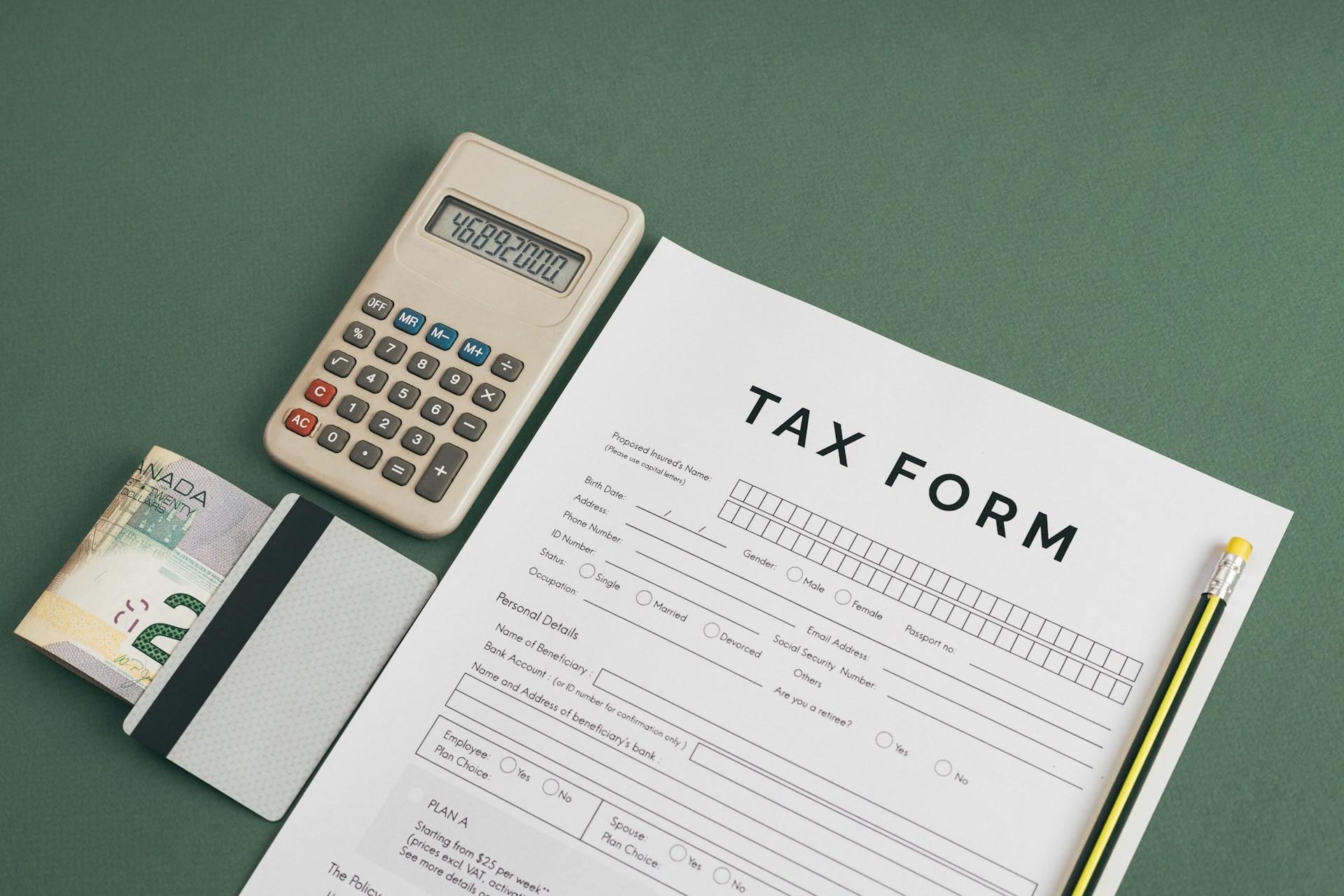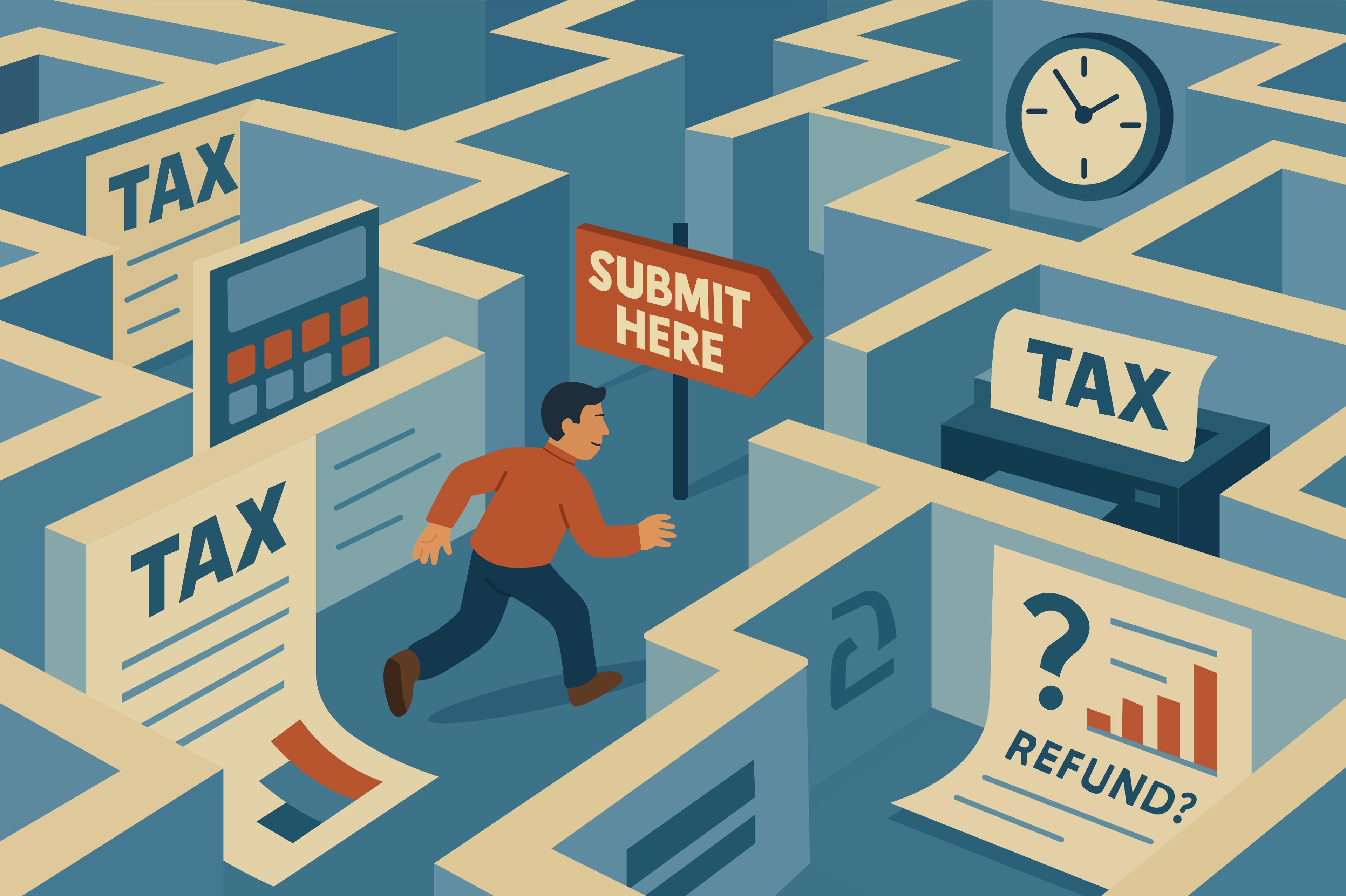
UK income tax often feels complicated because it is built to do two things at once. It needs to be fair in principle by charging higher rates on higher earnings, and it needs to be practical in reality by collecting the right amount across the year without asking most employees to file long forms. Once you understand the sequence behind it, the system becomes less intimidating. The key is to stop thinking of income tax as one percentage applied to everything you earn and start seeing it as a set of layers that apply in a specific order. Everything begins with the idea of taxable income. Your salary or income from work is your gross income, but income tax is charged on what is left after allowances and certain adjustments have been taken into account. The UK uses a progressive approach, which means different slices of your taxable income are taxed at different rates. That is why the phrase “I’m in the 40 percent bracket” is often misunderstood. It does not mean every pound you earn is taxed at 40 percent. It means the highest slice of your income is taxed at that rate, while the earlier slices are taxed at lower rates or not taxed at all.
Another foundational detail is the tax year itself. In the UK, the tax year runs from 6 April to 5 April, not from January to December. Your allowances and thresholds reset on that schedule, and so does the way payroll systems calculate what to deduct. This matters because most employees pay income tax through payroll. The system is designed to spread your tax bill across the year, so your payslip deductions are shaped by what payroll expects your total annual income to be. When your income changes mid-year, such as when you receive a bonus, change jobs, take unpaid leave, or add benefits, the payroll estimate can shift and your deductions can look unusually high or unusually low for a period. That is often a timing effect rather than a permanent change in your true tax bill.
For many people, the most important concept to grasp is the Personal Allowance. This is the amount of income you can earn before you pay income tax. For most taxpayers, a standard allowance applies, and it forms the tax-free foundation of the system. After that allowance is applied, the remaining taxable income is divided into bands. In England, Wales, and Northern Ireland, those bands are commonly referred to as the basic rate band, the higher rate band, and the additional rate band. Each band has a threshold, and each threshold determines which slice of your taxable income is taxed at which rate. The practical takeaway is that your total tax is a blend of these rates, not a single rate.
There is, however, a widely misunderstood complication that becomes relevant once income rises beyond a certain point. When adjusted net income exceeds £100,000, the Personal Allowance begins to taper away. For every £2 you earn over £100,000, you lose £1 of Personal Allowance, until the allowance is removed completely at £125,140. This is not just a technical footnote. It creates an unusually high effective tax rate for people in that range because you are not only paying tax on the additional income, you are also losing part of the income that would otherwise have been tax free. It is one reason people nearing £100,000 often feel surprised at how “expensive” a pay rise or bonus can be. The important point is not to fear the taper, but to be aware of it and understand that it can change the value of certain planning choices. Measures that reduce adjusted net income, such as pension contributions or Gift Aid, can affect whether and how much of the allowance taper applies.
Once allowances are settled, the system applies bands and rates. In England, Wales, and Northern Ireland, the basic structure is straightforward in principle. You have the Personal Allowance at 0 percent, then a basic rate band taxed at 20 percent, then a higher rate band taxed at 40 percent, and finally an additional rate taxed at 45 percent for income above the top threshold. The system is progressive, so your earlier income is taxed at lower rates, and only the top slice crosses into the higher bands.
Scotland is a special case that is essential to understand because it sets its own income tax rates and thresholds for most earned income. That means two people on the same gross salary can see different income tax deductions simply because they live in different parts of the UK. In Scotland, the band structure includes more steps, such as a starter rate and intermediate rates, and the top rates differ from the rest of the UK. If you move to Scotland or move out of Scotland, you may notice a change in your payslip tax deductions even if your salary stays the same. That is not necessarily an error. It reflects the different regime applied to Scottish taxpayers.
For employees, the collection system matters as much as the rates because what you experience month to month is shaped by PAYE. PAYE stands for Pay As You Earn, and it is the payroll mechanism that withholds tax from your salary before you receive it. The goal of PAYE is simple: to collect roughly the correct tax across the year so you do not face a large bill at the end of the tax year. To do this, PAYE relies heavily on your tax code. Your tax code is not just a random string. It signals how much tax-free allowance you have and whether any adjustments apply. It can be influenced by many common factors, including having more than one job, receiving taxable benefits like a company car or private medical insurance, or having underpaid tax in a previous year that HMRC is collecting through payroll.
Because PAYE is based on estimates and ongoing adjustments, your payslip can sometimes be confusing. A particularly common scenario is a one-off spike in tax after receiving a large bonus. People often assume the bonus has been taxed at an extreme rate, when in reality payroll may be temporarily treating you as if that higher monthly pay will repeat for the rest of the year. Over subsequent months, the system usually rebalances as it learns your actual annual pattern. This is why year-to-date figures on a payslip are often more informative than the tax deducted in a single month. If your taxable pay to date and tax paid to date look consistent with your annual income, a strange month can be less alarming.
To make the layered approach feel tangible, imagine someone earning £60,000 in England with no unusual deductions and the standard Personal Allowance. The first portion of income is covered by the Personal Allowance and is not taxed. What remains is taxable income. The next slice is taxed at the basic rate, up to the basic rate threshold. Only after that threshold is reached does the higher rate apply, and it applies only to the slice above the threshold. This is the core mechanism behind the progressive system. It is also why “moving into the higher rate band” does not mean you take home less overall. It means a portion of additional income is taxed at a higher rate. Your take-home pay still rises as your income rises, even though each extra pound may be taxed more heavily.
The story changes when you are not paid entirely through PAYE. If you are self-employed, or if you receive significant income that is not taxed at source, you may need to file a Self Assessment tax return. Under Self Assessment, you are still subject to income tax bands and rates, but instead of tax being withheld each time you are paid, you calculate your tax liability after the end of the tax year. You may make a balancing payment, and in many cases you may also have to make payments on account toward the next year’s bill. This shift is less about different tax rules and more about different collection mechanics. For many new freelancers and contractors, the biggest practical challenge is not the tax calculation itself, but cashflow management. When an employer uses PAYE, tax is removed before you see the money. When you are self-employed, you have to create that discipline yourself by reserving for tax throughout the year.
Even employees can fall into Self Assessment requirements in certain situations. People with complex income sources, higher incomes, or specific circumstances may need to file, and they may discover that PAYE has not collected exactly the right amount. This does not mean PAYE failed. It means PAYE is a best-effort mechanism based on the information available during the year. Self Assessment is how the system finalizes the numbers when extra information exists.
To understand what you really pay, you also need to recognise that taxable income can be reduced or adjusted in common ways. Workplace pension contributions are one major example, but the effect depends on how your scheme is structured. Some pension arrangements reduce taxable pay before tax is calculated. Others give relief differently, which may require extra steps for higher-rate taxpayers to claim the full benefit. Gift Aid donations can also affect the tax picture and can be particularly relevant for people in higher bands, because the relief interacts with band thresholds. These rules can become technical, but the planning mindset stays consistent. If you are near a threshold where small changes matter, it is worth understanding which deductions and reliefs reduce taxable income, which reduce adjusted net income, and which simply change how relief is granted.
For many people, the simplest way to bring clarity to UK income tax is to focus on the order of operations rather than on memorising every detail. First, identify whether you are taxed under the standard UK bands or the Scottish bands. Second, make sure your tax code seems consistent with your situation, especially after changes such as job moves or new benefits. Third, look at your approximate annual income, not just one month’s pay, because PAYE calculations are built around annual expectations. When you view your payslip through that lens, you can usually tell whether something is genuinely wrong or whether payroll is simply adjusting during the year.
Ultimately, understanding how UK income tax works is less about becoming a tax technician and more about gaining confidence in the system you live under. When you can see how allowances, bands, and collection mechanisms fit together, you stop feeling as if tax is something happening to you in the dark. Instead, it becomes a structure you can anticipate. That shift matters. It helps you evaluate a pay rise realistically, plan for bonuses without panic, spot an incorrect tax code early, and make sensible decisions if you approach higher income levels where allowances change. In a system designed to be both progressive and practical, your best advantage is clarity, because clarity turns confusion into control.
 WhatsApp
 Instagram
 Threads