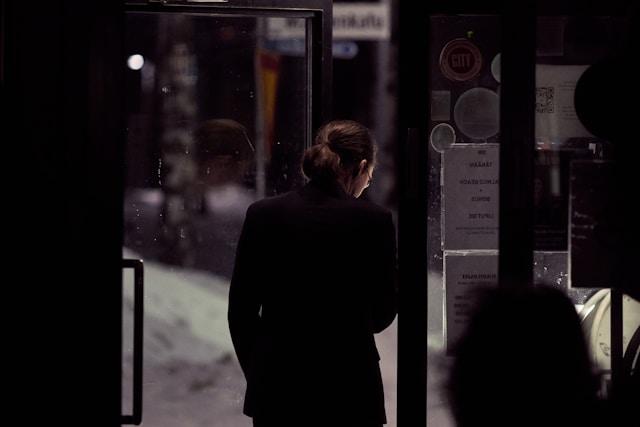
Understanding social context matters when doing an Irish Exit because the meaning of leaving quietly is never contained in the act itself. It is contained in the room you are leaving, the expectations that shape that room, and the relationships that hold it together. An Irish Exit can be considerate in one setting and hurtful in another, not because anyone is overreacting, but because gatherings carry invisible rules about how people arrive, how they participate, and how they leave. When you miss those rules, your exit can feel like a sudden drop in temperature. When you understand them, leaving quietly can be a gentle way to respect the flow of the moment.
Social settings function like spaces with an unspoken design. Some are built for lingering, where conversation stretches, the host keeps refilling glasses, and the evening feels like it is meant to run on warmth rather than a schedule. In these spaces, leaving is not simply an individual choice. It is a shift in the atmosphere that other people will notice, even if they do not say it out loud. That is why a quiet departure can land in two very different ways. In a room that values emotional continuity and ease, a dramatic goodbye can create a series of mini-endings that the host must manage. In a room that values acknowledgment and ritual, disappearing can feel like skipping a required gesture of gratitude. In many casual gatherings, the Irish Exit can be a kindness. If the host is juggling a dozen small responsibilities, managing the music, checking on food, making sure guests feel included, and keeping the night moving, pulling them into a long farewell may add pressure rather than warmth. Quietly leaving can prevent the evening from becoming about your departure. It can protect the mood for everyone who remains, especially if the group energy is delicate or the night is winding down. In that context, slipping out can be a form of social restraint, a way of not taking more attention than you need.
The Irish Exit can also be a practical act of self-awareness. Not everyone has the emotional or social bandwidth for extended goodbyes. Some people know that farewells turn into negotiations, with friends insisting they stay, asking for reasons, or unintentionally making them feel guilty. Leaving quietly can be a way to protect personal boundaries without creating a scene. When it aligns with the atmosphere of the gathering, it does not read as cold. It reads as leaving gently, with minimal disruption.
However, in more formal or duty-based contexts, leaving without acknowledgment can feel disrespectful. Many communities treat goodbyes as part of what it means to be a guest. Saying goodbye is not just announcing your departure. It is recognizing the host’s effort and confirming that you received their welcome. When the gathering is structured, such as a family dinner, a work event, or an occasion with hierarchy and tradition, an Irish Exit can come across as careless. The host may wonder whether you were uncomfortable, upset, or unimpressed. Others may interpret your absence as a statement, even if you intended none. This is why social context matters so much. Most gatherings are not neutral. They are made of roles. Whether you are a close friend, a new partner, a colleague, a relative, or a plus-one changes what people expect from you. In some roles, your presence carries more emotional weight, and your absence is felt more strongly. A close friend leaving without a word can feel like withdrawal. A colleague leaving without acknowledgment can read as disengagement. A guest at a family gathering slipping away can look like indifference to the relationship. The same act, performed by different people in different roles, can be interpreted in entirely different ways.
The type of event also shapes the meaning of the Irish Exit. A house party often allows for fluid movement. People arrive at different times, mingle in waves, and leave gradually. In that environment, departures are not necessarily ceremonial. They are part of the natural drift of the night. But a restaurant dinner, a birthday gathering, or any setting where the group is contained makes leaving more visible. When you step away from a table, the empty seat becomes a message, and your exit is harder to frame as casual. Weddings and major celebrations add another layer because the event is not just social, it is symbolic. Timing matters. Leaving quietly late in the night may be normal. Leaving quietly early can be read as failing to honor the occasion.
A useful way to understand social context is to notice what the host is trying to build. Some hosts are trying to protect calm and keep the night easy, where nobody has to manage anyone else’s emotions. In that setting, a quiet exit fits because it does not create a moment that needs to be held. Other hosts are trying to build connection, a feeling that everyone was truly present and seen. In that setting, the goodbye is part of the architecture of the evening. It is a small ritual that completes the exchange between guest and host. If you skip it, the evening can feel unfinished. Who else is present matters too. In groups where there is insecurity, status anxiety, or unresolved tension, an Irish Exit can be misread as avoidance. People may fill in the gap with stories, especially if they already expect conflict. In rooms where elders or mentors are present, formal respect may be valued because it makes social life predictable and stable. A quiet departure can feel like breaking an agreement, even if no one ever stated the agreement directly.
Even the physical setup can shape the meaning of leaving. In a small space where everyone is clustered, you cannot move without being noticed, and trying to slip out can feel like sneaking. In a larger space, where attention is spread out, leaving quietly can feel natural. In that sense, the Irish Exit is often a response to attention. Many people choose it because they do not want their departure to become the night’s turning point. But there is a difference between leaving without drama and leaving without care. The goal is to preserve the gathering, not to create confusion. Care can be expressed quietly. Sometimes it is a brief word to the host while they are busy, so you do not pull them away from their role. Sometimes it is sincere gratitude expressed earlier in the night, so the goodbye does not carry all the weight of acknowledgment. Sometimes it is a message afterward that closes the loop. These small gestures prevent the emotional “cleanup” that can happen when people notice you are gone and start trying to interpret what it means.
Ultimately, understanding social context turns the Irish Exit from a risky move into a thoughtful one. Every gathering has a rhythm, with its own arrival energy, middle-of-the-night steadiness, and gradual wind-down. If you can sense that rhythm, you can leave in a way that keeps the room intact. The best exits do not make people work to understand them. They do not trigger insecurity or create extra obligations for the host. They allow others to hold a generous interpretation, the simple assumption that you left because you needed to, not because you were making a point. In that sense, the Irish Exit is not about disappearing. It is about leaving with enough social awareness that your absence still feels considerate.
 WhatsApp
 Instagram
 Threads