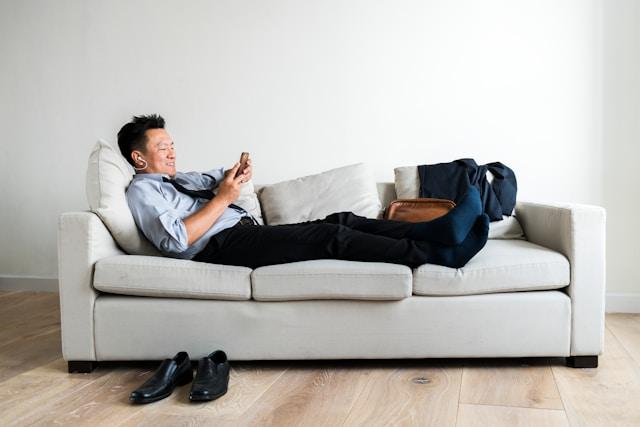
A sedentary lifestyle often feels harmless because it blends into modern routines so easily. Many people spend their mornings seated during the commute, their workdays anchored to a desk, their meals eaten in a chair, and their evenings unwinding on the couch. None of these moments look like a health threat on their own. The problem is what happens when most waking hours are spent with the body in a low-demand state, where muscles barely contract and energy use stays close to resting levels. Over time, that quiet pattern reshapes metabolism, circulation, posture, and even mood, often long before any obvious symptoms appear.
The body is designed for regular movement, not necessarily intense exercise, but frequent changes in position and steady muscular activity. Walking to complete everyday tasks, standing up often, using the legs and hips, carrying things, and shifting posture are the kinds of inputs the human system expects. When those inputs disappear, the body does what it always does with unused functions. It reduces them. The decline may be subtle at first, then it accumulates until it becomes harder to ignore. This is why a sedentary lifestyle carries health risks that extend far beyond simple weight gain. Weight is visible and easy to track, but many of the most consequential changes happen inside the body where they are not felt until later.
One of the most important risks involves the way the body handles blood sugar. Muscles are not only for strength and movement. They are also one of the main sites where glucose is cleared from the bloodstream. When muscles are active, they pull glucose in more effectively, and the body can manage blood sugar with less effort. When muscles are inactive for long stretches, that demand disappears. Glucose lingers in the blood longer, and the pancreas has to produce more insulin to achieve the same effect. Over time, this can contribute to insulin resistance, a state where cells respond less efficiently to insulin’s signal. Insulin resistance does not usually announce itself with a dramatic warning. It builds quietly, showing up as higher fasting glucose, rising A1C, greater post-meal sleepiness, and cravings that feel oddly persistent. Left unchecked, it increases the likelihood of developing type 2 diabetes and a range of complications tied to chronically elevated blood sugar.
The story does not stop at glucose. Sedentary behavior also affects the way fats move through the bloodstream. Regular muscle contraction helps activate enzymes that clear triglycerides and support healthier cholesterol patterns. When the day is dominated by sitting, that clearing mechanism is blunted. Triglycerides can rise, protective HDL cholesterol can fall, and the balance of blood lipids can shift in a direction that favors plaque buildup in arteries. This kind of internal drift contributes to atherosclerosis, the gradual narrowing and stiffening of blood vessels that underlies many heart attacks and strokes. The most unsettling part is how long this process can progress without noticeable symptoms, which is why sedentary living can feel safe while it quietly increases risk year after year.
Cardiovascular health is especially vulnerable because the heart and blood vessels adapt to what they are regularly asked to do. If daily life rarely demands sustained increases in circulation, overall cardiovascular capacity tends to decline. Fitness drops, and ordinary activities start to feel more taxing. A set of stairs may leave someone more breathless than it used to. A brisk walk might feel like effort instead of ease. These changes are not only about conditioning in the athletic sense. They reflect the body’s reduced ability to deliver oxygen efficiently, regulate blood pressure smoothly, and maintain responsive blood vessels.
High blood pressure is one of the most common consequences of this gradual shift. It is also one of the most dangerous because it is often symptomless. Elevated blood pressure increases strain on the heart and damages blood vessels over time, raising the risk of heart attack, stroke, kidney disease, and vision issues. Sedentary patterns often cluster with other factors that worsen blood pressure, such as stress, short sleep, and convenience-based eating, but the lack of movement itself plays a role by reducing the regular circulation changes that help keep the vascular system flexible and responsive.
Another risk connected to circulation is clot formation, particularly in situations where sitting is uninterrupted for long periods. When hips and knees remain bent for hours, blood flow from the legs slows and pools more easily. For some individuals, especially those with additional risk factors such as dehydration, smoking, certain medications, clotting tendencies, recent surgery, or pregnancy, prolonged immobility can increase the chance of deep vein thrombosis. While the absolute likelihood varies, the mechanism is consistent: slower blood flow makes it easier for clots to form. Even when a clot does not occur, chronic poor circulation can contribute to leg heaviness, swelling, varicose veins, and discomfort that further discourages movement.
Musculoskeletal health takes its own hit, and this is where many people begin to notice the costs in daily life. The body responds to repeated positions by adapting to them. If sitting dominates, the hips stay flexed for much of the day, which can lead to tight hip flexors and inhibited glutes. The upper back may round forward, the head may drift ahead of the shoulders, and the neck and upper traps may take on more strain. Meanwhile, the core muscles that stabilize the pelvis and spine may become less engaged and less resilient. Over time, this combination often shows up as low back pain, neck stiffness, shoulder tension, and an overall sense that the body feels older than it should. It is not only posture that drives these issues. It is also deconditioning. When key muscles are rarely asked to do their job, other structures compensate, and compensation tends to produce pain.
Muscle loss is another quiet but serious consequence. Muscles shrink and weaken when they are not regularly used, and strength is one of the best predictors of long-term independence and health. It is possible to have a normal body weight and still have low muscle quality. Over time, lower strength reduces the ability to handle daily demands, whether that means carrying groceries, climbing stairs, lifting a child, or simply standing for long periods without fatigue. This decline can begin earlier than most people assume, and it accelerates with age if the body receives too few movement signals. A sedentary lifestyle can therefore set the stage for frailty later by eroding strength long before the word frailty would ever come to mind.
Joint health also depends on movement. Many joints rely on the regular loading and unloading that comes with activity to distribute synovial fluid, support cartilage nourishment, and maintain comfortable range of motion. When movement is limited, joints can feel stiffer and less tolerant of load. Stiffness encourages avoidance, and avoidance deepens the sedentary habit. It becomes a loop where movement feels uncomfortable because the body has not practiced it, and the body does not practice it because it feels uncomfortable. Over time, this loop can contribute to chronic pain and reduced mobility.
Bone health is another area that suffers when life becomes mostly seated. Bones respond to stress in the same way muscles do. They adapt to what they are asked to تحمل. Weight-bearing activity provides signals that help maintain bone density. When those signals are reduced for years, the body may invest less in bone strength, raising the risk of osteopenia and osteoporosis. This matters because fractures later in life can be life-changing, and the groundwork for bone loss can start long before old age, especially when combined with low vitamin D, low protein intake, smoking, heavy alcohol use, or hormonal changes.
Balance and coordination, often overlooked in younger adulthood, also depend on regular movement. Standing, walking, navigating uneven surfaces, and changing direction train the nervous system to maintain stability. When the body spends most of its time seated, balance becomes less practiced. Reaction time and coordination can decline. Later in life, this contributes to fall risk, and falls are not merely accidents. They are a major driver of disability and loss of independence. A sedentary lifestyle does not cause a fall directly, but it can weaken the strength and stability systems that prevent falls when life inevitably throws a surprise step, a slippery floor, or a moment of distraction.
Even digestion can be affected. Movement supports gut motility, and long periods of stillness can slow the natural rhythm of the digestive system. Some people notice more bloating, constipation, or discomfort, especially when sitting soon after meals. These issues may seem minor compared with heart disease or diabetes, but they shape quality of life and can become another reason people feel sluggish and avoid activity. Sleep, too, often becomes more fragile in a sedentary pattern. Many people feel mentally tired after a day of screen-based work, but mental fatigue does not always translate into deep, restorative sleep. Physical activity helps the body build healthy sleep pressure, regulate circadian rhythms, and stabilize mood. When movement is scarce and daylight exposure is limited, sleep timing can drift, nighttime restlessness can increase, and morning energy can feel worse. Poor sleep then worsens appetite regulation, increases stress reactivity, and impairs insulin sensitivity, making sedentary habits even more damaging. In this way, sitting does not only reduce health through inactivity. It can also trigger a chain of secondary effects that amplify risk.
Mental health deserves its own attention because it is both a consequence and a driver of sedentary living. A lifestyle with little movement is associated with higher rates of anxiety and depression in many studies, and the relationship makes sense even without claiming a simple one-way cause. Movement affects neurotransmitters, supports brain-derived growth factors that help the brain adapt, lowers inflammation, and provides a sense of agency. When those inputs are missing, mood can become flatter, stress can feel heavier, and motivation can shrink. The result is a feedback loop where low mood reduces movement, and low movement worsens mood.
Cognitive health is linked to the same foundations. The brain depends heavily on stable metabolic health and healthy blood flow. If sedentary living increases the risk of hypertension, insulin resistance, and poor cardiovascular fitness, it also increases the likelihood of cognitive decline later. This is why movement is increasingly viewed as a form of brain care. It supports vascular health, stabilizes blood sugar, improves sleep, and reduces chronic inflammation, all of which protect cognitive function over the long term.
There is also evidence that prolonged sedentary time is associated with increased risk of certain cancers, particularly those connected to metabolic dysfunction and hormonal regulation. Sitting is not a single direct cause, but the environment it creates can matter: higher insulin levels, more body fat, and chronic low-grade inflammation can influence biological pathways involved in cancer development. It is another example of how sedentary behavior stacks risks rather than acting as a standalone trigger.
Perhaps one of the most misunderstood aspects of sedentary risk is that it can persist even in people who exercise. A daily workout helps, and it should never be dismissed, but it does not always cancel out the effects of sitting for most of the remaining day. The body responds to patterns. If someone trains for an hour and then sits for ten hours, the training is a positive input, but the prolonged inactivity still shapes blood sugar handling, circulation, and joint stiffness in ways that matter. This is why the idea of being active cannot be reduced to gym attendance. Daily movement frequency matters, and breaking up long sitting stretches can be a powerful form of prevention.
When you step back, the health risks of a sedentary lifestyle form a connected web. Reduced muscle activity worsens glucose control, which increases insulin demand, which raises metabolic stress. Lipid handling shifts in an unfavorable direction, supporting plaque formation in arteries. Blood pressure trends upward, increasing strain on the heart and damaging blood vessels. Muscles weaken and joints stiffen, raising pain and reducing mobility. Bones receive fewer strengthening signals. Sleep becomes less restorative, mood becomes less stable, and motivation for movement drops. Each part influences the others, turning a habit that feels ordinary into a long-term drain on health and resilience.
The key is not to view sedentary living as a moral failing or to respond with fear. It is simply a pattern with predictable biological consequences. The body thrives when it receives regular reminders to stay functional. If sitting has become the default, the risk is not only future disease but also the gradual loss of capacity that makes life feel smaller. The encouraging truth is that these systems respond to change. The most meaningful shift is often not heroic workouts, but a day that includes frequent movement, regular posture changes, and enough physical demand to keep the body awake and capable. Over time, that approach protects the heart, stabilizes metabolism, supports joints and muscles, and strengthens the foundation for a healthier mind and a longer, more resilient life.
 WhatsApp
 Instagram
 Threads