Singapore’s push for “quality tourism” over mass tourism is not a sudden change of taste. It is a practical response to what Singapore is, a compact, high-density city that has to balance being a welcoming destination with being a liveable home. In places where land is abundant and labour can expand easily, chasing higher visitor numbers can look like the obvious growth plan. In Singapore, the arithmetic is different. Every additional wave of visitors shares the same airport corridors, MRT lines, pavements, hawker centres, and public spaces that residents use every day. When capacity is the binding constraint, the smarter question is not “How do we get more people in?” but “How do we earn more value, create better jobs, and strengthen the city’s position without overwhelming the system?”
That is why policymakers increasingly frame tourism success in terms of receipts, productivity, and spillover benefits rather than sheer arrivals. Singapore’s tourism sector has rebounded strongly after the pandemic, but the way the recovery is discussed signals what matters most. In 2024, international visitor arrivals reached 16.5 million, and the Singapore Tourism Board reported that tourism receipts were on track to reach the upper bound of its forecast, marking a record in tourism spending. Those figures matter, but the strategic intent matters more. The long-term roadmap is built around the idea that Singapore should grow tourism value faster than it grows visitor volume. This is spelled out clearly in Tourism 2040, which projects tourism receipts of about S$47 to S$50 billion by 2040 and positions the roadmap as a continuation of a “Quality Tourism” approach shaped by competition, shifting demographics, and resource constraints.
The first reason for the quality pivot is physical and operational constraint. Singapore cannot scale tourism the way a large country can. Hotel rooms, event venues, attraction space, road capacity, and manpower all hit limits quickly. Expanding capacity is possible, but it is expensive and slow, and it competes directly with housing needs, business space, and long-term urban planning priorities. When tourism chases mass volume, it tends to require more labour per dollar earned, because the model depends on high throughput, frequent discounting, and lower spend per visitor. That is a poor fit for a high-cost economy trying to raise productivity, protect wage growth, and avoid becoming dependent on large pools of lower-paid service labour.
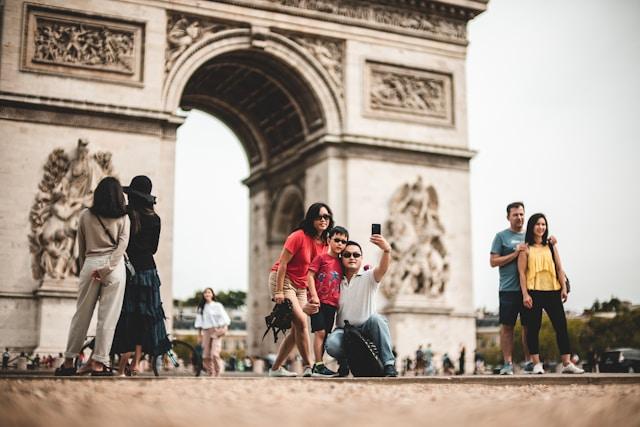
The second reason is liveability, which is not just a lifestyle goal but a form of economic infrastructure. A city’s ability to function smoothly is part of what makes it attractive to investors, talent, and business events. If tourism growth creates persistent crowding and stress in the most-used districts, resident tolerance weakens, and the quality of the city experience declines for everyone, visitors included. Across the world, many destinations have spent the last few years discovering that a volume-first tourism model can collide with local life, triggering political backlash and leading governments to experiment with caps, fees, and restrictions to manage overtourism pressures. Singapore’s circumstances differ from heritage cities with fragile old quarters, but the underlying lesson still applies: if the costs of tourism become too visible to residents, tourism becomes harder to sustain. A quality approach is a way of protecting social license by prioritising segments that deliver more economic benefit with less disruption, and by spreading demand across time, precincts, and product types.
The third reason is competitiveness. Singapore sits in a region full of appealing destinations, many of which can compete aggressively on price, length of stay, and sheer scale of natural assets. Singapore cannot win a race to be the cheapest, nor can it expand endlessly to absorb budget tourism the way larger destinations can. Its advantage lies in reliability, safety, connectivity, and execution, the strengths of a well-run city that can host major events smoothly and deliver a consistent experience. But those advantages only translate into durable gains if Singapore can price and position its tourism proposition to capture value. Otherwise, the city risks importing congestion while exporting margin, with businesses relying on volume to stay afloat rather than building differentiated experiences that support stronger yields.
This logic helps explain why Singapore is placing a heavy bet on business events and high-value segments rather than mass leisure alone. In official speeches linked to Tourism 2040, the government has been explicit that it aims to grow tourism receipts faster than visitor arrivals, and it highlights MICE as a prime example of a high-growth, high-quality segment. Minister Grace Fu has said that, on average, a MICE visitor spends about twice as much as a leisure visitor, and that STB aims to grow MICE tourism receipts three-fold by 2040. This is not simply a tourism preference. It is an economic strategy. Business events concentrate spending into hotels, venues, food and beverage, transport, and professional services, while also strengthening Singapore’s position as a place where industries convene. A major conference does not just fill rooms; it signals relevance in finance, technology, healthcare, logistics, and other sectors that Singapore wants to anchor. The tourism economy, in that sense, becomes a channel for industrial positioning and international mindshare.
Quality tourism also aligns with the idea of resilience. A mass tourism model tends to be more exposed to shocks because it is often built around price-sensitive travel that can evaporate quickly when consumer confidence drops or when airline capacity changes. A portfolio that includes premium leisure, signature events, and business travel can still be hit by downturns, but it is less dependent on bargain-driven demand. It also tends to create a different kind of job base, one that is more skills-intensive, more stable, and potentially better paid, because serving higher value visitors often requires stronger service design, better training, and more sophisticated operations.
Sustainability is another central reason Singapore is steering away from pure volume. Tourism growth is not free. It adds pressure on transport systems, increases energy use, raises waste volumes, and intensifies the strain on popular precincts. As global travel rebounds, sustainability expectations are rising not only among individual travellers but also among corporates, associations, and event organisers. For business events especially, sustainability requirements are increasingly tied to procurement and brand risk. Tourism 2040 explicitly frames the roadmap around sustainable development and the need to address increasing resource constraints. A quality strategy makes it easier to justify the investments needed for greener operations and better-managed precincts, because higher yields provide more room to fund upgrades and to reward businesses that improve standards.
There is also a straightforward fiscal logic behind the shift. Tourism relies on public goods: transport infrastructure, security, cleanliness, and the constant maintenance of urban spaces that visitors share with residents. If tourism growth is driven mainly by volume, the wear and tear on public systems rises quickly, and the state can end up paying more to manage crowding and maintenance without a proportional increase in economic return. By focusing on higher receipts and higher productivity, Singapore reduces the risk of becoming a place where the public carries the cost of mass footfall while the private sector competes in a low-margin race. The emphasis on upgrading destination offerings and cultivating higher value demand is, at its core, an attempt to keep tourism growth economically efficient for a small city.
None of this means Singapore is trying to become an exclusive destination where only wealthy travellers are welcome. Leisure tourism remains central, and Singapore’s tourism growth has long been powered by its ability to offer short, high-density experiences that combine food, shopping, culture, and entertainment in a compact area. The real difference is that Singapore is being more deliberate about what kind of leisure demand it wants to attract and how it wants visitors to move through the city. In practice, quality tourism tends to show up as event-led travel, more distinctive precinct experiences, attractions with strong brand pull, and products that encourage spending across a wider range of sectors rather than concentrating demand in a few crowded hotspots.
There are trade-offs in this approach, and Singapore will have to manage them carefully. A strong tilt toward premium segments can create vulnerability to global wealth cycles and corporate travel tightening. It can also create unevenness within the tourism ecosystem if larger players are better able to upgrade and capture value while smaller operators struggle to invest in product development and capability building. Quality tourism only works as a national strategy if it lifts the broader ecosystem, not just the flagship projects. That means productivity support, workforce development, and a steady pipeline of compelling reasons to visit, so that “quality” does not become a euphemism for higher prices with thinner substance.
Still, when Singapore’s constraints and ambitions are considered together, the direction makes sense. Tourism is one of Singapore’s key services exports, but it must coexist with the everyday functioning of a city where residents live, work, and commute in close proximity to visitors. The policy goal is therefore to maximise net value per unit of capacity, preserving liveability while expanding economic benefit. Tourism 2040 captures this intent directly by anchoring long-term growth on higher receipts, high-potential segments like MICE, destination attractiveness, and a future-ready industry shaped by sustainability and resource realities. In a small city, the best tourism strategy is rarely “more tourists.” It is smarter tourism, designed to keep the city thriving as both a destination and a home.
 WhatsApp
 Instagram
 Threads